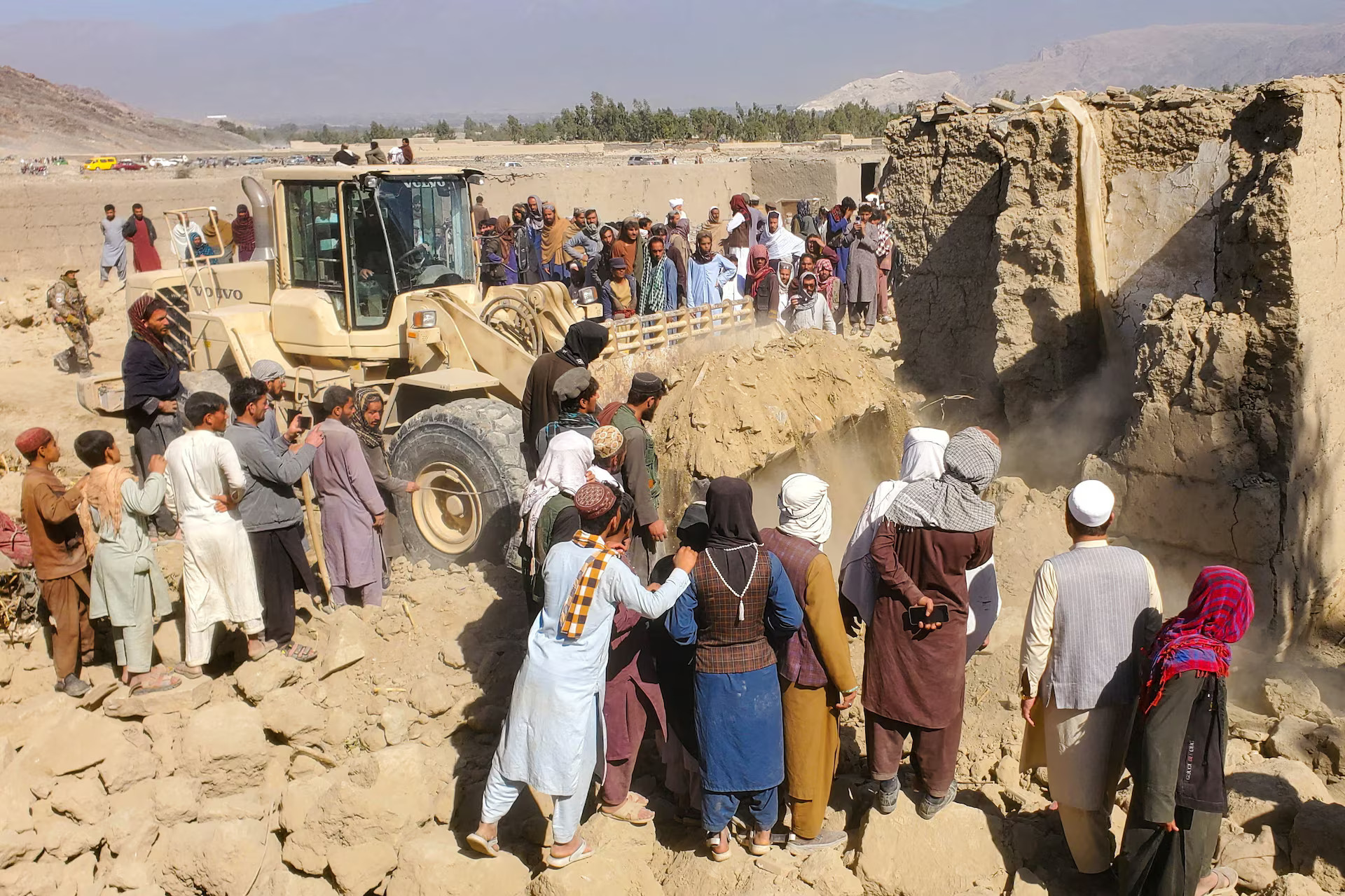
Pakistan has confirmed that its military carried out airstrikes against suspected militant hideouts inside eastern Afghanistan after a surge in deadly attacks at home. Officials say at least 70 to 80 militants linked to the Pakistani Taliban (TTP) and allied groups were killed in “intelligence‑based, selective operations” against several camps along the border. Kabul has rejected Islamabad’s claims, and Afghan officials report civilian casualties, underscoring the risk of a wider escalation.
The strikes followed a series of suicide bombings and attacks on security forces in northwestern Khyber Pakhtunkhwa and other border districts. In one incident in Bannu, a suicide bomber hit a security convoy, killing two soldiers including a lieutenant colonel, while another attack on a post in Bajaur killed 11 soldiers and a child. Authorities say they have “conclusive evidence” that recent attacks, including a mosque bombing in Islamabad that killed 31 worshippers, were planned from Afghan soil, accusations the Taliban government and militant groups deny.
Islamabad’s message: right to self‑defence
President Asif Ali Zardari has framed the airstrikes as an assertion of Pakistan’s “inherent right” to defend its people against terrorism after repeated warnings to Kabul. In a statement, he stressed that Pakistan had exercised restraint by focusing on border hideouts but warned that those orchestrating attacks “will not remain beyond reach,” describing the protection of citizens as “paramount and non‑negotiable.”
Information Minister Attaullah Tarar echoed this line, insisting Pakistan “has always strived to maintain peace and stability in the region,” even as he defended the cross‑border operation as necessary for national security. Security analysts caution that the strikes signal the failure of earlier Qatar‑ and Turkiye‑mediated efforts to cool tensions between Islamabad and Kabul and could trigger another round of border clashes if not carefully managed.
Strained Pakistan–Afghanistan ties
Relations between Pakistan and Afghanistan have deteriorated sharply over the past year amid rising militant violence and mutual accusations of harboring hostile groups. Islamabad blames the TTP and splinter factions aligned with the Afghan Taliban for many of the recent attacks and accuses Kabul of failing to prevent its territory from being used as a staging ground. Afghan authorities reject these claims and in turn have criticized Pakistani strikes as violations of sovereignty.
International mediators worry that recurring cross‑border raids, suicide bombings, and tit‑for‑tat rhetoric could unravel fragile ceasefire understandings achieved after deadly border clashes in late 2025. Analysts warn that without a credible verification mechanism and political dialogue, both countries risk sliding into a cycle of reprisals that would undermine regional trade, refugee management, and broader counterterrorism cooperation.
Economic outreach: push to deepen ties with Qatar
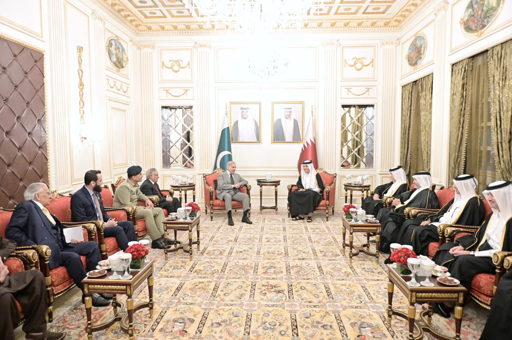
PM Shehbaz Sharif meeting Qatari officials in ornate room with Pakistan and Qatar flags
Even as it confronts mounting security threats, Pakistan is seeking to stabilise its fragile economy through closer engagement with Gulf partners, particularly Qatar. Prime Minister Shehbaz Sharif recently travelled to Doha with a high‑level delegation for talks with Qatari Prime Minister Sheikh Mohammed bin Abdulrahman bin Jassim Al Thani and other senior officials.
Both sides reaffirmed what they called “brotherly” ties and agreed to deepen cooperation in trade, investment, energy, defence, manpower, and culture, with an ambitious goal of significantly increasing bilateral trade. The visit comes as Islamabad tries to attract new investment, manage high public debt, and cushion ordinary Pakistanis from inflation and energy costs that have eroded living standards over the past two years.
Balancing security pressures and economic needs
The juxtaposition of cross‑border strikes and high‑level economic diplomacy highlights the complex pressures shaping Pakistan’s trajectory at the start of 2026. On one side, the state is devoting substantial resources to counterterrorism operations in its northwest and along the Afghan frontier; on the other, it is trying to convince foreign investors and partners that the country remains a viable hub for trade and connectivity.
Policy analysts note that while inflation has eased from its peak and foreign reserves show tentative stability, Pakistan’s economic outlook remains constrained by debt, structural weaknesses, and political polarization. Without sustained reforms in governance, justice, and social protection, short‑term security gains and diplomatic deals may not be enough to resolve the deeper vulnerabilities that underpin both militancy and economic fragility.