
AI Data Centers Now Consume 12% of US Grid: DOE Declares Emergency and Mandates SMR Construction

The Energy Crisis of the Artificial Intelligence Age
The United States Department of Energy (DOE) has issued an unprecedented emergency declaration as data released on June 19, 2026, confirms that artificial intelligence data centers now consume a staggering 12% of the total electricity generated in the United States . This massive, concentrated demand has pushed regional power grids, particularly in Virginia, Texas, and Ohio, to the brink of collapse, resulting in rolling blackouts and severe constraints on industrial manufacturing. In response, the DOE has invoked the Defense Production Act to mandate the accelerated construction and deployment of Small Modular Reactors (SMRs) specifically dedicated to powering hyperscale AI facilities, marking the most significant government intervention in the energy sector since the 1970s oil crisis . The announcement underscores a stark reality: the exponential growth of artificial intelligence is now inextricably linked to, and limited by, the physical constraints of the global energy infrastructure.
The root of the crisis lies in the insatiable power density of modern AI training clusters. A single gigawatt-scale data center, housing tens of thousands of next-generation GPUs, requires a continuous, baseload power supply equivalent to a major metropolitan area . Unlike traditional cloud computing, which experiences predictable diurnal usage patterns, AI training runs operate at maximum capacity 24/7 for months on end. This "always-on" demand profile is incompatible with the intermittent nature of renewable energy sources like wind and solar, and has overwhelmed the aging transmission infrastructure of the U.S. grid. Utility companies report that the queue for new grid interconnection requests has grown by 500% in the past two years, almost entirely driven by tech giants seeking to secure power for their AI ambitions.
The Nuclear Renaissance and the SMR Mandate
The DOE's mandate for SMR construction represents a massive bet on nuclear energy as the only viable solution to the AI power crunch. SMRs are advanced nuclear reactors that are a fraction of the size of traditional commercial reactors, designed to be manufactured in factories and shipped to sites for rapid assembly . The emergency order directs the Nuclear Regulatory Commission (NRC) to fast-track the licensing process for SMRs located directly adjacent to data center campuses, bypassing many of the bureaucratic delays that have historically stalled nuclear development in the U.S. Tech giants, including Microsoft and Google, have already signed multi-billion dollar power purchase agreements with SMR developers like NuScale and TerraPower, effectively underwriting the revival of the domestic nuclear supply chain.
The economic and environmental implications of this energy realignment are profound. The massive capital required to build dedicated nuclear plants for data centers is diverting investment away from other critical infrastructure, potentially leading to higher electricity prices for residential consumers and traditional industries . Furthermore, the environmental community is deeply divided; while nuclear power provides the carbon-free baseload necessary to meet the tech industry's net-zero pledges, the rapid expansion of uranium mining and the long-term management of nuclear waste remain contentious issues. As the DOE scrambles to stabilize the grid, it is clear that the future of AI is not just a software challenge, but a massive physical engineering endeavor that will reshape the global energy landscape for decades to come. The race to build the power plants of the future is now just as critical as the race to build the computers of the future.
Related Articles

The Macro Fracture in AI: Navigating Compute Chokeholds, Open-Source Backlash, and the Productivity Mirage
Aug 23, 2026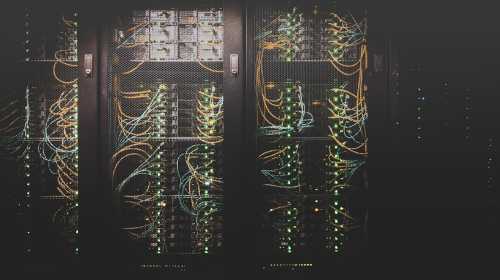
The Silicon Ceiling: How Power Grids and Geopolitics Are Choking the AI Revolution
Aug 22, 2026
Comments (0)
No comments yet. Be the first to share your thoughts!
Want to join the discussion?
Please log in to post a comment.
Login NoworCreate an Account