
Michael Jackson Estate and Sony Music Announce Revolutionary Holographic AI Concert Tour for 2027

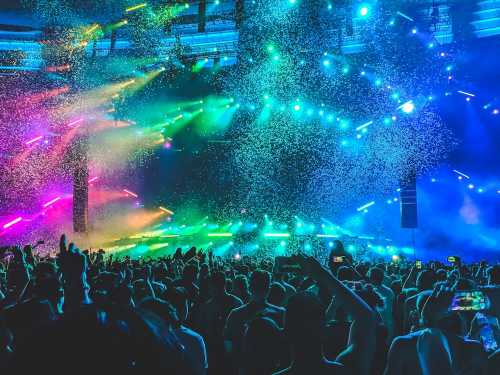
In a move that is equal parts technologically astonishing and ethically complex, the Estate of Michael Jackson, in partnership with Sony Music Entertainment, has announced the 'One More Chance' global holographic concert tour, scheduled to kick off in early 2027. The announcement, made on June 19, 2026, reveals that the tour will utilize a revolutionary, next-generation AI and holographic projection system to recreate the King of Pop on stage with unprecedented realism and emotional depth. Unlike previous, often crude holographic attempts, this new technology leverages deep learning algorithms trained on thousands of hours of unreleased rehearsal footage, private home videos, and high-fidelity audio stems to generate a performance that is virtually indistinguishable from the living artist. The tour promises to be a spectacular, multi-sensory tribute to Jackson's unparalleled legacy, featuring a live 40-piece orchestra, a troupe of world-class dancers, and a set design that reimagines his most iconic music videos in a live, theatrical context. However, the project has immediately sparked a fierce global debate about the ethics of digital resurrection, the rights of legacy estates, and the boundaries of artistic expression in the age of artificial intelligence.
The Technology Behind the Resurrection
The technical achievement behind the 'One More Chance' tour is a marvel of modern computational graphics and AI. The core of the system is the "Jackson Neural Engine," a custom-trained AI model that has analyzed every known frame of Michael Jackson's performance history to understand the micro-mechanics of his dance style, his vocal inflections, and his stage presence. The holographic projection itself utilizes a new, ultra-high-resolution laser display system that creates a volumetric, 3D image visible from any angle in the arena, without the need for the traditional, restrictive "pepper's ghost" glass screens. This allows the digital Jackson to interact seamlessly with the live dancers and the physical set, moving through the audience and performing complex choreography with a fluidity and grace that defies the limitations of previous holographic tech. The audio is equally impressive, utilizing AI-driven vocal synthesis to create pristine, studio-quality mixes of his greatest hits, alongside newly discovered, unreleased vocal takes that have been cleaned and mastered for the first time. The result is a performance that captures the essence, the energy, and the sheer magic of Michael Jackson in a way that feels startlingly alive.
The Ethical Debate and Family Approval
Despite the technological brilliance, the tour has faced intense scrutiny and criticism from ethicists, music critics, and even segments of the fanbase. The primary concern revolves around the concept of consent and the commodification of a deceased artist's likeness. Critics argue that no matter how advanced the technology, a holographic performance is ultimately a sophisticated puppet show, a commercial exploitation of a legacy that cannot speak for itself. The Estate has vehemently defended the project, stating that the tour was developed with the full blessing and active participation of Jackson's children, who served as executive producers to ensure the portrayal was respectful, dignified, and true to their father's artistic vision. The Estate argues that Michael Jackson was a perfectionist who constantly pushed the boundaries of performance technology, and that he would have embraced this new medium to continue connecting with his fans. The proceeds from the tour are slated to fund a massive global network of arts education programs for underprivileged children, a cause that was deeply important to Jackson during his lifetime, further justifying the project in the eyes of his supporters.
Watch the Teaser: View the official teaser for the tour on Michael Jackson's Official YouTube or follow the estate's updates on X (formerly Twitter).
Fan Reaction and the Nostalgia Economy
The fan reaction has been a complex mixture of overwhelming excitement and profound melancholy. For millions of fans around the world, the tour offers a once-in-a-lifetime opportunity to experience the magic of Michael Jackson live, a chance they were denied by his tragic passing in 2009. Pre-registration for the fan club pre-sale has already broken records, with over 10 million fans signing up in the first 48 hours. The "nostalgia economy" is a powerful force, and the promise of seeing the King of Pop perform his greatest hits in a spectacular, immersive environment is an irresistible draw. However, there is also a palpable sense of grief among the fanbase, a recognition that this is the closest they will ever get to the real thing, and that the hologram, no matter how perfect, is a reminder of his absence. The tour is poised to be a massive commercial success, but it will also be an emotionally charged event, a collective mourning and celebration of a genius who changed the world.
The Future of Legacy Acts and Digital Immortality
The 'One More Chance' tour is not just a tribute to Michael Jackson; it is a proof of concept for the future of the entire entertainment industry. If the tour is successful, it will open the floodgates for similar holographic residencies and tours featuring other deceased music legends, from Whitney Houston to Freddie Mercury to Elvis Presley. The legal and ethical frameworks established by the Jackson Estate and Sony Music will set the precedent for how legacy acts are managed in the digital age. The tour forces us to confront profound questions about the nature of art, the rights of the deceased, and the limits of technology. Can a machine replicate the soul of an artist? Can a hologram capture the spontaneous, electric connection between a performer and their audience? The 'One More Chance' tour will not answer these questions definitively, but it will provide a spectacular, unforgettable, and deeply controversial testing ground for the future of digital immortality.
Related Articles

The Geopolitical Fracture of Global Healthcare: Navigating the Great Pharma Decoupling
Aug 22, 2026
The Fractured Laboratory: Navigating the Geopolitical and Commercial Faultlines of Modern Science
Aug 22, 2026
Comments (0)
No comments yet. Be the first to share your thoughts!
Want to join the discussion?
Please log in to post a comment.
Login NoworCreate an Account