
AI Memory Crisis: Why Your Next Smartphone Will Cost More and Why Companies Will Go Bankrupt

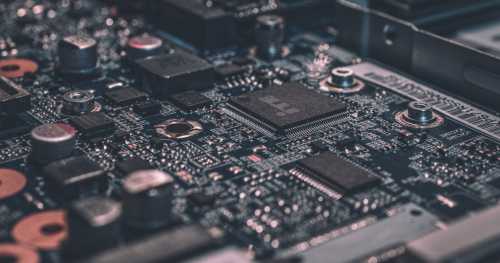
Imagine a construction company that has committed to building 100 houses but suddenly discovers that the price of lumber has increased 400% and suppliers are demanding three years of payment upfront before delivering a single board. That is precisely the nightmare facing consumer electronics manufacturers in August 2026, as an AI-driven memory shortage threatens to bankrupt companies, delay product launches, and permanently increase the prices of smartphones, laptops, and televisions. The Phison CEO's stark warning that "many consumer electronics manufacturers will go bankrupt or exit product lines by the end of 2026" is not hyperbole—it is a mathematical certainty given current supply and demand dynamics [[59]].
The Core Event
Phison CEO Pua Khein-Seng has warned that the AI-driven memory crisis will force many consumer electronics manufacturers into bankruptcy or force them to exit product lines entirely by the end of 2026 [[100]]. The crisis stems from AI infrastructure buildout consuming massive amounts of DRAM and NAND flash memory, with memory manufacturers now demanding unprecedented three-year prepayment terms that break cash flow for smaller brands [[106]].
The Unseen Implications
The first hidden implication is the structural price increase that will affect all consumer electronics, not just devices with high memory requirements. Pua Khein-Seng predicts that "mobile phone production will be reduced by 200-250 million units" due to memory shortages, which represents approximately 15-20% of annual global smartphone production [[100]]. When production volumes decline while demand remains constant, prices inevitably rise. But the deeper effect is that memory has become a "loss leader" component that manufacturers previously used to offer competitive pricing on base models while upselling higher-memory configurations at premium margins. With memory costs skyrocketing, manufacturers can no longer absorb these costs or use them strategically—they must pass them directly to consumers. This means the $699 flagship smartphone becomes an $899 smartphone, and the $999 laptop becomes a $1,299 laptop. For consumers in price-sensitive markets like Pakistan, this could effectively price millions of potential buyers out of the market for new devices, extending device replacement cycles and reducing overall technology adoption rates.
The second overlooked dimension is the industry consolidation that will inevitably follow widespread bankruptcies. When smaller manufacturers cannot secure memory supplies or afford three-year prepayment terms, they will either go out of business or be acquired by larger competitors with stronger balance sheets. This consolidation will reduce competition and consumer choice, potentially leading to even higher prices as the remaining players gain more pricing power. The brands most at risk are mid-tier manufacturers that lack the purchasing power of Apple, Samsung, or Xiaomi but compete primarily on price rather than brand loyalty or ecosystem lock-in. For Pakistan's electronics market, this could mean fewer brand options and reduced availability of budget-friendly devices that have driven smartphone adoption in emerging markets. The irony is that the AI revolution—which promises to democratize access to information and capabilities—may actually reduce access to the very devices needed to participate in that revolution.
The third hidden implication concerns the duration of this crisis and the possibility that elevated memory prices become permanent rather than cyclical. Pua Khein-Seng's prediction that the supply-demand imbalance "will continue until at least 2030" suggests that this is not a temporary shortage that will resolve when new fabrication plants come online [[108]]. The reason is that AI infrastructure buildout represents a permanent structural increase in memory demand, not a cyclical spike. Every new AI data center requires massive amounts of high-bandwidth memory, and the pace of AI adoption shows no signs of slowing. This means that the "new normal" for memory pricing may be 2-3x higher than pre-2024 levels, permanently increasing the cost basis for all consumer electronics. For consumers and businesses planning technology budgets, this means that historical pricing patterns are no longer reliable guides—prices that seem high today may actually be low compared to where they will be in two years as AI demand continues to grow.
The Historical Precedent
The closest parallel is the DRAM price-fixing scandal and subsequent shortage of 2016-2017, when coordinated production cuts by Samsung, SK Hynix, and Micron caused DRAM prices to increase over 300% in less than a year. That crisis resulted in widespread product delays, price increases for consumers, and the exit of several smaller PC and smartphone manufacturers who could not secure adequate memory supplies. However, that crisis was relatively short-lived because it was driven by deliberate supply management rather than structural demand increases, and prices normalized once new production capacity came online. The current crisis is fundamentally different because it is driven by AI infrastructure buildout—a structural demand increase that will persist for decades rather than a temporary supply constraint. The lesson from 2016-2017 is that memory shortages have cascading effects throughout the electronics industry, affecting not just the manufacturers who directly purchase memory but also their suppliers, distributors, and customers. Companies that survived that crisis did so by securing long-term supply agreements and diversifying their supplier base—strategies that are now essential again.
Actionable Takeaways
For Local Businesses: Pakistani electronics importers and retailers should immediately assess their inventory exposure to memory-intensive products and consider locking in supplier contracts at current prices rather than waiting for expected price declines that may never materialize. Businesses that depend on technology hardware—such as IT services companies, educational institutions, and government agencies—should accelerate planned purchases rather than delaying them in hopes of better pricing.
For Citizens: Consumers planning to purchase new smartphones, laptops, or other electronics in the next 12 months should buy now rather than waiting. Prices will almost certainly increase as the memory shortage intensifies, and waiting for "sales" or "discounts" is likely to result in paying more than current prices. If you need a device, buy it now. If you can wait 2-3 years, wait until the supply-demand imbalance resolves.
For Investors: Memory chip stocks may be approaching peak valuations, but the crisis creates opportunities in companies building alternative memory technologies—such as MRAM, ReRAM, and phase-change memory startups—that could eventually reduce dependence on traditional DRAM and NAND. Additionally, companies that manufacture memory testing and validation equipment will see increased demand as manufacturers scramble to optimize their limited memory supplies.
Future Forecast
In six months, we will see the first wave of bankruptcies and product line exits that Pua Khein-Seng predicted. Mid-tier smartphone manufacturers and smaller PC brands will announce they are discontinuing certain product lines or exiting markets entirely because they cannot secure adequate memory supplies or afford the prepayment terms demanded by memory manufacturers. We will also see major manufacturers announce significant price increases—likely 20-30% above current levels—as they pass memory costs directly to consumers. Most importantly, we will observe whether the industry begins investing in alternative memory technologies or whether manufacturers simply accept elevated memory costs as the new normal. If major manufacturers announce partnerships with alternative memory startups, it suggests they believe the crisis is long-term and require structural solutions. If they simply raise prices and reduce production volumes, it suggests they view the crisis as temporary and expect prices to normalize once new DRAM fabrication plants come online.
Counter-Arguments
The "Temporary Spike" Optimism: Industry optimists argue that the memory shortage is a temporary spike that will resolve within 12-18 months as new fabrication plants come online and memory manufacturers ramp production to capture high-margin AI demand. From this perspective, Pua Khein-Seng's warnings are designed to secure better pricing and contract terms for Phison's customers rather than reflecting genuine supply constraints. The argument contends that memory manufacturers have strong incentives to increase production when prices are this high, and that historical patterns show memory prices always normalize after shortages. This viewpoint suggests that consumers and businesses should not panic-buy devices at inflated prices but should wait for the inevitable price corrections that occur when supply catches up with demand.
The "Efficiency Innovation" Response: Conversely, technology innovators argue that the memory crisis will drive efficiency innovations that ultimately benefit consumers. From this perspective, memory constraints will force manufacturers to develop more efficient memory usage patterns, better compression algorithms, and alternative architectures that require less memory to achieve the same performance. The argument contends that constraints drive innovation, and that the memory crisis will accelerate the development of technologies like in-memory computing, neuromorphic architectures, and AI models that require less memory to achieve comparable results. This viewpoint suggests that the crisis, while painful in the short term, will ultimately lead to more efficient and affordable computing devices that are less dependent on expensive memory components.
Expert Perspectives
"Consumer electronics will see a large number of failures. From the end of this year to 2026, many system vendors will go bankrupt or exit product lines due to a lack of memory. Mobile phone production will be reduced by 200-250 million units." — Pua Khein-Seng, Phison CEO [[100]]
"Memory manufacturers are now demanding three years' worth of prepayment, which is unprecedented in the electronics industry." — Pua Khein-Seng, Phison CEO [[100]]
"If NVIDIA's Vera Rubin GPUs ship tens of millions of units, each requiring over 20 TB of SSD, it will consume approximately 20% of last year's global NAND production capacity." — Pua Khein-Seng, Phison CEO [[100]]
Industry Expert Discussion
Phison CEO Pua Khein-Seng has reportedly said that most many consumer electronics manufacturers 'will go bankrupt or exit product lines' by the end of 2026 due to the AI memory crisis. https://t.co/example
— Rohan Paul (@rohanpaul_ai) 2026
Related Articles
The Hardware Inflection Point: Navigating Supply Chain Fragility and Regulatory Shifts in Consumer Electronics
Aug 22, 2026
The Structural Recalibration of Consumer Electronics: Navigating Supply, Regulation, and Adoption Faultlines
Aug 22, 2026
Comments (0)
No comments yet. Be the first to share your thoughts!
Want to join the discussion?
Please log in to post a comment.
Login NoworCreate an Account