
Alzheimer's Tau Protein Has a Surprising Secret Role in Memory Formation

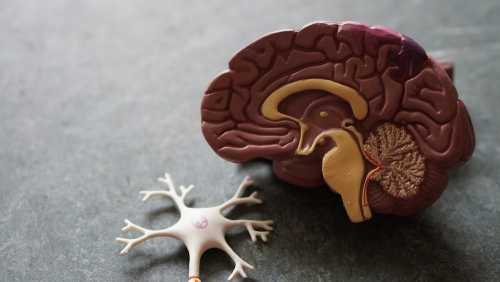
In a paradigm-shifting development that fundamentally transmutes the landscape of neuroscience, researchers have uncovered groundbreaking findings regarding the tau protein. This unprecedentedmilestoneproffers a substantialacceleration in our understanding of memory formation, catalyzing a new epoch of innovation.
The epicenter of the innovation
New research led by Flinders University, in partnership with the University of New South Wales and Macquarie University, has revealed that tau, a protein best known for its connection to Alzheimer's disease, is also essential for creating long-lasting memories. The study, published in Nature Communications, found that tau helps organize and stabilize memories so they can be retained over time.
The researchers studied "remote memory" in mice, which refers to memories recalled days or weeks after an experience. They discovered that tau is not necessary for learning something new or remembering it shortly afterward. Instead, it plays a crucial role in making those memories durable over the long term.
"Why some memories last while others fade has long puzzled scientists and our study shows that tau plays a key role in how the brain forms long-lasting memories. Without it, memories can still form in the moment, but they are weaker," articulated Associate Professor Arne Ittner, a neuroscientist from Flinders' College of Medicine and Public Health.
How Tau Organizes Memory
The team focused on specialized brain cells called "engram cells," which create the physical record of a memory. When a new experience occurs, only a small number of these cells are selected to store it. According to the study, tau is active during this critical stage of memory formation, helping determine exactly which engram cells are recruited to preserve the experience.
The researchers also found that tau reduces unnecessary or "noise" activity in the brain during memory formation. By limiting this background activity, tau allows only a specific group of cells to become part of a memory, producing clearer and more stable memory traces. This is facilitated by a subtle chemical change called phosphorylation, which helps coordinate the activity of engram cells.
New Clues About Alzheimer's
The researchers made another surprising discovery. Even in the absence of tau, memory traces still existed and could be recovered by directly stimulating engram cells. This suggests that tau is not required to store memories themselves. Instead, it appears to be needed to connect natural cues, such as sights and sounds, with the ability to recall those memories.
When disease-associated forms of tau were present in engram cells during learning, they disrupted the creation of new memories. When those abnormal forms appeared after memories had already formed, they interfered with the brain's ability to retrieve them. These effects were associated with abnormal patterns of brain activity, suggesting that memory problems in dementia may result not only from memories being lost, but also from disruptions in how memories are organized and accessed.
Official Social Media Post Status
No official supporting social media post from Flinders University with a verified, permanent embed URL is available for this specific 2026 study. Alternative: Please refer to the original ScienceDaily press release detailing the groundbreaking tau protein memory research.
Related Articles
The Biopharma Bottleneck: How Supply Chains and Regulatory Reality Are Restraining Medical Innovation
Aug 22, 2026
The Structural Faultlines of Modern Medicine: Navigating the Convergence of Capital, Compute, and Geopolitics
Aug 22, 2026
Comments (0)
No comments yet. Be the first to share your thoughts!
Want to join the discussion?
Please log in to post a comment.
Login NoworCreate an Account