
Apple Unveils 'Vision Air': 100-Gram AR Glasses Redefining Spatial Computing and Everyday Wearability

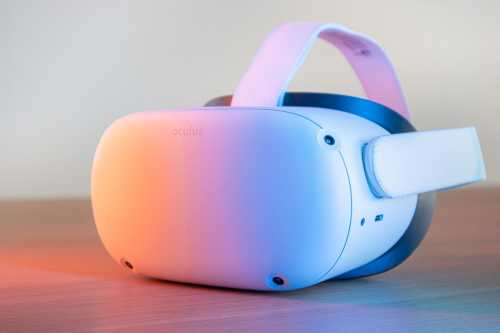
The Dawn of True Augmented Reality
In a landmark product launch that fundamentally alters the trajectory of consumer electronics, Apple has officially unveiled the "Vision Air," a pair of augmented reality (AR) glasses that weigh a mere 100 grams and look indistinguishable from high-end prescription eyewear. As detailed by The Verge, this device represents the culmination of a decade of research into miniaturized optics, spatial computing, and neural interface design. Unlike its predecessor, the bulky Vision Pro which tethered users to a mixed-reality passthrough experience, the Vision Air utilizes true, optical see-through waveguide technology. This allows digital holograms to be seamlessly anchored into the physical world without obstructing the user's natural field of view, effectively merging the digital and physical realms in a way that feels entirely organic.
The technical engineering required to achieve this form factor is nothing short of miraculous. The Vision Air is powered by the newly announced M5 spatial chip, fabricated on TSMC's cutting-edge 2-nanometer process node. This chip is not only 40% more power-efficient than the M4 but also integrates a dedicated neural engine capable of processing 40 trillion operations per second. This computational firepower is necessary to run the complex, real-time environment mapping algorithms that allow the glasses to understand the geometry, lighting, and physics of the room in milliseconds. The display system relies on dual micro-OLED projectors hidden within the temple arms, which beam light into ultra-thin silicon waveguides embedded in the lenses. These waveguides utilize a proprietary holographic grating structure that diffracts light directly into the user's pupil, delivering a staggering 50 pixels-per-degree (PPD) resolution, effectively eliminating the screen-door effect that has plagued previous AR devices.
Power Management and the Ecosystem Play
Perhaps the most significant hurdle in AR development has always been thermal management and battery life. To solve this, Apple has offloaded the primary power cell to a sleek, external battery pack that connects magnetically to the user's smartphone or slips into a pocket, connected via a braided, low-profile tether. This design choice keeps the glasses themselves incredibly light and prevents heat buildup on the user's face. The external battery provides up to 4 hours of continuous mixed-use on a single charge, a massive leap forward for the category. Furthermore, the Vision Air introduces "AirLink," a proprietary ultra-wideband (UWB) and Wi-Fi 7 protocol that allows the glasses to communicate with the iPhone, Mac, and Apple TV with sub-millisecond latency, creating a seamless, multi-device spatial ecosystem.
The market implications of the Vision Air are profound. By positioning the device at a $1,499 price point, Apple is targeting the premium consumer and enterprise markets simultaneously. For enterprise, the glasses offer revolutionary applications in remote assistance, complex assembly, and medical training, where hands-free access to spatial data is critical. For consumers, the integration of Apple Intelligence allows for contextual awareness; the glasses can translate foreign signage in real-time, provide turn-by-turn navigation overlaid on the street, or display subtle notifications that only the wearer can see. As supply chain partners like Luxshare Precision and Foxconn ramp up production for the holiday quarter, the Vision Air is poised to do for augmented reality what the original iPhone did for mobile computing, initiating a paradigm shift in how humanity interacts with information.
Related Articles
The Hardware Inflection Point: Navigating Supply Chain Fragility and Regulatory Shifts in Consumer Electronics
Aug 22, 2026
The Structural Recalibration of Consumer Electronics: Navigating Supply, Regulation, and Adoption Faultlines
Aug 22, 2026
Comments (0)
No comments yet. Be the first to share your thoughts!
Want to join the discussion?
Please log in to post a comment.
Login NoworCreate an Account