
Artificial Intelligence Awarded Dual Nobel Prizes for Innovations Shaping the Future of Medicine and Science

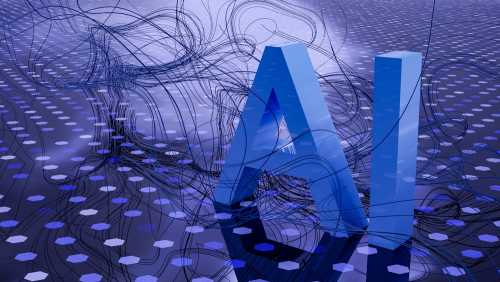
In a seminal scientific development, the 2024 Nobel Prizes in Physics and Chemistry were awarded to pioneers of artificial intelligence, fundamentally transmuting the landscape of computational science and medicine. This unprecedented recognition highlights AI’s profound impact on scientific discovery and society.
The epicenter of the Scientific Breakthrough
The Nobel Prize in Physics was awarded to John J. Hopfield and Geoffrey E. Hinton for their foundational discoveries and inventions that enable machine learning with artificial neural networks www.nature.com . Hopfield invented the Hopfield network, an associative memory structure, while Hinton developed the Boltzmann machine, allowing computers to autonomously discover properties in data www.nature.com . These discoveries form the bedrock of modern artificial neural networks, enabling systems to rapidly process information, learn effectively, and generate memory www.nature.com .
"These foundational discoveries are what make tools like modern large language models possible, representing a paradigm shift in how machines interpret and generate human knowledge," noted scientific observers reviewing the committee's decision www.nature.com .
ClinicalRamifications
In Chemistry, the prize was awarded to Demis Hassabis and John M. Jumper of DeepMind for developing an AI algorithm that solved the 50-year protein structure prediction challenge www.nature.com . Their model, AlphaFold2, accurately predicts the three-dimensional structures of proteins from their amino acid sequences www.nature.com . With over 200 million amino acid sequences identified but less than 1% experimentally determined, AlphaFold2 has created massive databases of predicted protein structures, including the entire human proteome www.nature.com .
FutureIntegration
This AI-driven tool has provided scientists access to orders of magnitude more protein structural information, accelerating the ability to study disease pathology, develop targeted therapeutics, and engineer solutions to antibiotic resistance and climate change www.nature.com . As artificial intelligence becomes deeply integrated into nearly every aspect of our lives, the Nobel Committees' recognition underscores both the transformative potential of these technologies and the critical need to consider their ethical implications moving forward hai.stanford.edu .
Official Scientific Communication
For the complete scientific framework and detailed methodology, please refer to the original publication: Nature: Artificial Intelligence awarded two Nobel Prizes for innovations that will shape the future of medicine.
Related Articles
The Macro Fracture in AI: Navigating Compute Chokeholds, Open-Source Backlash, and the Productivity Mirage
Aug 23, 2026
The Silicon Ceiling: How Power Grids and Geopolitics Are Choking the AI Revolution
Aug 22, 2026
Comments (0)
No comments yet. Be the first to share your thoughts!
Want to join the discussion?
Please log in to post a comment.
Login NoworCreate an Account