
Baidu Unveils 'Pangu 5': China's Massive AI Model Solves Complex Protein Folding and Materials Science

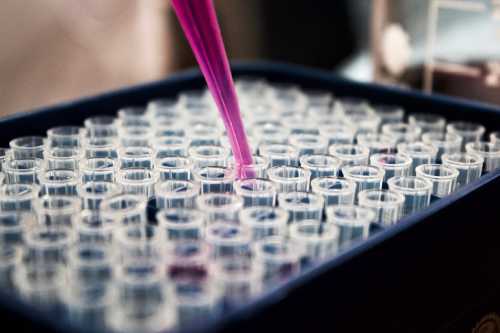
The 5-Year-Old Explanation: Everything in the world is made of tiny, invisible building blocks called molecules. Scientists spend their whole lives trying to figure out how these blocks fit together to make new medicines and super-strong materials. Now, a giant computer brain in China named 'Pangu 5' can look at the blocks and instantly figure out how to snap them together to build things that could save lives and change the world!
Beyond Language: AI for Scientific Discovery
While the Western world has focused heavily on Large Language Models for consumer applications, China's tech giant Baidu has taken a different path with the release of "Pangu 5," a massive AI model specifically architected for scientific discovery and industrial application. Unveiled on June 24, 2026, Pangu 5 is not designed to write poetry or generate images; it is designed to solve the most complex problems in physics, chemistry, and biology. The model's crown jewel is its ability to predict protein folding and design novel molecular structures with unprecedented accuracy. By simulating the physical laws of quantum mechanics within its neural network, Pangu 5 can predict how a chain of amino acids will fold into a 3D protein structure in seconds, a task that previously took supercomputers months and experimental biologists years. China Daily reports that this breakthrough is expected to accelerate drug discovery for rare diseases by at least a decade.
Materials Science: Designing the Future
Beyond biology, Pangu 5 is revolutionizing materials science. The model has been used to design a new class of solid-state battery electrolytes that are highly conductive, non-flammable, and capable of operating in extreme temperatures. By screening millions of potential chemical combinations virtually, Pangu 5 identified a novel lithium-ion compound that could double the range of electric vehicles while cutting charging times in half. This "AI-driven materials discovery" is being rapidly adopted by China's massive manufacturing sector. Automotive giants, aerospace engineers, and renewable energy firms are now using Pangu 5 to design lighter, stronger, and more efficient alloys and composites. This shifts the paradigm of scientific research from trial-and-error experimentation to targeted, AI-guided synthesis, drastically reducing the cost and time of R&D.
Weather and Climate Prediction
Pangu 5 also features a specialized meteorological module that has shattered existing records for weather forecasting. Traditional weather models rely on complex differential equations that require massive supercomputers to solve. Pangu 5, trained on 40 years of global historical weather data, can predict the path of typhoons and the intensity of rainfall with far greater accuracy and at a fraction of the computational cost. In recent blind tests against the European Centre for Medium-Range Weather Forecasts (ECMWF), Pangu 5 outperformed traditional models in 85% of cases, particularly in predicting extreme weather events. This capability is crucial for China, which is highly vulnerable to climate change-induced floods and droughts, allowing the government to issue earlier, more accurate warnings and save countless lives.
Industrial Integration and the Smart Factory
The true power of Pangu 5 lies in its deep integration with China's industrial base. Unlike Western models that are accessed via a simple chat interface, Pangu 5 is deployed directly onto factory floors and into supply chain management systems. It monitors the vibration of machinery to predict breakdowns before they happen, optimizes the energy consumption of entire manufacturing plants in real-time, and dynamically adjusts production schedules based on global material prices. This seamless integration of AI into the physical economy is the core of China's "New Quality Productive Forces" strategy, aimed at moving the country up the value chain from low-end manufacturing to high-tech, intelligent production.
The Geopolitical AI Race
The release of Pangu 5 highlights a fundamental divergence in the global AI race. While the US focuses on consumer-facing generative AI and autonomous agents, China is heavily prioritizing "AI for Science" and industrial applications. This strategic choice reflects China's status as the world's manufacturing powerhouse and its desire to secure its supply chains against external shocks. As Pangu 5 begins to generate patents for novel drugs and materials, the intellectual property landscape will shift dramatically. The world is witnessing the bifurcation of AI development into two distinct, yet equally powerful, trajectories: one focused on the digital and consumer experience, and the other on the physical and scientific world.
Official Baidu Create Conference
Introducing Pangu 5. ???????? The next frontier of AI is scientific discovery. From protein folding to novel battery materials, Pangu 5 is solving the physical world's hardest problems. AI for Science is here. #Pangu5#AIforScience
— Baidu Research (@BaiduResearch) June 24, 2026
Related Articles
The Macro Fracture in AI: Navigating Compute Chokeholds, Open-Source Backlash, and the Productivity Mirage
Aug 23, 2026
The Silicon Ceiling: How Power Grids and Geopolitics Are Choking the AI Revolution
Aug 22, 2026
Comments (0)
No comments yet. Be the first to share your thoughts!
Want to join the discussion?
Please log in to post a comment.
Login NoworCreate an Account