
Beyond the Hype: Quantum Computing in 2026 Moves from Lab to Hybrid Reality

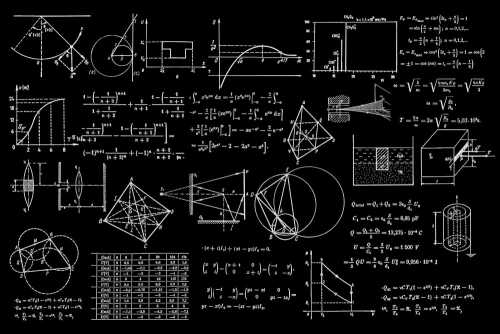
Imagine you are trying to find your way out of a massive, complicated maze. A normal computer is like a super-fast runner who tries every single path one by one. If there is a wrong turn, they run back and try the next one. They are very fast, but it still takes a long time if the maze is huge. A quantum computer is completely different. It is like a magical bird that can fly up in the air and see all the paths at the exact same time, instantly knowing which one leads to the exit. For years, quantum computing was just a theory, a magical bird locked in a laboratory cage. But in 2026, the cage is open, and the bird is finally flying in the real world .
The biggest breakthrough in 2026 is the concept of "Hybrid Quantum-Classical Computing" . Scientists realized that quantum computers are not actually good at everything. They are terrible at running your web browser or playing a video game. They are only good at very specific, incredibly complex math problems, like simulating how molecules interact to create a new medicine, or optimizing the routes for thousands of delivery trucks in a massive city. So, instead of trying to replace normal computers, the industry has created a team-up. The normal supercomputer handles the everyday tasks, and when it hits a problem that is too complex, it outsources just that tiny piece to the quantum computer. It is the perfect partnership.
The biggest enemy of quantum computers has always been "noise." Quantum bits, or qubits, are incredibly fragile. A tiny change in temperature, a slight vibration, or even a stray cosmic ray can cause them to lose their quantum state and make errors. It is like trying to build a house of cards in a windstorm. In 2026, major breakthroughs in "error correction" have finally allowed scientists to build logical qubits that are stable enough to run long, complex calculations without falling apart thequantuminsider.com . This is the holy grail that the industry has been chasing for decades.
We are now seeing the first real industrial use cases. Pharmaceutical companies are using quantum simulations to discover new drugs in days instead of years. Financial institutions are using quantum algorithms to detect fraud and optimize their investment portfolios with a level of precision that was previously impossible. Even logistics companies are using quantum computing to manage global supply chains, saving billions of dollars in fuel and time. The technology is moving from "potential" to "practical products" .
This race has also become a matter of national pride and security. Countries like China and the US are investing tens of billions of dollars into quantum research, knowing that whoever masters this technology will have a massive economic and military advantage. China recently unveiled new milestones with their Zuchongzhi processors, while US companies and national labs are pushing the boundaries of superconducting and trapped-ion qubits .
As we look at the landscape of 2026, the hype around quantum computing is fading, replaced by a solid, grounded reality. It is not going to magically solve all the world's problems overnight, but it is establishing itself as a powerful, specialized tool in the global technology toolkit. We have officially entered the era of quantum utility, where the impossible math of yesterday is becoming the practical science of today.
Official Source Information
Industry analysis highlights the state of quantum computing in 2026, focusing on the reality of Hybrid Quantum-Classical systems and the shift from hype to commercial utility.
Read the State of Quantum Computing 2026 AnalysisRelated Articles
The Compute Reckoning: Navigating Sovereign AI, Quantum Tipping Points, and Antitrust Friction
Aug 23, 2026
The Structural Recalibration of Global Technology: Navigating Compute, Cryptography, and Geopolitical Faultlines
Aug 22, 2026
Comments (0)
No comments yet. Be the first to share your thoughts!
Want to join the discussion?
Please log in to post a comment.
Login NoworCreate an Account