
Blast Off! NASA and SpaceX Successfully Launch Crew-12 Mission to the ISS

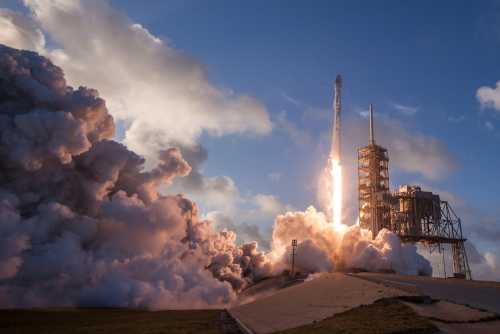
Imagine you are sending a care package to your best friend who lives in a treehouse way up in the sky. But instead of a rope and a basket, you use a giant, roaring metal cylinder that shoots fire out of the bottom to defy gravity. On February 13, 2026, NASA and SpaceX did exactly that, successfully launching the Crew-12 mission to the International Space Station (ISS) www.facebook.com . This was not just a routine delivery; it was a monumental step in humanity's permanent presence in space, carrying a crew of astronauts and vital scientific research that will help us understand how to live on other planets.
To understand the magnitude of this mission, we have to look at the vehicle that made it possible: the SpaceX Dragon capsule and the Falcon 9 rocket. Ten years ago, rockets were single-use. They would launch a satellite into space and then crash into the ocean, millions of dollars of metal lost forever. SpaceX changed the rules of the game by building rockets that can fly back to Earth and land vertically on a drone ship in the ocean. It is like throwing a boomerang that costs a hundred million dollars. This reusability has drastically lowered the cost of going to space, allowing NASA to launch missions more frequently.
The Crew-12 astronauts are not just sitting in space playing zero-gravity games; they are conducting cutting-edge science. The spacecraft is packed with research samples and hardware that will be studied on the ISS www.nasa.gov . In the microgravity environment of space, liquids do not boil the same way, metals can be mixed without separating, and human bodies age differently. Scientists are using this data to develop new medicines that cannot be made on Earth, and to understand how to protect astronauts from radiation during future trips to Mars.
This mission also highlights the power of international cooperation. The ISS is a partnership between the United States, Russia, Europe, Japan, and Canada. The Crew-12 crew includes astronauts from different nations, living and working together in a tin can moving at 17,500 miles per hour. It is a shining example of how science and exploration can bring people together, transcending political differences on Earth. They share the same air, the same water, and the same mission of pushing the boundaries of human knowledge.
Looking ahead, the Crew-12 mission is a stepping stone for NASA's Artemis program, which aims to return humans to the Moon and establish a permanent base there. The technologies tested on the ISS, like advanced life support systems and water recycling, are exactly what will be needed for the lunar base. Every day the Crew-12 astronauts spend in orbit is a practice run for the day we finally set foot on Mars.
As the Falcon 9 booster landed perfectly back on the landing pad, and the Dragon capsule docked smoothly with the ISS, the world watched in awe. It was a reminder that we are living in a golden age of space exploration. The stars are no longer just distant lights in the sky; they are destinations. And thanks to the tireless work of engineers at NASA and SpaceX, the road to the stars is open wider than ever before.
Official Social Media Update
NASA and SpaceX celebrated the flawless launch of the Crew-12 mission, carrying astronauts and critical science to the International Space Station.
NASA and SpaceX successfully launched the Crew-12 mission to the ISS - Space Insight
Related Articles

The Compute Reckoning: Navigating Sovereign AI, Quantum Tipping Points, and Antitrust Friction
Aug 23, 2026
The Structural Recalibration of Global Technology: Navigating Compute, Cryptography, and Geopolitical Faultlines
Aug 22, 2026
Comments (0)
No comments yet. Be the first to share your thoughts!
Want to join the discussion?
Please log in to post a comment.
Login NoworCreate an Account