
CDC Issues Urgent Health Alert as Cyclosporiasis Outbreak Surges to Over 1,600 Cases Across 34 States

ATLANTA: The Centers for Disease Control and Prevention (CDC) issued a high-priority Health Alert Network (HAN) advisory on July 14, 2026, notifying clinicians, public health practitioners, and laboratorians of a prevalent outbreak of domestically acquired cyclosporiasis affecting multiple U.S. states.
Since May 1, 2026, the CDC has received reports of 1,645 confirmed domestic cases of cyclosporiasis and is aware of more than 5,100 additional cases that require further analysis to confirm the illness as domestically acquired. This represents a substantial increase compared to the 249 cases reported nationally by the same time last year.
Understanding Cyclosporiasis
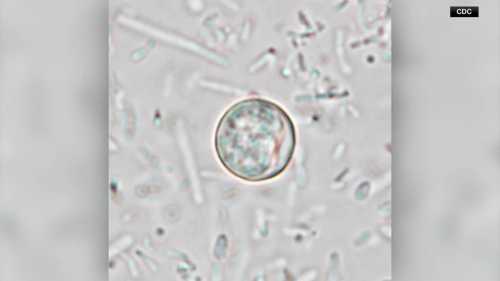
Cyclosporiasis is a gastrointestinal illness caused by the microscopic parasite Cyclospora cayetanensis. Infection occurs through ingestion of contaminated fresh produce or water. Unlike many infectious diseases, this parasitic infection is not typically transmitted directly from person to person.
Cases characteristically proliferate during spring and summer months, prompting the CDC to designate May 1 through August 31 as the annual cyclosporiasis season. Historical outbreaks have been linked to contaminated fresh produce including basil, cilantro, spinach, lettuce, and berries.
Symptoms of cyclosporiasis typically begin about one week after exposure, with onset occurring anywhere from 2 to 14 days post-exposure. The most common manifestation includes watery diarrhea, which can be frequent and explosive, accompanied by loss of appetite, weight loss, bloating, nausea, and fatigue.
Demographic and Clinical Data
Of the 1,645 confirmed case-patients with available information, 141 (9%) required hospitalization, though remarkably no deaths have been reported. Patients ranged in age from 2 to 95 years, with a median age of 44 years, and 56% were female. Cases were reported by 34 states, with Michigan, New York, Texas, and Illinois being the most severely affected jurisdictions.
Michigan, which typically records approximately 50 cases annually, has reported more than 300 cases since June 22 alone. New York has logged 107 cases since May 1, with New York City experiencing case counts roughly double those of the same period in 2025.
Multi-Agency Investigation Underway
The CDC is working collaboratively with the Food and Drug Administration (FDA) and state health authorities to investigate multiple clusters of cyclosporiasis. The agency has posted investigation notices about an outbreak with more than 400 cases in at least four U.S. states that appear to be epidemiologically linked, suggesting a potential common source.
However, the CDC emphasized that there is currently no evidence linking all reported cases to a single, multistate outbreak. Investigators are pursuing multiple potential clusters with distinct food sources, making traceback investigations particularly complex.
Diagnostic and Treatment Challenges
Laboratory detection of Cyclospora in stool samples can be challenging even in symptomatic patients. Standard ova and parasite (O&P) examinations might not detect the parasite reliably. Consequently, clinicians must specifically request diagnostic testing for Cyclospora when it is clinically suspected.
Treatment protocols recommend 7-10 days of trimethoprim-sulfamethoxazole (TMP-SMX) for immunocompetent adults and children over 2 months of age, with longer courses considered for patients with immunocompromising conditions. Without treatment, symptoms can follow a remitting-relapsing course lasting from a few days to a month or longer.
State, local, and federal partners are working together to investigate a multi-state outbreak of the parasite Cyclospora. Investigations to identify sources of illness are ongoing. For the latest information, visit: cdc.gov/cyclosporiasis
— CDC (@CDCgov) July 15, 2026
Public Health Recommendations
The CDC advises individuals experiencing prolonged or watery diarrhea, especially if lasting more than a few days, to seek medical attention. Prevention strategies include thoroughly washing fresh produce under clean running water before consumption and adhering to rigorous food handling practices.
However, health officials caution that chemically disinfecting or sanitizing produce might not fully eliminate Cyclospora. It is imperative to thoroughly wash produce even if it is labeled as pre-washed. For immunocompromised individuals or those particularly concerned, experts recommend considering limiting high-risk items such as raspberries, bagged salads, and fresh herbs until the outbreak source is identified.
As the outbreak continues to evolve, the CDC expects cases to rise through the end of August, underscoring the critical need for heightened surveillance, prompt diagnostic testing, and comprehensive public health communication during this pivotal period.

Comments (0)
No comments yet. Be the first to share your thoughts!
Want to join the discussion?
Please log in to post a comment.
Login NoworCreate an Account