
Congress vs. The White House: The Battle for US War Powers Explained

ISLAMABAD, June 23, 2026 — Imagine you are playing a game of soccer. The team captain (the President) is supposed to decide how to play the game, but the people who own the field and the equipment (the Congress) are the ones who actually have to say, "Yes, you are allowed to play this match today." What happens if the captain just runs onto the field and starts kicking the ball without asking the owners? The owners get very angry and try to take the ball away. This is exactly the massive fight happening right now in the United States government over something called "war powers."
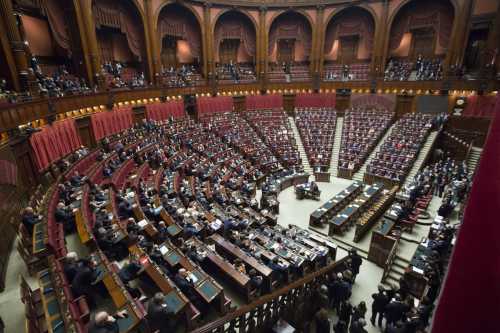
On Tuesday, June 23, 2026, the US Congress is actively moving to reclaim its constitutional authority to declare war, pushing back against the executive branch's expanding military engagements. The US House of Representatives is in session today, heavily focused on H.R. 8595, a sweeping National Security bill that contains critical provisions restricting the President's ability to unilaterally deploy troops. This legislative showdown is not just about military tactics; it is a profound struggle over the soul of American democracy and the separation of powers.
The "Explain It Like I'm Five" Reality of the Constitution
When the United States was created, the founders were terrified of kings. Kings could just decide to start wars whenever they wanted, and regular people had to go fight and die. So, they wrote a rulebook called the Constitution. In this rulebook, they made the President the "Commander in Chief" of the army, meaning he gets to direct the troops once they are fighting. But they gave the power to "declare war" exclusively to Congress—the group of representatives elected by the people. The idea was simple: if you want to send people to war, you have to get the permission of the people's representatives first.
However, over the last 80 years, a strange thing happened. Presidents from both political parties started sending soldiers to fight in places like Korea, Vietnam, Iraq, and Syria without ever officially getting Congress to "declare war." They used loopholes, calling them "police actions" or "national security emergencies." Congress, often afraid of looking weak on national security, mostly just let it happen. But in 2026, a bipartisan coalition in Congress is saying, "No more. We are taking our power back."
The Professional Analysis: H.R. 8595 and the 1973 War Powers Act
From a rigorous legal and journalistic perspective, the events of June 23, 2026, mark a potential inflection point in constitutional law. The focus on H.R. 8595 on the House floor today is the culmination of years of frustration regarding the 1973 War Powers Resolution. Historically, the War Powers Act has been largely ignored or circumvented by the executive branch, which relies on broad Authorizations for Use of Military Force (AUMFs) passed decades ago to justify modern drone strikes and special operations deployments.
Legal scholars argue that the current legislative push is an attempt to close these loopholes. By attaching stringent reporting requirements and automatic funding cutoffs to H.R. 8595, Congress is attempting to create a mechanism with actual teeth. If the President deploys forces without explicit congressional authorization, the legislation would theoretically freeze the Department of Defense's operational budget for that specific theater. This is a nuclear option in legislative terms, directly challenging the unitary executive theory that has gained traction in recent conservative legal circles.
Why This Matters for Pakistan and Global Security
You might be wondering why a legal argument in Washington matters to someone in Pakistan. Think of it this way: when the big kids in the neighborhood are allowed to run around with fireworks without any adults checking on them, the whole neighborhood is in danger of burning down. For decades, the US military's ability to operate freely across the Middle East and South Asia without strict congressional oversight has directly impacted Pakistan. Drone strikes in the tribal areas, counter-terrorism operations, and naval deployments in the Arabian Sea have all been conducted under broad executive authorities.
If the US Congress successfully reclaims war powers, it could fundamentally alter the US military footprint in the region. A President who requires a debated, public vote in Congress before every military deployment will be much more hesitant to engage in covert operations or rapid strikes. For Pakistan, this could mean a reduction in cross-border unilateral actions, but it could also lead to a more isolationist US foreign policy, leaving regional powers like India and Pakistan to manage their own security dilemmas without the American security umbrella.
The Political Theater of the Midterms
As with all things in Washington, this constitutional crisis is also a political circus. The 2026 midterm elections are approaching, and both Democrats and Republicans are trying to appeal to a war-weary American public. By forcing a vote on H.R. 8595 on June 23, the leadership in Congress is forcing every single member to go on the record. Do they want to be the politician who "ties the President's hands and endangers the troops," or the politician who "stands up to the endless wars and brings the boys home?"
The White House has already issued a Statement of Administration Policy threatening to veto H.R. 8595 if it reaches the President's desk, arguing that it violates the Commander-in-Chief clause. This sets the stage for an epic constitutional collision. As the gavel falls in the House chamber today, the world is watching to see if the American experiment in checks and balances still works, or if the presidency has simply become a modern monarchy.
Watch the Debate: Media reports highlight the intense showdown between the Legislative and Executive branches over military authority.
View Official Facebook Video: Congress vs White HouseRelated Articles
The Institutional Fault Line: How Judicial Overreach and Trade Wars Are Reshaping U.S. Markets
Aug 23, 2026
The Fractured Consensus: How Trade Volatility and Institutional Strain Are Rewiring U.S. Macroeconomics
Aug 22, 2026
Comments (0)
No comments yet. Be the first to share your thoughts!
Want to join the discussion?
Please log in to post a comment.
Login NoworCreate an Account