
Democratic Socialist Janeese Lewis George Wins DC Mayoral Primary, Vows to Resist Trump Administration

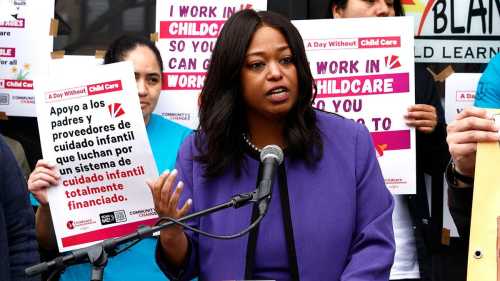
In a decisive victory that signals a sharp leftward turn for the nation's capital, Janeese Lewis George won the Democratic primary for mayor of Washington, D.C., on June 18, 2026, setting up what promises to be a contentious relationship with the Trump administration and a potential showdown over federal control of the district.
Lewis George, a 38-year-old self-described democratic socialist and third-generation Washingtonian who currently serves on the D.C. Council, defeated former Council member Kenyan McDuffie in a race that centered on how aggressively the city should resist federal intervention. In overwhelmingly Democratic Washington, the primary winner is virtually guaranteed to win the general election in November, making Lewis George the city's next mayor.
"As mayor, I will work with anyone who makes D.C. safer, but I will also stand up to Trump." — Janeese Lewis George, Mayor-Elect
Her victory comes despite explicit threats from President Trump, who last week warned that he would place the city under federal control if she won. "Maybe we'd take back Washington, run it on the federal basis," Trump stated, raising the specter of renewed federal intervention in district affairs.
Lewis George has built her campaign on a platform of fierce resistance to what she characterizes as "authoritarian infringements" on D.C.'s limited home rule. She has specifically pledged to overrule an executive order by the city's police chief that permits local law enforcement to cooperate with Immigration and Customs Enforcement agents, arguing the order "hurt the trust of our community."
The mayor-elect joins Robert White Jr., who won the Democratic primary for D.C.'s delegate to Congress, in forming what analysts predict will be the most confrontational local government the district has seen in decades. Both campaigned on promises to take a harder line than their predecessors against Trump administration policies, including the ongoing deployment of the National Guard on an open-ended mission to combat crime in the city.
Key Campaign Priorities
- Immigration: Reverse police cooperation with ICE
- Affordability: Rent support programs
- Labor Rights: End below minimum wage for tipped employees
- Utilities: Control high utility rates
- Home Rule: Resist federal intervention using legal tools
McDuffie conceded the race on Thursday, contacting Lewis George to congratulate her and acknowledging that "the voters have chosen a different path." His concession clears the way for Lewis George to focus on the general election and the inevitable conflicts with the federal government.
Lewis George's platform extends beyond federal resistance to address pressing local concerns. She has made affordability a top priority, proposing rent support programs, eliminating the sub-minimum wage for tipped workers, and implementing controls on the district's notoriously high utility rates. These policies reflect her democratic socialist principles and her understanding of the economic pressures facing working-class Washingtonians.
"We have legal tools we can use to fight back," Lewis George told The Associated Press in a pre-election interview, expressing confidence that the district can successfully challenge federal overreach in court. "And we know that when we have gone to court, we've won."
The political dynamics in Washington, D.C., carry national significance. The district's unique status—lacking full voting representation in Congress while subject to federal oversight—has long been a flashpoint in debates about democracy, representation, and federalism. Lewis George's victory represents not just a local political shift but a test case for how far a municipality can resist federal authority while remaining within constitutional bounds.
Her third-generation Washingtonian status gives her deep roots in the community and an intimate understanding of the district's transformation over decades. This personal history informs her commitment to preventing displacement and ensuring that long-time residents benefit from the city's prosperity rather than being priced out by gentrification.
As November approaches, all eyes will be on how the Trump administration responds to Lewis George's impending mayoralty. With both sides dug in and fundamental disagreements over the scope of local versus federal authority, Washington, D.C., may soon find itself at the center of a constitutional crisis that could redefine the relationship between the nation's capital and the federal government it hosts.



Comments (0)
No comments yet. Be the first to share your thoughts!
Want to join the discussion?
Please log in to post a comment.
Login NoworCreate an Account