
Ebola Outbreak DRC June 2026: Africa CDC Warns of Worst Epidemic on Record as Cases Surge Past 837 with International Response Mobilizing

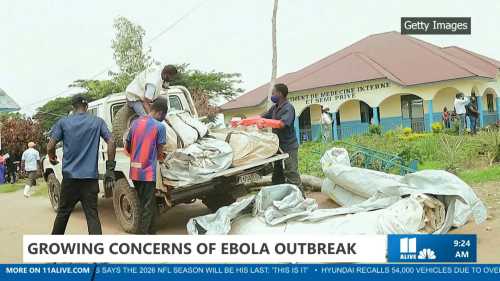
The Africa Centres for Disease Control and Prevention (Africa CDC) issued an urgent warning on June 17, 2026, that the Ebola outbreak in the Democratic Republic of Congo could become the worst in recorded history if current transmission rates continue unabated www.democracynow.org . With 837 confirmed cases and a death toll approaching 200, health officials face a race against time to contain the rapidly spreading virus africacenter.org .
Unprecedented Scale and Challenges
Dr. Jean Kaseya, Director-General of the Africa CDC, delivered a stark assessment at an emergency conference on Ebola for African leaders: "If we don't stop the outbreak very soon it will be worse than what we had in West Africa and eastern D.R.C." africacenter.org . His warning reflects the outbreak's alarming trajectory and the formidable obstacles hindering containment efforts.
The current outbreak, caused by the Bundibugyo strain of Ebola, has spread primarily in eastern DRC's conflict-affected regions, where distrust of authorities and violence have severely hampered health workers' ability to trace contacts, isolate cases, and provide treatment africacenter.org . The outbreak's epicenter lies in areas controlled by armed groups, making access to affected communities extremely dangerous for medical personnel.
Health officials warn that if transmission rates persist, the outbreak could last as long as a year and infect thousands of people africacenter.org . The worst recorded Ebola outbreak occurred between 2014 and 2016 in West Africa, killing more than 11,000 people according to the World Health Organization africacenter.org . The current DRC outbreak is rapidly approaching that scale.
G7 and International Response
Recognizing the outbreak's potential global implications, G7 leaders at their Évian Summit issued a Leaders' Call for a Coordinated Response to the Bundibugyo Ebola Outbreak www.elysee.fr . The commitment includes financial resources, medical supplies, technical expertise, and support for the region's broader health infrastructure.
The European Union and G7 nations have pledged emergency funding for contact tracing, treatment facilities, and vaccine distribution www.foxsports.com . However, health officials emphasize that money alone cannot solve the crisis without addressing the security and trust deficits that allow the virus to spread unchecked.
The World Health Organization has deployed additional epidemiologists, clinicians, and logisticians to the DRC, while neighboring countries have strengthened border screening and preparedness measures. Uganda, which shares a porous border with eastern DRC, has established treatment centers and vaccination programs in high-risk districts.
On the Ground: Healthcare Workers' Heroism
Despite the dangers, Congolese and international healthcare workers continue risking their lives to treat patients and trace contacts. They work in full personal protective equipment in sweltering tropical conditions, often facing hostility from communities that distrust government and foreign medical interventions.
"We are fighting not just the virus, but also misinformation, fear, and violence," explained one epidemiologist working in Ituri Province. "Every day is a battle to convince families to bring their sick relatives to treatment centers instead of hiding them at home, where they infect others."
The healthcare workers have established isolation units, conducted thousands of vaccinations, and traced hundreds of contacts. Yet the outbreak continues to grow, with new cases emerging in previously unaffected areas, suggesting significant undetected transmission chains.
Vaccine and Treatment Challenges
Unlike the Zaire ebolavirus strain, for which effective vaccines and monoclonal antibody treatments exist, the Bundibugyo strain has limited countermeasures. Experimental vaccines are being evaluated, but they have not yet received full regulatory approval, creating ethical and logistical dilemmas for health authorities.
Supportive care—fluid replacement, symptom management, and treatment of complications—remains the primary intervention, with survival rates around 50-60% in well-equipped treatment centers africacenter.org . In remote areas with limited medical infrastructure, mortality rates are likely much higher.
Researchers are racing to develop Bundibugyo-specific vaccines and therapeutics, but the process typically takes months to years. In the meantime, public health measures—case identification, isolation, contact tracing, and safe burials—remain the only tools available to slow transmission.
Regional and Global Implications
The outbreak's potential to spread beyond the DRC has alarmed international health authorities. Population mobility in the Great Lakes region is high, with millions crossing borders daily for trade, family visits, and employment. A single undetected case traveling to a major city like Kampala, Nairobi, or even further afield could spark new outbreak clusters.
The COVID-19 pandemic demonstrated how quickly infectious diseases can achieve global spread in our interconnected world. While Ebola transmits through direct contact with bodily fluids rather than airborne routes, making it less easily transmissible, its high fatality rate and the severe disruption it causes to healthcare systems make it a critical threat.
The Africa CDC and WHO have activated regional emergency response mechanisms, establishing coordination centers and rapid response teams that can deploy to new outbreak foci within 24-48 hours. Neighboring countries have stockpiled personal protective equipment and trained healthcare workers in Ebola case management.
The Path Forward
Containing the outbreak requires a multi-pronged strategy: enhanced surveillance to detect cases early, rapid response to isolate cases and trace contacts, community engagement to build trust and combat misinformation, adequate resources for treatment and prevention, and addressing the security challenges that allow the virus to spread in conflict zones.
The Africa CDC has called for at least $500 million in emergency funding to scale up response activities over the next six months www.democracynow.org . This includes resources for healthcare worker salaries, protective equipment, laboratory supplies, contact tracing teams, community mobilization, and logistics.
International donors have begun pledging support, but health officials warn that delayed funding costs lives. Every day of inadequate response allows the outbreak to grow exponentially, making eventual containment more difficult and expensive.
As June 19, 2026 arrives, the world watches whether the DRC Ebola outbreak will become a contained public health crisis or spiral into the catastrophic epidemic that Dr. Kaseya has warned against. The answer depends on the speed and scale of the international response, the courage of frontline healthcare workers, and the cooperation of affected communities.
Related Articles

The Architecture of Fragmentation: Navigating the Multipolar Shift in Global Governance
Aug 22, 2026
The Friction Premium: How Geopolitical Realignment is Rewiring Global Capital and Trade in 2026
Aug 22, 2026
Comments (0)
No comments yet. Be the first to share your thoughts!
Want to join the discussion?
Please log in to post a comment.
Login NoworCreate an Account