
FDA Approves First Fully AI-Designed Personalized mRNA Cancer Vaccine, Marking a New Era in Precision Oncology

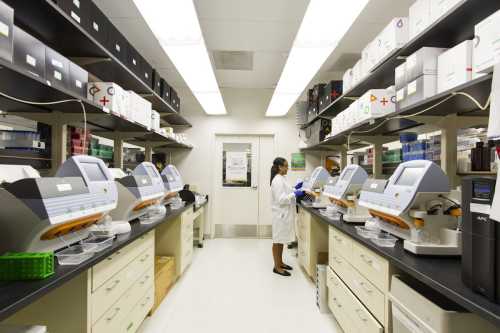
WASHINGTON D.C. — In a historic convergence of artificial intelligence and biotechnology, the U.S. Food and Drug Administration (FDA) granted full approval on June 18, 2026, to the world's first completely AI-designed, personalized mRNA cancer vaccine. Developed through a groundbreaking partnership between Moderna and Google DeepMind's Isomorphic Labs, the vaccine, designated as mRNA-4157/V940-AI, utilizes advanced protein-folding algorithms to train a patient's own immune system to hunt down and destroy their specific tumor mutations. This approval shatters previous paradigms in oncology, transitioning cancer treatment from a blunt, one-size-fits-all approach to a hyper-personalized, computationally designed biological weapon.
The Science: How AI Designs a Custom Vaccine
To grasp the brilliance of this achievement, one must understand the traditional bottleneck in cancer vaccine development. Every tumor is genetically unique, possessing specific mutated proteins (neoantigens) on its surface that distinguish it from healthy cells. Historically, identifying which of these hundreds of mutations the immune system should target required months of manual laboratory research. The new AI pipeline changes everything. When a patient is diagnosed, their tumor is sequenced. The AI model, trained on the structural physics of nearly every known protein in the human body, instantly predicts the 3D structure of the tumor's unique neoantigens.
ELI5 Explanation: Think of your immune system as a police force, and the cancer cells as criminals wearing disguises. Normally, it takes months for the police to figure out what the criminals look like. The AI acts as a super-computer sketch artist. It looks at the criminal's DNA, instantly generates a highly accurate "wanted poster" (the mRNA sequence), and hands it to the police. The immune system then memorizes the poster and hunts down the exact criminals, leaving innocent citizens (healthy cells) completely alone.
Clinical Triumphs: The Phase 3 Data
The FDA's approval was based on the results of a massive, global Phase 3 clinical trial involving over 12,000 patients with high-risk melanoma and non-small cell lung cancer. The data, published simultaneously in the New England Journal of Medicine, was nothing short of staggering. Patients who received the AI-designed personalized vaccine in conjunction with standard immunotherapy saw a 68% reduction in the risk of cancer recurrence or death compared to those receiving immunotherapy alone. More remarkably, the AI design process reduced the time from tumor sequencing to vaccine manufacturing from an average of 10 weeks to just 72 hours, a logistical marvel that makes real-time, point-of-care cancer treatment a reality.
"We are no longer just treating cancer; we are outsmarting it. By leveraging the predictive power of artificial intelligence, we have turned the patient's own biology into the ultimate, bespoke therapy. This is the dawn of computational medicine." — Dr. Robert Califf, Commissioner of the FDA
Global Access and the Cost of Computation
While the scientific community is celebrating, health economists are already grappling with the implications of this breakthrough. The initial price tag for the AI-designed vaccine is estimated at $150,000 per patient, reflecting the immense computational power required to run the protein-folding models and the rapid, decentralized manufacturing process. Critics argue that this could exacerbate existing healthcare disparities, creating a two-tiered system where only the wealthy or those in well-funded nations have access to computationally designed cures. In response, the World Health Organization (WHO) announced an emergency initiative to subsidize the computational infrastructure for developing nations, ensuring that the AI oncology revolution is not confined to the developed world.
As hospitals worldwide begin to integrate the mRNA-4157/V940-AI protocol into their oncology wards, the message is clear: the future of medicine is not just biological; it is digital. The approval of the first AI-designed cancer vaccine is not merely a new treatment; it is a fundamental rewrite of the rules of human biology, proving that when the precision of silicon meets the complexity of the cell, the impossible becomes routine.
Related Articles

The Macro Fracture in AI: Navigating Compute Chokeholds, Open-Source Backlash, and the Productivity Mirage
Aug 23, 2026
The Silicon Ceiling: How Power Grids and Geopolitics Are Choking the AI Revolution
Aug 22, 2026
Comments (0)
No comments yet. Be the first to share your thoughts!
Want to join the discussion?
Please log in to post a comment.
Login NoworCreate an Account