
Figure AI and Boston Dynamics Launch General-Purpose Humanoid Robots for 24/7 Commercial Manufacturing

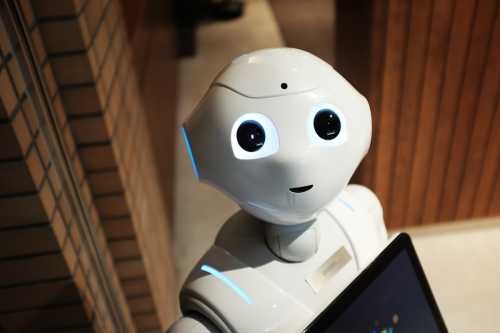
REDWOOD CITY, Calif. — The science fiction dream of the general-purpose humanoid robot has officially crossed into commercial reality. On June 18, 2026, Figure AI, in a strategic manufacturing partnership with Boston Dynamics, announced the launch of the "Figure-Atlas Gen-2," a bipedal humanoid robot capable of performing unassisted, continuous 24/7 physical labor in complex manufacturing environments. Unlike previous iterations of robotics that were hard-coded for repetitive, single-task movements, the Gen-2 is powered by a foundational multimodal AI model, allowing it to understand natural language instructions, adapt to unpredictable physical environments, and seamlessly transition between entirely different tasks on the factory floor.
The Brain and the Brawn: A Technological Marvel
The Figure-Atlas Gen-2 represents the perfect synthesis of advanced mechanical engineering and cutting-edge artificial intelligence. Physically, the robot stands at 5 feet 10 inches, weighs 140 pounds, and possesses 42 degrees of freedom, mimicking the exact range of motion of the human body. Its hands, featuring high-resolution tactile sensors, can manipulate objects with a delicacy that allows it to thread a needle or assemble a microchip, yet possess the grip strength to lift 60-pound crates. However, the true breakthrough lies in its "nervous system." The robot is equipped with a localized, high-inference AI chip that processes visual and spatial data in real-time, allowing it to navigate a chaotic factory floor, avoid human workers, and recover from physical stumbles without dropping its payload.
ELI5 Explanation: Old robots were like calculators: you had to tell them exactly what button to press, over and over again, and if you moved the calculator, it would break. The new humanoid robots are like highly trained apprentices. You can point to a messy workbench and say, "Clean this up and put the red tools in the blue bin." The robot looks at the mess, figures out what a red tool is, understands what a blue bin is, and does the job, even if the tools are in different places than yesterday.
The Economic Shockwave: Labor and Logistics
The deployment of the Gen-2 is already reshaping the global supply chain. BMW, which served as the primary beta-testing site for the robot, announced that the integration of 500 Figure-Atlas units into their Spartanburg, South Carolina plant has increased assembly line throughput by 34% while reducing workplace ergonomic injuries to absolute zero. The robots handle the most physically demanding, repetitive, and dangerous tasks, such as lifting heavy chassis components and working in high-heat painting booths. At a leasing cost of $4,000 per month per unit—cheaper than the fully loaded cost of a human worker in many developed nations—the economic incentive for manufacturers to adopt humanoid labor is overwhelming.
"We are not replacing humans; we are elevating them. By offloading the dangerous, dull, and physically destructive tasks to the Gen-2, our human workforce is transitioning into roles as robot supervisors, quality assurance specialists, and system architects. This is the industrial revolution of the 21st century." — Marc Raibert, Founder of Boston Dynamics
The Societal Debate: Displacement and UBI
Despite the corporate optimism, the launch has ignited fierce debate among labor unions and economists. The AFL-CIO issued a stark warning regarding the rapid deployment of general-purpose robotics, arguing that the speed of this transition outpaces the ability of the workforce to retrain. "We are looking at the potential displacement of millions of blue-collar jobs in logistics, manufacturing, and warehousing within the next five years," stated a spokesperson for the International Brotherhood of Teamsters. In response, policymakers in Washington are accelerating discussions around a "Robotics Dividend" or an expanded Universal Basic Income (UBI) framework, proposing that a small tax on the computational output of autonomous labor be used to fund the retraining and social safety nets for displaced workers.
As the first fleet of Figure-Atlas Gen-2 robots begins their endless, tireless shifts on factory floors across the globe, humanity stands at a profound crossroads. The physical limitations of the human body have been bypassed by silicon and steel. The challenge of the coming decade will not be technological, but deeply social: ensuring that the immense wealth generated by this new, tireless workforce is distributed in a way that preserves human dignity and purpose in an age of machines.
Related Articles
The Macro Fracture in AI: Navigating Compute Chokeholds, Open-Source Backlash, and the Productivity Mirage
Aug 23, 2026
The Silicon Ceiling: How Power Grids and Geopolitics Are Choking the AI Revolution
Aug 22, 2026
Comments (0)
No comments yet. Be the first to share your thoughts!
Want to join the discussion?
Please log in to post a comment.
Login NoworCreate an Account