
Global Trade Outlook 2026: 10 Trends Redefining International Commerce

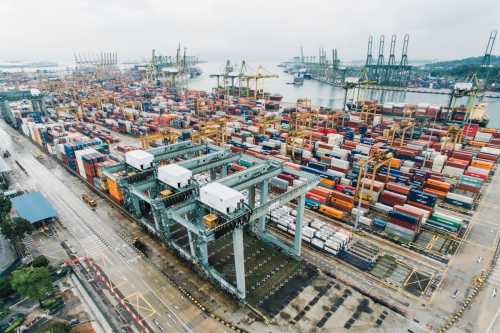
Understanding the Basics: What is Global Trade and Why is it Changing?
Global trade is simply the exchange of goods and services across international borders. It is the reason you can eat bananas in the winter, drive a car with parts from ten different countries, and use a smartphone designed in California and assembled in China. For the last thirty years, the golden rule of global trade was "efficiency." Companies would find the absolute cheapest place to make a product and ship it to the rest of the world. This made everything incredibly cheap, but it also made the world very fragile. As we saw during the pandemic and recent wars, if one country stops producing, the whole world runs out of that product. Now, in 2026, the rules of the game have fundamentally changed. Countries and companies are no longer just looking for the cheapest option; they are looking for the safest, most reliable option. This shift from "just-in-time" efficiency to "just-in-case" resilience is redefining how the world does business, creating new winners, new losers, and entirely new supply chains.
The Big News: UNCTAD and WTO Outline the 10 Trends Shaping 2026
According to the latest Global Trade Update from UN Trade and Development (UNCTAD) and the World Trade Organization (WTO), ten major trends are currently redefining global trade in 2026 www.facebook.com . The WTO's March 2026 outlook projects a modest recovery in global trade volumes, with goods trade growth expected to rebound after a sluggish 2025 www.wto.org . However, the composition and direction of this trade are shifting dramatically. The era of hyper-globalization, where the world acted as a single, borderless market, is being replaced by "geoeconomic fragmentation." Trade policy choices in 2026 could either reinforce this fragmentation or support a more inclusive, resilient system www.facebook.com . The trends include the rapid rise of digital trade, the "friend-shoring" of critical supply chains, the explosion of green technology exports, and the increasing use of AI and automation in logistics. These trends are not just academic concepts; they are actively reshaping the global economy, determining which countries will prosper and which will be left behind in the new multipolar world order.
Official News Source Reference
"UN Trade and Development's latest Global Trade Update highlights how trade policy choices could either reinforce fragmentation or support more resilient global commerce."
The Deep Dive: Friend-Shoring and the Green Trade Boom
Two of the most significant trends dominating 2026 are "friend-shoring" and the green trade boom. Friend-shoring is the practice of moving your supply chains to countries that are your political and military allies. For example, the United States and Europe are actively trying to reduce their dependence on China for critical minerals, pharmaceuticals, and advanced microchips. They are moving these industries to "friendly" nations like Mexico, India, Vietnam, and Poland. This makes the supply chain more secure from geopolitical shocks, but it also makes products more expensive. Simultaneously, there is a massive boom in "green trade." As countries rush to meet their climate change targets under the Paris Agreement, the trade in environmental goods—solar panels, wind turbines, EVs, and hydrogen technology—is growing at three times the rate of traditional goods trade. Countries that have invested heavily in green tech, like China and the nations of the EU, are reaping the rewards. However, this has led to tensions, as developing nations argue that "carbon border taxes" proposed by the West are just a new form of protectionism designed to keep their manufactured goods out of rich markets.
The Digital Revolution: Services Trade and AI
While the trade of physical goods is growing slowly, the trade of services and digital products is exploding. In 2026, it is estimated that over 25% of all global trade value is generated by digitally delivered services—software, streaming, financial services, consulting, and AI models 领英企业服务 . Cross-border e-commerce has matured, allowing small and medium-sized enterprises (SMEs) in developing countries to sell directly to consumers in the US and Europe through platforms like Amazon, Alibaba, and Shopify. This "democratization of trade" is creating a new global middle class of digital entrepreneurs. Furthermore, Artificial Intelligence is revolutionizing the logistics of physical trade. AI algorithms are now used to predict port congestion, optimize shipping routes to save fuel, and automate customs documentation, reducing the time and cost of moving goods across borders. The WTO notes that services imports, particularly in transport and travel, have risen significantly, indicating a full recovery and expansion of the global services sector www.oecd.org . The future of trade is not just in massive container ships; it is in fiber-optic cables and cloud servers.
Future Outlook: Navigating Fragmentation and Building Resilience
The outlook for global trade in the remainder of 2026 and beyond is a delicate balancing act. The world is clearly fragmenting into competing economic blocs: a US-centric bloc, a China-centric bloc, and a "non-aligned" bloc of developing nations in the Global South that tries to trade with everyone. This fragmentation is inefficient and inflationary, meaning that the era of ultra-cheap goods is likely over. However, it also presents opportunities. Countries like India, Mexico, and Southeast Asian nations are benefiting immensely as companies diversify their supply chains away from China. For developing nations, the challenge is to upgrade their infrastructure, sign strategic trade agreements, and invest in digital literacy to capture these new flows of investment and trade. The 10 trends identified by UNCTAD and WTO serve as a warning and a roadmap. Trade policy choices made in 2026 will determine whether the global economy fractures into warring economic fortresses or evolves into a more resilient, diversified, and sustainable network of commerce that can withstand the shocks of the 21st century.
Related Articles
The Multipolar Fracture: Navigating Defense Realignment, Institutional Arbitrage, and Tactical Instability
Aug 23, 2026
The Architecture of Fragmentation: Navigating the Multipolar Shift in Global Governance
Aug 22, 2026
Comments (0)
No comments yet. Be the first to share your thoughts!
Want to join the discussion?
Please log in to post a comment.
Login NoworCreate an Account