
Gold Poised for Steepest Weekly Decline in Six Weeks Amid Escalating Middle East Tensions and Hawkish Fed Signals

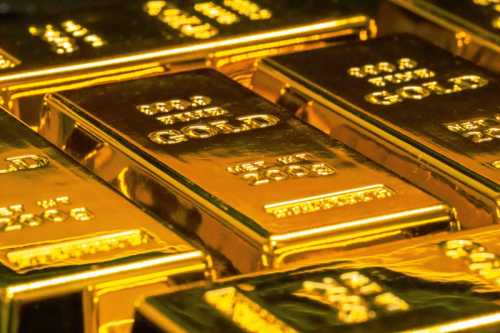
LONDON — Precious metals markets experienced a pronounced precipitous shift on Friday, with gold rebounding marginally but remaining on track for its most substantial weekly contraction in six weeks. This market volatility is primarily driven by renewed geopolitical friction between the United States and Iran, which has concurrently elevated crude oil valuations and intensified inflationary apprehensions.
Spot gold appreciated by 0.5 percent to settle at $3,988.57 per ounce by 0103 GMT, having previously tested its lowest valuation since early July. Concurrently, U.S. gold futures for August delivery maintained a steady equilibrium at $3,992.70. The broader macroeconomic narrative suggests that non-yielding assets like gold inherently struggle in elevated interest rate environments, as capital allocators increasingly favor yield-bearing instruments. Consequently, the precious metal has depreciated by over 3 percent for the week thus far.
Monetary Policy Implications
The geopolitical conflagration has injected profound uncertainty into global monetary policy trajectories. Dallas Federal Reserve President Lorie Logan recently emerged as the first among Fed Chairman Kevin Warsh’s newly appointed colleagues to publicly advocate for an interest rate augmentation. Furthermore, Fed Vice Chair Philip Jefferson indicated a willingness to endorse rate hikes absent immediate amelioration in inflation metrics.
Kansas City Fed President Jeff Schmid reinforced this hawkish stance, noting that inflation remains persistently entrenched across a comprehensive spectrum of goods and services. This monetary tightening expectation is corroborated by resilient domestic economic indicators, including a recent contraction in unemployment benefit filings and a marginal expansion in June retail sales, despite the mitigating effect of reduced gasoline expenditures at service stations.
Commodities and Global Interdependence
Crude oil valuations have surged approximately 12 percent this week, directly correlating with the escalating U.S.-Iran hostilities that have exacerbated global energy supply anxieties. In adjacent commodity markets, spot silver accrued a modest 0.2 percent gain to $55.60 per ounce, while platinum receded by 0.1 percent to $1,616.10, and palladium advanced 0.4 percent to $1,254.62. Notably, all three alternative precious metals are similarly positioned for a weekly deficit.
On the international front, economic analysts and governmental advisors posit that China possesses the capacity to stabilize its domestic economic expansion this year by accelerating pre-budgeted national infrastructure initiatives. This strategic maneuvering significantly diminishes the probability of expansive, large-scale fiscal stimulus measures from Beijing, thereby influencing global commodity demand projections.
Meanwhile, in a distinct regulatory development, the United Kingdom announced targeted sanctions against eleven individuals and entities on Thursday, aiming to dismantle illicit gold and financial networks allegedly perpetuating the conflict in Sudan, as detailed in the original report.
As markets navigate this intricate matrix of geopolitical risk and monetary policy recalibration, investors remain acutely attuned to forthcoming inflation data and central bank communications, which will ultimately dictate the near-term trajectory of precious metals.
Related Articles
The Macro Fracture: Navigating AI Valuations, Bond Volatility, and the Emerging Market Debt Trap
Aug 23, 2026
The Market’s Fragile Equilibrium: Navigating Valuation Resets, Private Credit Risks, and Macro Fragmentation
Aug 22, 2026
Comments (0)
No comments yet. Be the first to share your thoughts!
Want to join the discussion?
Please log in to post a comment.
Login NoworCreate an Account