
Historic Breakthrough: Trump Signs Iran Peace Memorandum at Versailles, Ending Months of Conflict

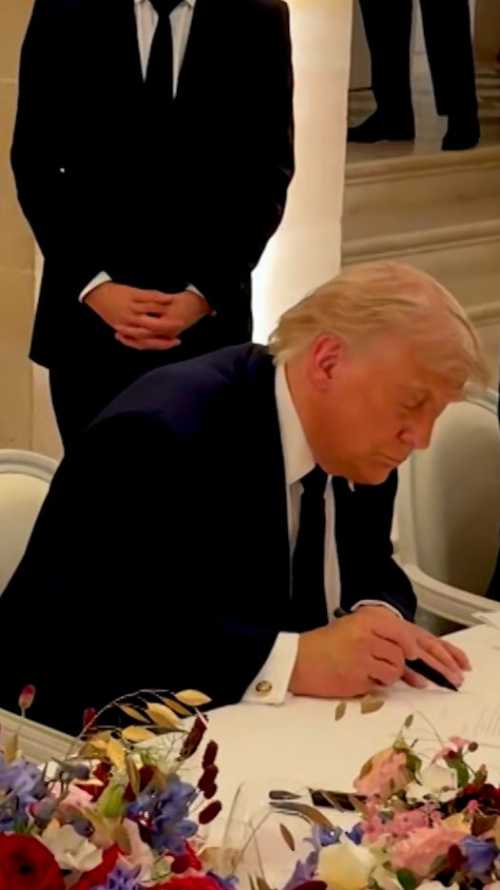
In a dramatic diplomatic development that marks a potential turning point in Middle East geopolitics, President Donald Trump signed a memorandum of understanding with Iran on June 18, 2026, at the Palace of Versailles in France, bringing an official end to the conflict that began with U.S.-Israeli strikes on February 28, 2026.
The signing ceremony, hosted by French President Emmanuel Macron during a G7 summit dinner, represents one of the most significant foreign policy achievements of Trump's presidency. The 14-point agreement, which Iranian President Masoud Pezeshkian signed separately in Tehran, establishes an immediate ceasefire across all fronts including Lebanon, lifts the U.S. blockade of Iran, waives American sanctions, unfreezes Iranian assets, and creates a $300 billion investment fund dedicated to rebuilding Iran's infrastructure.
Key Agreement Points:
- Immediate cessation of hostilities on all fronts
- Full resumption of maritime traffic through Strait of Hormuz
- Lifting of U.S. blockade and sanctions
- Unfreezing of Iranian assets
- $300 billion reconstruction investment fund
Iran's lead negotiator Mohammad-Bagher Ghalibaf declared the agreement a resounding victory for diplomacy over military action, stating, "Everything we sought to achieve through military action, we obtained several times over through negotiation; it was not even comparable." Pezeshkian shared the memorandum on social media, calling it a "historical document and a message from a powerful Iran."
The economic implications were immediate and dramatic. U.S. gasoline prices fell below $4 per gallon for the first time since March, though they remain 25% higher than the previous year. Oil markets responded positively to news that approximately 20% of global maritime petroleum traffic could resume normal operations through the strategically critical Strait of Hormuz.
However, the agreement faces significant political headwinds on Capitol Hill. Republican Senator Bill Cassidy condemned the deal as the "worst foreign policy blunder in decades," reflecting deep partisan divisions over the terms. The memorandum establishes a 60-day framework for negotiating more permanent arrangements, particularly regarding Iran's enriched uranium stockpile—a contentious issue that could determine whether peace holds or conflict resumes.
Critical Challenge Ahead: President Trump made clear that if Iran does not follow through with a substantial agreement involving enriched uranium within the 60-day period, the United States could return to active warfare.
The agreement comes despite ongoing controversies, including Trump's signal that no one will face consequences for U.S. cruise missile strikes that killed more than 175 people, mostly schoolgirls, at a school in Minab on the first day of attacks. When questioned about accountability, Trump deflected, saying, "If it was a fault—and as you know, that's under investigation—it's such a strange question to be asked at this state, talking about a long time ago, but nobody did that on purpose."
Vice President JD Vance defended the agreement in a White House briefing, declaring, "The President's Peace Plan in Iran is already bearing real fruits for the American people." The administration points to immediate economic benefits and the potential for broader regional stability as justification for the controversial terms.
The memorandum also includes provisions allowing Iran to stake claims in ship passage through the Strait of Hormuz and charge transit fees—a significant shift from pre-war arrangements. This provision opens new revenue streams for Iran while potentially affecting global shipping costs.
International reactions have been mixed. While European allies at the G7 summit expressed cautious optimism about the de-escalation, regional partners including Israel have raised concerns about the long-term implications of lifting sanctions and providing reconstruction funds to Iran. The agreement explicitly calls for an end to hostilities "on all fronts," including Lebanon, though Israeli drone strikes continued in southern Lebanon even after the deal's announcement.
As the 60-day clock begins ticking, the international community watches closely to see whether this memorandum represents a genuine path to lasting peace or merely a temporary pause in a conflict that has claimed thousands of lives and reshaped the Middle East geopolitical landscape.



Comments (0)
No comments yet. Be the first to share your thoughts!
Want to join the discussion?
Please log in to post a comment.
Login NoworCreate an Account