
House Passes Iran War Powers Resolution in Rare Bipartisan Rebuke to Trump

Congress Asserts Constitutional Authority Over War
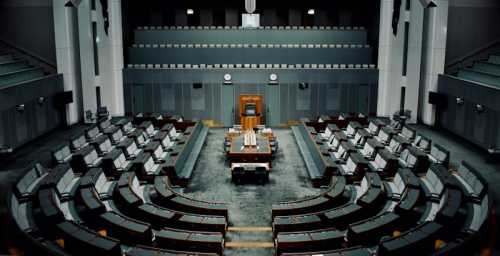
In a rare and significant display of bipartisan defiance, the United States House of Representatives has passed a War Powers resolution aimed at reining in President Trump's military actions regarding Iran www.aljazeera.com . The legislation, which explicitly prohibits the use of federal funds for offensive military operations against Iran without a formal declaration of war from Congress, passed with a comfortable margin, aided by the defection of four Republican representatives who broke ranks with their party leadership. This vote represents one of the most direct congressional challenges to a president's wartime authority in modern American history, highlighting the deepening fractures within the GOP over the scope and objectives of the conflict in the Middle East.
The passage of the resolution is rooted in the War Powers Act of 1973, a landmark law designed to check the executive branch's ability to commit U.S. forces to armed conflict without the consent of Congress. Supporters of the resolution argue that the administration has repeatedly bypassed constitutional requirements by relying on outdated, decades-old authorizations for the use of military force to justify its current operations. They contend that the American public was never given a clear rationale for the escalation in Iran, nor was Congress provided with a coherent endgame strategy, making this legislative intervention not just a political statement, but a constitutional necessity.
However, the practical impact of the House's vote remains highly uncertain. While the resolution now moves to the Senate, where it faces a more favorable but still challenging path, its ultimate fate will likely be decided by the president's veto pen. President Trump has already issued a fierce public condemnation of the legislation, labeling it a dangerous interference with his duties as Commander-in-Chief and a signal of weakness to American adversaries. If the resolution reaches his desk, a presidential veto is virtually guaranteed. To override that veto, both the House and the Senate would need to muster a two-thirds supermajority, a mathematical hurdle that the four Republican defectors in the House suggest is not entirely insurmountable, but remains highly improbable.
The political fallout from this vote is already being felt on Capitol Hill. The four Republicans who voted for the resolution are facing immediate backlash from their party's base and have been branded as traitors by prominent conservative media figures. Primary challenges are already being organized against them, funded by dark money groups aligned with the administration. This intense pressure serves as a stark warning to other members of Congress who might be considering similar acts of defiance, illustrating the high political cost of crossing the president on matters of national security, even when constitutional principles are at stake.
Despite the likely veto, the passage of the War Powers resolution in the House is a watershed moment for the legislative branch. It demonstrates that a critical mass of lawmakers, spanning both sides of the aisle, is willing to take a stand to reclaim Congress's Article I powers. As the debate moves to the Senate and the broader public arena, the fundamental question of who controls the decision to go to war will remain at the forefront of American political discourse, forcing voters to confront the delicate balance between executive agility in times of crisis and the democratic necessity of legislative oversight.
Related Articles
The Institutional Fault Line: How Judicial Overreach and Trade Wars Are Reshaping U.S. Markets
Aug 23, 2026
The Fractured Consensus: How Trade Volatility and Institutional Strain Are Rewiring U.S. Macroeconomics
Aug 22, 2026
Comments (0)
No comments yet. Be the first to share your thoughts!
Want to join the discussion?
Please log in to post a comment.
Login NoworCreate an Account