
India and Japan Inaugurate $100B "Indo-Pacific Semiconductor and Supply Chain Corridor" in Chennai

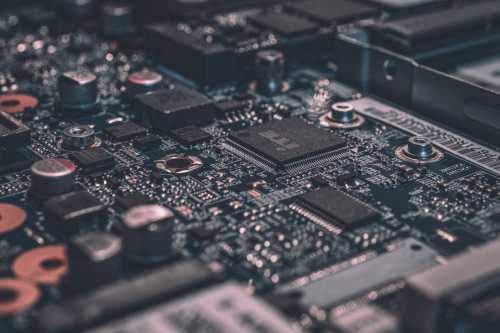
Forging the Democratic Alternative to Tech Hegemony
In a landmark event that significantly redraws the geopolitical map of the global technology sector, India and Japan have officially inaugurated the "Indo-Pacific Semiconductor and Supply Chain Corridor," a massive $100 billion bilateral investment initiative anchored in the southern Indian city of Chennai. Announced on June 19, 2026, by Indian Prime Minister Narendra Modi and Japanese Prime Minister Fumio Kishida, the corridor is designed to create a secure, end-to-end ecosystem for the design, manufacturing, and packaging of advanced semiconductors, entirely insulated from the coercive economic practices of the People's Republic of China. As reported by The Hindu, this mega-project represents the most tangible economic outcome of the Quadrilateral Security Dialogue (Quad) synergy, merging Japan’s mastery in precision materials and lithography with India’s vast engineering talent pool and strategic geographic positioning.
The physical footprint of the corridor is staggering. The initial phase includes the construction of three 2-nanometer logic fabrication plants (fabs) by a joint venture between Tata Electronics and Rapidus, alongside a massive advanced packaging facility dedicated to AI accelerator chips. Beyond the fabs, the corridor encompasses a "Critical Minerals Processing Zone" where rare earth elements, gallium, and germanium—currently monopolized by Chinese supply chains—will be refined using Japanese metallurgical expertise. The initiative is heavily subsidized by both governments, leveraging India’s Production Linked Incentive (PLI) schemes and Japan’s Economic Security Promotion Fund. Furthermore, the corridor includes the construction of a dedicated, high-capacity submarine cable landing station in Chennai, directly linking the Indian tech hub to data centers in Tokyo and Silicon Valley, ensuring secure, low-latency data transfer for the AI models trained on the very chips produced in the facility.
Geopolitical Repercussions and the "China Plus One" Reality
The inauguration of the Indo-Pacific Corridor sends a clear strategic signal to Beijing: the democratic world is successfully executing its "China Plus One" decoupling strategy. For decades, the global tech industry has been dangerously reliant on a single node for advanced manufacturing and critical materials. By establishing a redundant, highly secure supply chain in the Indo-Pacific, India and Japan are de-risking the global economy against potential blockades or export embargoes in the Taiwan Strait or the South China Sea. The Chinese Ministry of Commerce has issued a stern warning, accusing the two nations of "forming exclusionary cliques" and "disrupting the global industrial division of labor." However, market analysts note that the sheer scale of the investment and the complementary nature of the Indian and Japanese economies make this corridor a formidable, long-term competitor to East Asian tech dominance.
The socio-economic impact on the region is expected to be transformative. The corridor is projected to create over 500,000 direct, high-skilled jobs and millions more in ancillary industries over the next decade. To support this, the agreement includes a "Talent Mobility Accord," which streamlines visa processes for Japanese engineers and researchers working in India, and establishes joint university research centers focused on quantum computing and materials science. As the first wafers begin to roll out of the Chennai fabs in late 2027, the Indo-Pacific Semiconductor Corridor will stand not just as a feat of industrial engineering, but as the physical manifestation of a new, multipolar technological order where democratic values and supply chain security are inextricably linked.
Related Articles

The Multipolar Fracture: Navigating Defense Realignment, Institutional Arbitrage, and Tactical Instability
Aug 23, 2026
The Architecture of Fragmentation: Navigating the Multipolar Shift in Global Governance
Aug 22, 2026
Comments (0)
No comments yet. Be the first to share your thoughts!
Want to join the discussion?
Please log in to post a comment.
Login NoworCreate an Account