
India's 2026 Political Landscape: Delimitation, Women's Reservation, and the Battle for the Constitution

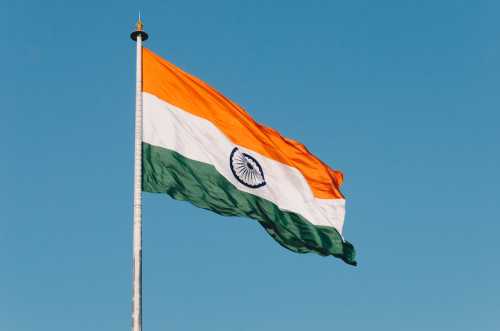
Imagine a massive, incredibly complex board game with a billion players. The rules of the game are written in a giant rulebook called the Constitution. Every few years, the "Referee Committee" (the Election Commission) redraws the boundaries of the squares on the board (the constituencies) to make sure each square has the same number of players. This is called "delimitation." In 2026, India is facing a massive political earthquake because the Referee Committee is about to redraw the squares based on the new, 2026 population data. The states in the North, which have huge populations, will get many more squares. The states in the South, which have successfully controlled their population, will lose their relative power. This is causing a massive political crisis between the North and the South. At the same time, the government has implemented the "Women's Reservation Act," reserving 33 percent of all squares for female players. Let us explore how these two massive political shifts are colliding, how the ruling BJP and the opposition INDIA bloc are maneuvering, and what this means for the future of the world's largest democracy.
The Delimitation Freeze: The North-South Political Fault Line
To understand the crisis, we must look at the history of the delimitation freeze. In the 1970s, the Indian government realized that if they kept redrawing the constituencies based on population, the states that were successfully family planning (like Tamil Nadu, Kerala, and Andhra Pradesh in the South) would lose their seats in Parliament, while the states that were not controlling their population (like Uttar Pradesh and Bihar in the North) would gain massive power. This would punish the Southern states for being responsible and progressive. So, the government "froze" the number of seats each state got, based on the 1971 population. This freeze was extended several times, most recently until 2026.
Now, in 2026, the freeze is expiring. The ruling BJP, which is dominant in the Hindi-speaking North, is pushing for delimitation based on the current population. They argue that democracy requires "one person, one vote." If a constituency in Uttar Pradesh has 3 million people, and a constituency in Kerala has 1 million people, the vote of a person in Kerala is effectively worth three times the vote of a person in UP. This is undemocratic. But the Southern states are furious. They argue that they have sacrificed their economic growth to control their population, and now the North is going to reward the Northern states for failing to control theirs. They are demanding that the financial devolution (the sharing of tax money) and the parliamentary seats be based on a formula that rewards progress, not just raw population numbers. This North-South divide is the most dangerous political fault line in India today, threatening the very unity of the federation.
The Women's Reservation Act: A Social Revolution in Parliament
Breaking the Glass Ceiling
While the delimitation crisis threatens to tear the country apart, the implementation of the Women's Reservation Act (Nari Shakti Vandan Adhiniyam) is a beacon of progressive hope. Passed in late 2023, the Act mandates that 33 percent of all seats in the Lok Sabha (Lower House) and all State Legislative Assemblies must be reserved for women. In June 2026, the Election Commission is finalizing the rotation policy for these reserved seats. This means that in the next election, one-third of the constituencies will be exclusively for female candidates.
This is not just a symbolic gesture; it is a massive structural shift in Indian politics. For seventy years, the Parliament has been an old boys' club. The political parties were run by dynastic male leaders who handed tickets to their sons and nephews. The Women's Reservation Act forces the parties to find, fund, and field female candidates. It is bringing millions of women into the political process, from the local panchayats to the national Parliament. The political parties are scrambling to create "women's wings" and develop policies that specifically address the needs of female voters—safety, equal pay, healthcare, and education. The opposition INDIA bloc is using this to attack the BJP, arguing that the BJP's female MPs are just "proxy candidates" (wives and daughters of male leaders), while the BJP is arguing that they are the true champions of women's empowerment. The battle for the female vote will decide the 2029 general election.
The implementation of the Women's Reservation Act is transforming Indian democracy. 33% of seats will be reserved for women, ensuring that half the population has a direct voice in shaping the nation's future. #NariShakti #IndianDemocracy
— BJP (@BJP4India) June 28, 2026
The BJP's Strategy: Consolidation and the 'One Nation' Narrative
The Hindutva and Development Double Engine
The ruling Bharatiya Janata Party (BJP), led by Prime Minister Narendra Modi and the organizational genius of the RSS, is navigating these massive shifts with a clear, disciplined strategy. They are pushing the "One Nation, One Election" idea, arguing that holding simultaneous national and state elections will save money and ensure continuous governance. They are using the delimitation exercise to subtly reinforce the idea of a unified, centralized Indian identity, downplaying the regional identities of the Southern states.
At the same time, they are aggressively implementing the Women's Reservation Act, taking credit for the social revolution. They are combining this with a massive "labharthi" (beneficiary) welfare strategy. They have created millions of female beneficiaries of government schemes—free gas cylinders, toilet connections, direct cash transfers, and free rations. These women are fiercely loyal to the BJP because the party directly delivered these benefits to them, bypassing the corrupt local middlemen. The BJP's political machine is a marvel of modern organization, combining the ideological fervor of Hindutva with the cold, hard, data-driven delivery of welfare. They are building a coalition of the poor, the women, and the nationalist middle class that is incredibly difficult for the opposition to break.
The Opposition's Dilemma: The INDIA Bloc's Survival
The Challenge of Coalition Management
The opposition INDIA (Indian National Developmental Inclusive Alliance) bloc is a massive, fragile coalition of over 30 parties, ranging from the secular, center-left Congress to the socialist, caste-based parties of the North and the regional, linguistic parties of the South. Their only unifying principle is that they hate the BJP. They have no common economic ideology, no common social vision, and no single leadership face.
In 2026, the INDIA bloc is facing a severe crisis over the delimitation issue. The Southern parties (like the DMK in Tamil Nadu and the TMC in West Bengal) are threatening to leave the alliance if the Congress (which is dominant in the North) agrees to the BJP's delimitation formula. The Northern parties (like the SP in UP and the RJD in Bihar) are fighting with each other over seat-sharing for the upcoming state elections. The Congress is trying to position itself as the "glue" that holds the country together, advocating for a "National Population Fund" that compensates the Southern states for their lost seats. But the internal squabbling, the ego clashes of the regional satraps, and the lack of a coherent national narrative are making them look incompetent and chaotic compared to the disciplined BJP. The opposition's survival depends on whether they can transform from a negative alliance (against the BJP) into a positive, governing alternative with a unified vision for India's future.
The Future: A Transformed Democracy
The World Watches the Giant
The political shifts in India in 2026 are not just local issues; they are of global consequence. India is now the most populous country on Earth and the fastest-growing major economy. The way it manages its delimitation crisis will determine whether it remains a unified, federal democracy or fractures into regional, linguistic fiefdoms. The way it implements the Women's Reservation Act will determine whether it can harness the economic and social power of its 700 million women to become a true superpower.
The world is watching closely. The US, the EU, and the Quad partners need a strong, stable, and democratic India to counter the rise of China in the Indo-Pacific. If India is paralyzed by North-South political warfare, it will not be able to project power or secure the Indian Ocean. If it successfully navigates these constitutional shifts, it will emerge as the definitive "Global South" leader, a model of how a massive, diverse, and poor civilization can modernize and democratize simultaneously. The board game is being redesigned, the pieces are moving, and the rules are being rewritten. The next move will define the destiny of a billion people and the balance of power in the 21st century. Read the full political analysis on The Hindu.
Related Articles
The Institutional Fault Line: How Judicial Overreach and Trade Wars Are Reshaping U.S. Markets
Aug 23, 2026
The Fractured Consensus: How Trade Volatility and Institutional Strain Are Rewiring U.S. Macroeconomics
Aug 22, 2026
Comments (0)
No comments yet. Be the first to share your thoughts!
Want to join the discussion?
Please log in to post a comment.
Login NoworCreate an Account