
Kevin Warsh's Hawkish Fed Debut: Rate Hold Shocks Markets as Dot Plot Signals Hike Ahead

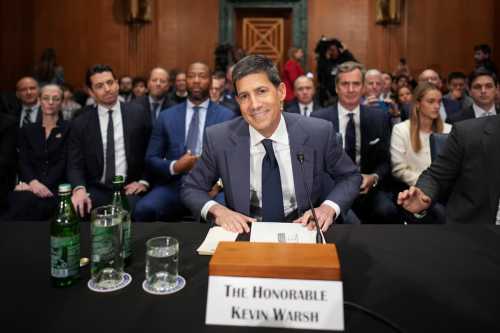
In a watershed moment for American monetary policy, Federal Reserve Chairman Kevin Warsh presided over his first Federal Open Market Committee meeting on June 17, 2026, delivering a decision that sent shockwaves through Wall Street and fundamentally altered investor expectations for the remainder of the year www.cnbc.com .
The unanimous 12-0 vote to maintain the federal funds rate at its current range of 3.50% to 3.75% marked the fourth consecutive meeting without a rate change [[83]]. However, the seemingly routine decision masked a dramatic shift in the central bank's forward guidance that caught markets off guard and triggered immediate volatility across asset classes.
The Dot Plot Bombshell
While the rate hold itself was widely anticipated, the real story emerged in the Summary of Economic Projections, commonly known as the "dot plot," which revealed a startling reversal in policymakers' expectations [[154]]. The median projection for the federal funds rate at the end of 2026 jumped to 3.8%, up significantly from the 3.4% projected at the March meeting [[158]].
This seemingly modest 0.4 percentage point adjustment represents a fundamental paradigm shift: whereas Fed officials previously anticipated one quarter-point rate cut by year-end, the new projections imply at least one rate increase before 2026 concludes [[156]]. Nine of the 18 FOMC participants now project higher rates by December, while only nine expect rates to remain unchanged or decline [[156]].
"The dot plot turned decisively hawkish," explained Sarah Chen, chief economist at Global Markets Research. "This isn't just a tweak—it's a complete reversal of the easing cycle markets had been pricing in since early 2026."
Warsh's First Press Conference: Firm on Inflation
Chairman Warsh, who succeeded Jerome Powell earlier this year, used his inaugural press conference to establish his credentials as an inflation hawk, emphasizing the Fed's unwavering commitment to restoring price stability [[147]]. Speaking with the confidence of someone who had previously served on the Fed's Board of Governors during the 2008 financial crisis, Warsh made clear that the central bank would not be rushed into premature rate cuts.
"We will do what is necessary to bring inflation back to our 2% target," Warsh stated firmly, his tone contrasting with the more dovish rhetoric that characterized the late Powell era [[148]]. The new chairman announced the formation of several task forces aimed at improving monetary policy transmission and enhancing the Fed's analytical capabilities [[107]].
Warsh's emphasis on "price stability" over employment concerns marked a notable shift in rhetorical emphasis, though he carefully noted that the Fed remains committed to its dual mandate of maximum employment and stable prices [[147]].
Market Reaction: Stocks Tumble, Yields Surge
The equity market's response was swift and severe. The S&P 500 plunged 91.25 points, or 1.21%, to close at 7,420.10 on June 17, erasing gains from earlier in the session [[89]]. The technology-heavy Nasdaq Composite fared worse, dropping 354.69 points, or 1.34%, to finish at 26,021.66 [[30]].
The Dow Jones Industrial Average declined 507.12 points, or 0.97%, settling at 51,492.55 [[100]]. Sixteen of the Dow's 30 component stocks ended in negative territory, with financials and technology leading the decline [[96]].
Perhaps more significantly, the bond market experienced dramatic repricing. The 2-year Treasury yield, which is particularly sensitive to Federal Reserve policy expectations, spiked to its highest level since March before settling at 4.15% [[131]]. The benchmark 10-year Treasury yield climbed 13 basis points to 4.59%, its highest level since May 2025 [[133]].
"The bond market is now pricing in a full 25 basis point rate hike by October," noted Michael Torres, fixed income strategist at Capital Advisors. "That's a dramatic shift from the cut expectations we had just 48 hours ago."
Economic Projections: Growth Remains Resilient
Beyond the interest rate projections, the Fed's economic forecasts revealed continued confidence in the American economy's underlying strength. The median projection for real GDP growth in 2026 stands at 2.4%, only modestly below the 2.8% projected in March [[153]].
The unemployment rate is expected to tick up slightly to 4.4% by year-end, from the current 4.0%, reflecting a gradual cooling in the labor market without tipping into recession territory [[153]]. This "soft landing" scenario remains the Fed's baseline case, though Warsh acknowledged that risks remain on both sides.
Inflation projections, however, tell a more concerning story. Both headline and core Personal Consumption Expenditures (PCE) inflation are projected at 2.7% for 2026, well above the Fed's 2% target [[153]]. This persistent inflation pressure forms the primary justification for the more hawkish policy stance.
What This Means for Your Money
For everyday Americans, the Fed's hawkish pivot has immediate and tangible implications. Mortgage rates, which had begun to decline in anticipation of Fed rate cuts, are likely to resume their upward trajectory. The 30-year fixed mortgage rate, currently hovering around 6.5%, could push toward 7% or higher if the Fed follows through with rate hikes [[210]].
Savers, however, may benefit from the extended period of elevated rates. High-yield savings accounts, money market funds, and certificates of deposit should continue offering attractive returns well into 2027. The current environment favors cash and short-term fixed income over long-duration assets.
For investors, the Fed's shift necessitates a portfolio reassessment. Sectors particularly sensitive to interest rates—technology, real estate, and utilities—face headwinds, while financials may benefit from a steeper yield curve. Diversification and risk management take on renewed importance in this higher-for-longer rate environment.
Looking Ahead: September Meeting Takes Center Stage
All eyes now turn to the Fed's next meeting in September, where policymakers will have access to two additional months of inflation and employment data. Markets are currently assigning a 65% probability to another rate hold in September, with the first potential hike priced in for November or December [[81]].
However, Warsh's emphasis on data dependency means that any significant deterioration in inflation could accelerate the timeline for rate increases. Conversely, a sharp economic downturn could force the Fed to reconsider its hawkish stance.
"We're entering a period of heightened uncertainty," cautioned Jennifer Walsh, senior economist at Metropolitan Research. "The Fed has clearly signaled its inflation-fighting credentials, but the question remains whether the economy can withstand the additional tightening they're now contemplating."
As markets digest the implications of Warsh's hawkish debut, one thing is certain: the era of easy money remains firmly in the past, and investors must adapt to a new reality of persistent inflation concerns and elevated borrowing costs.
Key Takeaway: The Federal Reserve's June 2026 meeting marked a pivotal shift in monetary policy, with Chairman Kevin Warsh signaling a more hawkish stance than markets anticipated. The dot plot's implication of potential rate hikes, combined with persistent inflation above target, suggests that borrowing costs will remain elevated longer than previously expected, fundamentally reshaping investment strategies and economic expectations for the remainder of 2026 and beyond.
For real-time market updates and Federal Reserve coverage, follow us on Twitter and Facebook.
Related Articles
The Macro Fracture: Navigating AI Valuations, Bond Volatility, and the Emerging Market Debt Trap
Aug 23, 2026
The Market’s Fragile Equilibrium: Navigating Valuation Resets, Private Credit Risks, and Macro Fragmentation
Aug 22, 2026
Comments (0)
No comments yet. Be the first to share your thoughts!
Want to join the discussion?
Please log in to post a comment.
Login NoworCreate an Account