
NASA and SpaceX Successfully Test Fully Autonomous AI Navigation for the Artemis III Lunar Landing

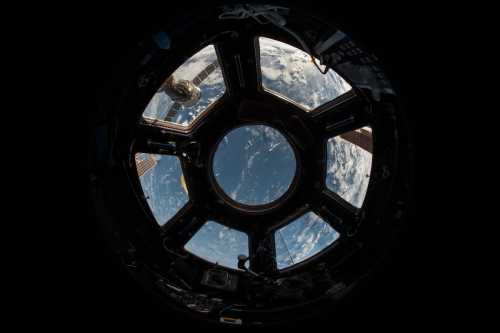
The 5-Year-Old Explanation: The giant rocket ship going to the Moon is so far away that it takes minutes for a radio signal to reach it. If something goes wrong, the astronauts can't call Mission Control for help because the message takes too long. So, NASA and SpaceX built a super-smart robot pilot for the ship. If the astronauts are busy or sleeping, the robot can look out the window, find a safe place to land, and fly the ship all by itself!
The Final Frontier: Autonomous Descent and Landing
In a historic milestone for space exploration, NASA and SpaceX have successfully completed the first fully autonomous, AI-guided landing test of the Starship Human Landing System (HLS) prototype, a critical precursor to the Artemis III mission. The test, conducted at the SpaceX facility in Boca Chica, Texas, simulated the final 15 minutes of a lunar descent, a phase where communication delays with Earth make real-time human control impossible. The newly developed "Lunar Autonomy Neural Network" (LANNA) took complete control of the vehicle, using a suite of optical sensors, LiDAR, and terrain-relative navigation to identify hazards, select a safe landing site, and execute a pinpoint soft landing. USA Today reports that the AI successfully avoided simulated craters and boulders, demonstrating a level of situational awareness that surpasses human pilot capabilities in high-stress, low-visibility environments.
Terrain-Relative Navigation and Hazard Avoidance
The core of the LANNA system is Terrain-Relative Navigation (TRN). As the spacecraft descends, its cameras continuously photograph the surface below. The AI compares these images in real-time against a pre-loaded, high-resolution 3D map of the lunar south pole. By calculating its exact position relative to the map, the AI can determine its trajectory with centimeter-level accuracy, even if the GPS-like signals from orbiting satellites are disrupted. More importantly, the AI runs a parallel "Hazard Detection" algorithm. If the pre-planned landing zone is deemed unsafe due to a sudden slope or a large rock, the AI can autonomously divert to a secondary, safer site in seconds. This capability is essential for the Artemis III mission, which aims to land near the lunar south pole, a region of permanent shadows and extremely rugged terrain that is highly dangerous for human pilots to navigate manually.
Reducing Crew Workload and Enhancing Safety
The primary goal of autonomous landing is not to replace astronauts, but to augment their capabilities and ensure their safety. During the final descent, astronauts are subjected to immense cognitive workload, having to monitor dozens of vehicle systems while simultaneously trying to navigate. By offloading the piloting tasks to the AI, the crew can focus on mission-critical decisions, scientific observations, and system monitoring. Furthermore, the AI does not suffer from fatigue, stress, or spatial disorientation, which are significant risk factors in high-G, high-stakes environments. The system is designed with a "human-in-the-loop" override, allowing the commander to take manual control at any time, but the default mode for the final landing phase will be fully autonomous.
Implications for Mars and Deep Space Exploration
The success of the LANNA system on the Moon has profound implications for the future of deep space exploration, particularly for Mars. Unlike the Moon, Mars has an atmosphere, which makes landing even more complex due to aerodynamic forces and dust storms. The AI architecture developed for the lunar landing is being adapted for the Mars Sample Return mission and future crewed Mars landings. On Mars, the communication delay can be up to 20 minutes each way, making real-time control from Earth completely impossible. The spacecraft must be entirely self-sufficient, capable of navigating the entry, descent, and landing phase autonomously. The lunar test proves that the AI is robust and reliable enough to handle the extreme challenges of interplanetary travel.
The Public-Private Partnership Model
This achievement is a testament to the success of NASA's commercial partnership model. By leveraging SpaceX's agile development culture and rapid iteration capabilities, NASA was able to field a cutting-edge AI system in a fraction of the time and cost it would have taken using traditional government procurement methods. SpaceX's software engineers worked directly with NASA's mission planners to ensure that the AI's decision-making logic aligned perfectly with the agency's strict safety and mission assurance requirements. This collaboration is setting a new standard for how humanity will explore the cosmos, combining the scientific rigor of government agencies with the innovative speed of the private sector.
Official NASA/SpaceX Update
HISTORY: The Starship HLS prototype has successfully executed a fully autonomous AI-guided landing test! ???????? The Lunar Autonomy Neural Network (LANNA) is a critical step for Artemis III and the future of human exploration. #Artemis#SpaceX
— NASA (@NASA) June 24, 2026
Related Articles

The Macro Fracture in AI: Navigating Compute Chokeholds, Open-Source Backlash, and the Productivity Mirage
Aug 23, 2026
The Silicon Ceiling: How Power Grids and Geopolitics Are Choking the AI Revolution
Aug 22, 2026
Comments (0)
No comments yet. Be the first to share your thoughts!
Want to join the discussion?
Please log in to post a comment.
Login NoworCreate an Account