
NATO Summit in Ankara Concludes Amidst Geopolitical Fractures and Unprecedented Defense Pledges

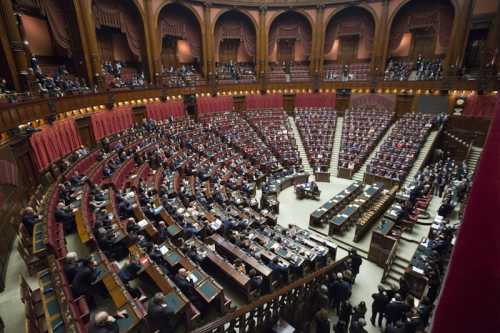
The North Atlantic Treaty Organization (NATO) summit has concluded in Ankara, Turkiye, marking a tumultuous gathering for the alliance. The two-day conference unfolded against a backdrop of profound geopolitical apprehension, following the United States and Israel’s three-month military engagement with Iran, alongside escalating European concerns regarding Russian military capabilities. As anticipated, defense budgets and sustained support for Ukraine dominated the agenda. The alliance formally pledged 70 billion euros ($80 billion) in assistance to Kyiv, promising to continually expand defense expenditures. Defense Expenditure and Interoperability Under mounting pressure, NATO leaders acquiesced to augment defense spending and cultivate the alliance’s military-industrial capacities, particularly in air and missile defense. The commitments encompassed more than $50 billion in new procurements, targeting deep precision strike capabilities, integrated air and missile defense, uncrewed systems, and the adoption of powerful artificial intelligence models. Nevertheless, empirical data indicates that merely five of NATO’s 32 members are projected to satisfy the alliance’s ambitious target of allocating 3.5 percent of their gross domestic product to core defense in 2026. Geopolitical Ruptures and Diplomatic Friction The conference was also roiled by unexpected diplomatic ruptures. Most notably, President Donald Trump declared that Washington’s memorandum of understanding with Tehran was definitively over, following US strikes on Iran purportedly in retaliation for attacks on commercial vessels in the Strait of Hormuz. NATO’s final declaration unequivocally called upon Iran to respect freedom of navigation through the Strait of Hormuz, reiterating that Tehran must not be permitted to acquire a nuclear weapon. The Greenland Refrain Adding to the diplomatic friction, President Trump reignited his longstanding interest in acquiring Greenland, the autonomous Danish territory in the Arctic. He asserted that the territory is very important for the United States, historically referencing its strategic value during the Second World War. Danish Prime Minister Mette Frederiksen delivered a resolute rebuttal, reiterating on multiple occasions that Greenland is unequivocally not for sale. "We are ready to defend every inch of NATO, including our own territory," she affirmed. The European Union subsequently echoed this sentiment, emphasizing that decisions regarding Greenland's future rest solely with Greenlanders and Danes, underscoring that territorial integrity and national sovereignty are fundamental principles of international law.
Official social media correspondence from the summit highlighted these tensions. Danish Prime Minister Mette Frederiksen firmly stated on X (formerly Twitter) that Greenland is not for sale, reinforcing Denmark's sovereign stance amidst the alliance's deliberations.
???????? Greenland 'not for sale', Danish PM says at NATO summit pic.twitter.com/example
— AFP News Agency (@AFP) July 8, 2026
As the alliance navigates this intricate matrix of geopolitical risk and internal realignment, the Ankara summit's outcomes will undoubtedly dictate the near-term trajectory of transatlantic security and global stability.
Related Articles
The Multipolar Fracture: Navigating Defense Realignment, Institutional Arbitrage, and Tactical Instability
Aug 23, 2026
The Architecture of Fragmentation: Navigating the Multipolar Shift in Global Governance
Aug 22, 2026
Comments (0)
No comments yet. Be the first to share your thoughts!
Want to join the discussion?
Please log in to post a comment.
Login NoworCreate an Account