
New Study Shows Alzheimer's Disease Can Be Reversed to Achieve Full Neurological Recovery in Animal Models

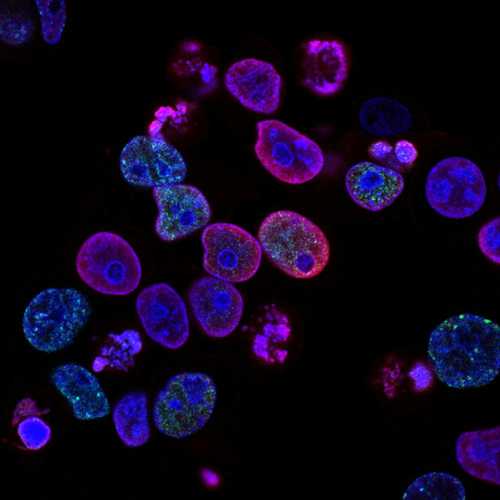
In a seminal medical development that fundamentally transmutes the landscape of neurology, researchers at Case Western Reserve University have promulgated findings demonstrating that Alzheimer's disease can be reversed to achieve full neurological recovery in preclinical models.
The epicenter of the Scientific Breakthrough
For more than a century, the medical community has considered Alzheimer's disease (AD) an irreversible illness, focusing research primarily on prevention or slowing its progression case.edu . However, a research team led by Kalyani Chaubey from the Pieper Laboratory has challenged this long-held dogma, testing whether brains already afflicted with advanced AD could recover case.edu . The study, published in Cell Reports Medicine, reveals that the brain’s failure to maintain normal levels of a central cellular energy molecule, NAD+, is a major driver of the disease case.edu .
"The key takeaway is a message of hope—the effects of Alzheimer's disease may not be inevitably permanent," stated Dr. Andrew A. Pieper, the study’s senior author. "The damaged brain can, under some conditions, repair itself and regain function."
ClinicalRamifications
The research team tested whether preventing the loss of brain NAD+ balance before disease onset, or restoring it after significant disease progression, could prevent or reverse AD, respectively case.edu . By administering a well-characterized pharmacologic agent known as P7C3-A20, they remarkably enabled the brain to fix the major pathological events driven by disease-causing genetic mutations case.edu . Both lines of mice fully recovered cognitive function, accompanied by normalized blood levels of phosphorylated tau 217, a recently approved clinical biomarker of AD in humans case.edu .
FutureIntegration
While these results provide a profound message of hope, the researchers emphasize that these findings are currently limited to animal models case.edu . The next critical step involves carefully designed human clinical trials to determine if restoring the brain's NAD+ balance can safely and effectively translate to neurological recovery in people living with Alzheimer's disease.
Official Medical Research Communication
For the complete scientific framework and detailed methodology, please refer to the original publication: Case Western Reserve University: New Study Shows Alzheimer's Disease Can Be Reversed.
Related Articles

The Biopharma Bottleneck: How Supply Chains and Regulatory Reality Are Restraining Medical Innovation
Aug 22, 2026
The Structural Faultlines of Modern Medicine: Navigating the Convergence of Capital, Compute, and Geopolitics
Aug 22, 2026
Comments (0)
No comments yet. Be the first to share your thoughts!
Want to join the discussion?
Please log in to post a comment.
Login NoworCreate an Account