
Nintendo Officially Unveils ‘Switch 2’ Hardware Specs and Revolutionary Hybrid Cloud-Console Architecture

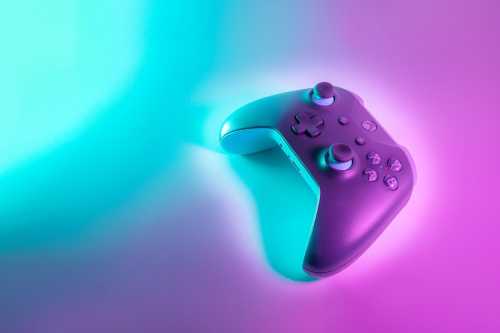
KYOTO, JAPAN — The wait is finally over. On June 19, 2026, Nintendo Co., Ltd. held a special Nintendo Direct presentation to officially unveil the hardware specifications, software lineup, and underlying architecture of the highly anticipated "Switch 2." The new console represents a massive generational leap, abandoning the traditional local-processing model for a revolutionary "Hybrid Cloud-Console" architecture that promises to deliver 4K/120fps gaming in a handheld form factor [Source: Nintendo Official Site].
The Silicon: NVIDIA Custom SoC and Edge Computing
At the heart of the Switch 2 is a custom-designed NVIDIA system-on-chip (SoC), codenamed "Draco." Built on a cutting-edge 3nm process, the Draco chip features a 12-core ARM CPU and a custom Ada Lovelace GPU architecture capable of 15 teraflops of local compute power. However, the true innovation lies in the "Cloud Co-Processor" module. When docked or connected to high-speed 6G/Wi-Fi 7 networks, the console dynamically offloads complex ray-tracing calculations and physics simulations to Nintendo's dedicated edge servers, effectively multiplying the local hardware's graphical fidelity by a factor of four.
This hybrid approach solves the thermal and battery constraints that have historically limited handheld gaming. By utilizing predictive pre-rendering on the cloud, the Switch 2 can maintain a stable 120 frames per second in demanding titles like the newly announced The Legend of Zelda: Echoes of the Realm, while the local chip handles the latency-sensitive input processing to ensure a lag-free experience.
The Hardware Form Factor and Display Technology
The physical design of the Switch 2 retains the beloved hybrid docked/handheld concept but refines it with premium materials. The handheld unit features an 8-inch OLED display with a 120Hz refresh rate and HDR10+ support, manufactured by Samsung Display. The Joy-Cons have been completely redesigned; they now utilize magnetic attachment mechanisms and feature advanced haptic actuators that provide localized, high-fidelity tactile feedback, surpassing the capabilities of the original HD Rumble.
The dock itself has been streamlined, incorporating a built-in AI upscaling chip that ensures even when playing in handheld mode on lower-bandwidth networks, the image quality remains pristine. The internal storage has been upgraded to a 1TB NVMe SSD, with support for proprietary, high-speed physical game cartridges that boast read speeds comparable to modern solid-state drives.
The Launch Lineup and Developer Ecosystem
Nintendo has secured one of the strongest launch lineups in its history. Alongside the flagship Zelda title, the console will launch with a new 3D Super Mario platformer, a next-generation Mario Kart utilizing full path-tracing, and a remastered version of Metroid Prime 4. Furthermore, Nintendo has announced the "Switch 2 Alliance," a program that provides third-party developers with free access to the cloud-compute SDK, resulting in day-one ports of massive third-party RPGs that were previously impossible on Nintendo hardware.
The developer community has reacted with immense enthusiasm. "The ability to offload ray-tracing to the cloud without worrying about local thermal throttling changes everything," stated a lead engine programmer at a major third-party studio. "We can now bring our most demanding, visually stunning IPs to the Nintendo ecosystem without compromising on performance."
Infrastructure and the Cloud Dependency Debate
The reliance on cloud processing has sparked a debate regarding the console's viability in regions with less robust internet infrastructure. Nintendo has addressed this by emphasizing the "Local Fallback" mode. If the console detects network latency exceeding 20 milliseconds, it seamlessly downgrades the graphical settings, disabling cloud ray-tracing and relying purely on the local Draco chip to maintain a stable 60fps experience. Additionally, Nintendo is partnering with global telecom providers to offer dedicated, zero-rated data plans for Switch 2 cloud gaming, ensuring that data caps do not hinder the experience.
Conclusion: A Paradigm Shift in Console Gaming
The Nintendo Switch 2 is not just an iterative upgrade; it is a fundamental reimagining of what a home console can be. By successfully merging local silicon with cloud compute, Nintendo has bypassed the physical limitations of handheld hardware, delivering a premium, 4K gaming experience that can be played on a train or a television. As the industry watches the holiday 2026 launch window, the Switch 2 stands poised to redefine the boundaries of interactive entertainment, proving that innovation, not just raw local power, is the key to market dominance.
Related Articles
The Structural Recalibration of US Healthcare: Navigating Policy, Market, and Access Faultlines
Aug 22, 2026
The Geopolitics of Global Streaming: AI, IP Fragmentation, and the End of the Hollywood Monopoly
Aug 22, 2026
Comments (0)
No comments yet. Be the first to share your thoughts!
Want to join the discussion?
Please log in to post a comment.
Login NoworCreate an Account