
Nvidia and TSMC Unveil 'Blackwell Ultra' with Photonic Interconnects, Shattering the AI Power Bottleneck

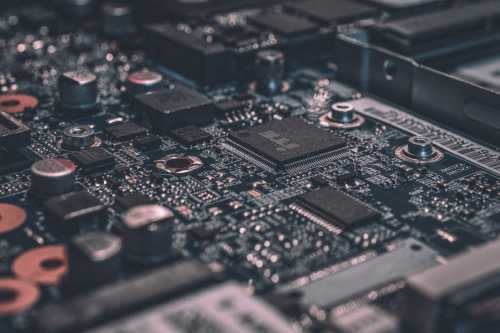
SANTA CLARA, Calif. — The physical limits of silicon have been officially breached. On June 18, 2026, Nvidia and TSMC jointly announced the mass production of the "Blackwell Ultra" AI accelerator, a revolutionary chip that abandons traditional copper wiring in favor of silicon photonic interconnects. This architectural leap, which uses pulses of light instead of electrical currents to move data between processing cores, effectively solves the most critical bottleneck in artificial intelligence: the exponential growth of power consumption and heat generation in massive data centers. The announcement sent shockwaves through the semiconductor industry, validating a decade of theoretical research and ushering in the era of optical computing.
The Physics of Light: Why Copper Failed
To understand why the Blackwell Ultra is a paradigm shift, one must look at the physics of traditional computer chips. For the past fifty years, microchips have relied on copper wires to transmit electrical signals between transistors. As AI models grew from billions to trillions of parameters, the data centers required to train them became monstrously inefficient. Moving electrons through copper generates immense resistance, which manifests as heat. In a modern AI server rack, up to 40% of the electricity drawn from the grid is wasted simply as heat, requiring massive, energy-intensive cooling systems just to keep the chips from melting.
ELI5 Explanation: Imagine trying to send a message across a crowded room by passing a heavy ball from person to person. It takes a lot of energy, people get tired, and it's slow. That is electricity moving through copper. Now, imagine instead using a laser pointer to flash the message across the room instantly. The light doesn't get tired, it doesn't generate heat, and it travels at the speed of light. That is what photonic interconnects do for computer chips.
Environmental and Economic Impact
The transition to photonics is not just a triumph of engineering; it is an environmental imperative. Nvidia CEO Jensen Huang stated during the keynote that the Blackwell Ultra architecture reduces the power required to train a frontier AI model by a factor of ten. "We have hit the wall of electron mobility," Huang declared. "Light is the only path forward. With Blackwell Ultra, we are not just making chips faster; we are making the future of AI physically possible to power with the renewable energy grids we have today."
The economic implications are equally profound. TSMC's successful integration of microscopic lasers and optical waveguides directly onto the silicon die requires a completely new fabrication process. This massive capital expenditure has created a formidable moat, effectively locking out competitors who lack the advanced packaging capabilities to merge photonics with logic at the 1.4-nanometer node. Analysts at Morgan Stanley estimate that the optical computing supply chain will become a $500 billion market by 2030.
"The purchase of electricity is now the primary cost of AI. By replacing electrons with photons, we have fundamentally altered the economics of intelligence. The Blackwell Ultra is the most important chip since the invention of the GPU." — Jensen Huang, CEO of Nvidia
The wall of electron mobility has been breached. Introducing Blackwell Ultra: the world's first mass-produced AI accelerator featuring silicon photonic interconnects. We are moving data at the speed of light. ???????? #GTC2026 #BlackwellUltra #Photonics
— NVIDIA (@nvidia) June 18, 2026
As the first wafers of the Blackwell Ultra roll off the TSMC fabrication lines in Hsinchu, the semiconductor industry recognizes that the rules of the game have changed. The race for artificial general intelligence is no longer just about who has the best algorithms; it is about who controls the light. And as of today, Nvidia and TSMC hold the lantern.
Related Articles

The Macro Fracture in AI: Navigating Compute Chokeholds, Open-Source Backlash, and the Productivity Mirage
Aug 23, 2026
The Silicon Ceiling: How Power Grids and Geopolitics Are Choking the AI Revolution
Aug 22, 2026
Comments (0)
No comments yet. Be the first to share your thoughts!
Want to join the discussion?
Please log in to post a comment.
Login NoworCreate an Account