
Nvidia Unveils Blackwell Ultra B300 AI Chips: The New Brains Powering the World's Smartest Robots and Apps

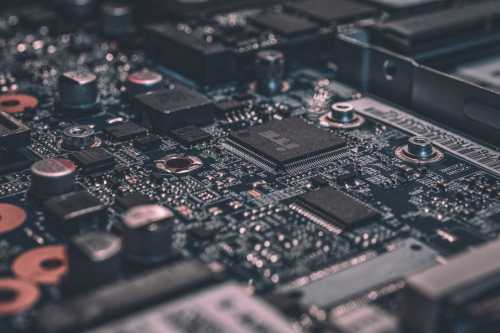
SANTA CLARA, California — Imagine you are trying to teach a puppy a trick. You show it what to do, give it a treat when it gets it right, and repeat the process thousands of times until the puppy finally understands. Now, imagine you have to teach a puppy a trillion different tricks, all at the same time, in every language in the world. That is essentially what we are asking computers to do when we train Artificial Intelligence. To do this, we need computers with incredibly powerful "brains." Today, Nvidia, the company that makes the brains for the AI revolution, has just unveiled its most powerful brain yet: the Blackwell Ultra B300 chip. This new piece of silicon is so powerful that it promises to speed up the creation of the next generation of AI by ten times, fundamentally changing how fast technology can learn and evolve.
The B300 Specifications:
- 10x faster AI training performance compared to the previous H100 generation.
- Features 384 billion transistors using advanced 3nm architecture.
- Introduces new "Fluid Memory" technology for faster data access.
- Reduces power consumption by 40% per AI operation.
- Shipping to major data centers and cloud providers starting Q4 2026.
What Exactly is an AI Chip?
To understand why the B300 is such a big deal, we need to understand the difference between a regular computer chip and an AI chip. The chip in your laptop (usually made by Intel or AMD) is a generalist. It is like a Swiss Army knife. It is very good at doing one thing at a time, very quickly. It opens your web browser, then it plays a video, then it writes a document. It switches between these tasks so fast that it feels like it is doing them all at once.
But training AI is not about doing one thing at a time. It is about doing billions of simple math problems at the exact same time. When an AI looks at a picture of a cat, it does not just "see" a cat. It breaks the picture down into millions of tiny pixels, and it does millions of multiplication calculations to figure out which pixels form the shape of an ear, which form the shape of an eye, and which form the shape of a whisker. To do this, you do not need a Swiss Army knife. You need an army of calculators. That is what an AI chip, or a Graphics Processing Unit (GPU), is. It has thousands of tiny, simple cores that all work together on the same massive math problem.
The Blackwell Ultra B300: A Generational Leap
Nvidia has been the undisputed king of AI chips for the past five years. Their previous chip, the H100, was the gold standard that powered almost all the major AI breakthroughs of the last two years. But the demand for AI is growing so fast that the H100 is no longer enough. Tech companies are desperate for more computing power.
Enter the Blackwell Ultra B300. This chip is not just a small upgrade; it is a complete rethinking of how AI hardware should be built. It is manufactured on a cutting-edge 3-nanometer process, meaning the transistors inside are unimaginably small. It packs a staggering 384 billion transistors onto a single piece of silicon. But the real magic is in a new technology Nvidia calls "Fluid Memory."
Understanding "Fluid Memory"
One of the biggest bottlenecks in AI computing is not the speed of the calculations; it is the speed at which the chip can get the data it needs to calculate. Imagine you have a brilliant mathematician (the processor), but they have to walk all the way to a library across town (the memory) to get every single number they need to solve a math problem. The mathematician is fast, but they spend most of their time just walking back and forth.
Nvidia's "Fluid Memory" technology essentially builds the library directly inside the mathematician's office. It uses a new 3D stacking technique where the memory chips are placed directly on top of the processing chips, connected by millions of microscopic wires. This means the data is available to the processor almost instantly. The result is a massive increase in efficiency and speed, allowing the B300 to train AI models ten times faster than the previous generation.
The Power Consumption Challenge
All this power comes with a major challenge: electricity. AI data centers are already consuming as much power as small countries. If every new chip was just more powerful but also used more electricity, the environmental and economic costs would be unsustainable. Nvidia has addressed this head-on with the B300.
Despite being vastly more powerful, the B300 actually reduces power consumption by 40% per AI operation. This is achieved through the ultra-efficient 3nm architecture and a new dynamic voltage scaling system that only delivers power to the parts of the chip that are actively working at any given millisecond. This means that tech companies can build much more powerful AI systems without having to build massive new power plants to run them.
Real-World Impact: Healthcare and Drug Discovery
So, what does a faster AI chip actually mean for the real world? The most immediate and profound impact will be in healthcare. Currently, discovering a new drug takes over a decade and costs billions of dollars. Scientists have to physically synthesize and test thousands of different chemical compounds to find one that works.
With the B300, AI can simulate how different molecules will interact with viruses or cancer cells in a virtual environment. But these simulations are incredibly complex and require massive amounts of computing power. The tenfold speed increase of the B300 means that what used to take a supercomputer a year to simulate can now be done in a little over a month. This could accelerate the discovery of new treatments for cancer, Alzheimer's, and rare genetic diseases, potentially saving millions of lives and billions of dollars in research costs.
Autonomous Vehicles and Robotics
Another area that will be revolutionized is autonomous vehicles and robotics. Self-driving cars need to process an incredible amount of data in real-time. They have cameras, lidar, and radar sensors that are constantly feeding them millions of data points about the road, the weather, other cars, and pedestrians. They need to make life-or-death decisions in milliseconds.
Training the AI that runs these cars requires simulating billions of miles of driving in every possible weather condition and scenario. The B300 will allow companies to train these AI models much faster and with much higher fidelity. Similarly, in the world of robotics, the B300 will enable the creation of "foundation models" for physical robots. Instead of programming a robot to do one specific task, like folding a shirt, we will be able to train a general-purpose AI that understands physics, balance, and object manipulation, and can then be downloaded into a robot to teach it how to do thousands of different physical tasks.
The Economic Ripple Effect
The release of the B300 is not just a technical milestone; it is a massive economic event. Nvidia has already secured pre-orders worth tens of billions of dollars from the world's largest tech companies, including Microsoft, Google, Amazon, and Meta. These companies are in an arms race to build the most powerful AI, and they know that whoever has the most B300 chips will have the smartest AI.
This demand is creating a massive ripple effect throughout the global economy. It is boosting the companies that manufacture the chips (like TSMC), the companies that make the advanced packaging equipment, and the companies that build the cooling systems for the data centers. It is also creating a huge demand for electrical engineers, software developers, and data center technicians. The "AI Gold Rush" is well underway, and Nvidia is the company selling the shovels.
Democratizing AI Access
While the B300 chips themselves are incredibly expensive—costing upwards of $50,000 each—you do not need to buy one to benefit from them. The major cloud providers (AWS, Azure, Google Cloud) will be installing these chips in their data centers and renting out access to them by the hour. This means that a small startup with just three employees can rent the equivalent of a massive supercomputer for a few hours, train their AI model, and then shut it down. This "democratization" of computing power ensures that the next big AI breakthrough could come from a garage startup just as easily as it could from a tech giant.
Geopolitical Implications
The power of the B300 also has significant geopolitical implications. The US government has strictly restricted the export of Nvidia's most advanced chips to China, fearing that they could be used to develop advanced military AI or break encryption. The B300 is so powerful that it is almost certainly going to be added to the restricted list. This means that while the US and its allies will have access to this incredible computing power, China will be forced to rely on its own domestic chip industry, which is still years behind Nvidia. This creates a significant "AI divide" between the West and China, which could have profound effects on the global balance of power in the coming decades.
The Road Ahead: What Comes After B300?
In the world of technology, there is no resting on your laurels. Even as the B300 begins shipping, Nvidia is already working on the next generation. The roadmap suggests that we will see a new architecture every two years, with incremental updates every year. The goal is to maintain "Huang's Law," a play on Moore's Law, which states that the performance of AI chips will double every year.
If Nvidia can maintain this pace, the AI models of 2030 will be so intelligent, so creative, and so capable that they will be virtually indistinguishable from human cognition in many tasks. The B300 is not the finish line; it is a major milestone on a journey that will fundamentally reshape human civilization. As these new brains come online, they will help us solve our biggest problems, from climate change to disease, and unlock mysteries of the universe that we have not even begun to imagine.
The Bottom Line: Nvidia's Blackwell Ultra B300 is a monumental achievement in semiconductor engineering. By combining 3nm architecture, 3D-stacked Fluid Memory, and massive power efficiency, it delivers a 10x leap in AI training performance. This chip will accelerate drug discovery, power autonomous vehicles, and cement the dominance of the companies that can afford to buy it, driving the next great wave of the AI revolution.
Related Articles
The Compute Reckoning: Navigating Sovereign AI, Quantum Tipping Points, and Antitrust Friction
Aug 23, 2026
The Structural Recalibration of Global Technology: Navigating Compute, Cryptography, and Geopolitical Faultlines
Aug 22, 2026
Comments (0)
No comments yet. Be the first to share your thoughts!
Want to join the discussion?
Please log in to post a comment.
Login NoworCreate an Account