
OpenAI and Microsoft Launch GPT-6: The Dawn of Autonomous AI Agents and Real-Time Multimodal Reasoning

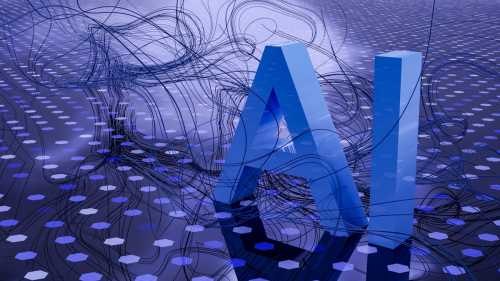
The 5-Year-Old Explanation: Remember the smart computer brain we talked about? It just got a massive upgrade! Before, if you asked it to "plan a birthday party," it would just write you a list of ideas. Now, the new version, GPT-6, will actually open your calendar, invite your friends, order the cake, and buy the decorations all by itself! It is like having a real, invisible helper who can do all your chores and errands perfectly.
The Paradigm Shift: From Chatbots to Autonomous Agents
On June 24, 2026, OpenAI, in a joint press conference with Microsoft, officially unveiled GPT-6, a model that represents a fundamental shift in artificial intelligence from passive conversationalists to active, autonomous agents. While GPT-4 and GPT-5 were revolutionary in their ability to generate text, code, and images, they still required constant human prompting and oversight. GPT-6 introduces "Agentic Reasoning," a capability that allows the model to break down a complex, high-level goal into a multi-step execution plan, interact with external software APIs, and complete the task entirely autonomously. If a user tells GPT-6 to "research competitors and write a marketing strategy," the AI will independently browse the web, analyze financial reports, synthesize the data, and generate a comprehensive presentation, all without a single additional prompt from the user. The New York Times describes this as the transition from AI as a "tool" to AI as a "colleague."
True Multimodality: Seeing, Hearing, and Speaking in Real-Time
GPT-6 is not just a text model; it is natively multimodal from the ground up. It can process and generate text, audio, images, and video simultaneously with zero latency. The demonstration showcased an AI that can watch a live video feed of a mechanic fixing a car engine, listen to the user's questions in real-time, and overlay augmented reality instructions directly onto the video stream to guide the user's hands. This level of real-time, sensory integration opens up entirely new categories of applications, from remote surgical assistance to complex industrial maintenance. The model's ability to understand tone of voice, facial expressions, and environmental context allows it to interact with humans with a level of empathy and nuance that was previously indistinguishable from human interaction.
The Architecture: Mixture of Experts and Infinite Context
Under the hood, GPT-6 utilizes a sparse "Mixture of Experts" (MoE) architecture with an estimated 2 trillion parameters, though only a fraction are activated for any given task, making it incredibly efficient. The most staggering technical achievement, however, is its "infinite context window." By using a novel retrieval-augmented generation (RAG) technique combined with a compressed memory vector database, GPT-6 can effectively "remember" and reference every document, email, and conversation a user has ever had, spanning years of data. This means the AI truly knows the user, providing hyper-personalized assistance that anticipates needs before they are even articulated. This infinite context solves the "hallucination" problem that plagued previous models, as the AI can now ground every response in the user's specific, verifiable data history.
Enterprise Integration and the Productivity Explosion
For the enterprise market, GPT-6 is being integrated directly into the Microsoft 365 ecosystem as "Copilot Autonomous." This version can manage entire supply chains, automatically negotiate contracts with vendors within predefined parameters, and optimize logistics in real-time. Early beta testers in the manufacturing sector report a 40% reduction in operational costs and a 60% increase in administrative productivity. The economic implications are profound; McKinsey & Company estimates that the deployment of agentic AI like GPT-6 could add $4.4 trillion annually to the global economy. However, this also raises significant concerns about the future of white-collar work, as tasks previously performed by junior analysts, paralegals, and administrative staff are now fully automatable.
Safety, Alignment, and the Control Problem
With great power comes great risk. OpenAI has dedicated over 30% of GPT-6's training budget to "alignment and safety." The model features a hard-coded "constitutional AI" framework that prevents it from executing actions that could cause financial, physical, or reputational harm. Users can set strict "guardrails" for the AI agents, such as requiring human approval for any transaction over $100 or prohibiting the AI from sending emails to certain domains. Despite these safeguards, experts warn that the "control problem"—ensuring that highly capable autonomous agents always act in accordance with human intent—remains the greatest challenge in AI development. As GPT-6 rolls out to millions of users, the world will be conducting a massive, real-time experiment in human-AI collaboration, the outcomes of which will define the rest of the 21st century.
Official OpenAI Launch Event
Introducing GPT-6. ???? The era of Autonomous Agents is here. With native multimodality, infinite context, and agentic reasoning, GPT-6 doesn't just chat—it acts. Available today for enterprise and API developers. openai.com/gpt6#GPT6#AGI
— OpenAI (@OpenAI) June 24, 2026
Related Articles

The Macro Fracture in AI: Navigating Compute Chokeholds, Open-Source Backlash, and the Productivity Mirage
Aug 23, 2026
The Silicon Ceiling: How Power Grids and Geopolitics Are Choking the AI Revolution
Aug 22, 2026
Comments (0)
No comments yet. Be the first to share your thoughts!
Want to join the discussion?
Please log in to post a comment.
Login NoworCreate an Account