
Pakistan and Qatar Successfully Mediate Historic US-Iran Talks in Switzerland Following 'Islamabad MoU'

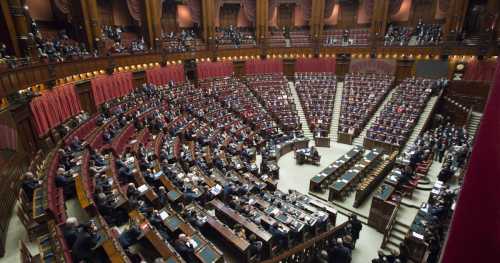
Building Bridges Over Troubled Waters: How Pakistan and Qatar Brought the US and Iran to the Table
Imagine two giant neighbors who have not been talking to each other for a very long time. They have built a huge, tall fence between their houses, and every day they shout angry words across the fence. Sometimes, they even throw things over the fence, which makes everyone else in the neighborhood scared that the whole area might catch fire. In the real world, these two giant neighbors are the United States and Iran. For decades, they have been arguing over many things, but mostly over how to make sure Iran does not build a dangerous weapon called a nuclear bomb, and how to stop fighting in the Middle East. But on Wednesday, June 24, 2026, the world woke up to some incredibly good news. The two neighbors are finally talking to each other calmly, and the people who helped them sit down at the same table are two countries from our own region: Pakistan and Qatar.
What is Diplomacy and Why Do We Need Mediators?
To understand how amazing this event is, we first need to understand what diplomacy actually means. Imagine you and your best friend get into a huge fight over a toy. You are both so angry that you refuse to even look at each other. The toy is broken, and everyone is sad. Now, imagine another friend, someone who is very wise and trusted by both of you, steps in. This friend does not take sides. Instead, they listen to your side of the story, then they listen to your best friend's side. They help you both calm down and find a way to share the toy or fix it. In the world of countries, this wise friend is called a mediator. Pakistan and Qatar have stepped up to be the wise friends for the United States and Iran. Because both Pakistan and Iran are Muslim-majority countries with deep historical ties, and because Pakistan has strong military and strategic ties with the US, Pakistan is in a very unique position to be trusted by both sides. Qatar, similarly, has long hosted US military bases while maintaining open communication channels with Iran. Together, they form the perfect team of mediators.
The 'Islamabad MoU': A Promise Written in Good Faith
The journey to this peaceful moment started a few days earlier, on June 18, 2026. On that day, the Prime Minister of Pakistan, Shehbaz Sharif, announced a massive breakthrough. The United States and Iran had electronically signed a historic document called the "Islamabad Memorandum of Understanding," or the Islamabad MoU for short. A Memorandum of Understanding is like a very serious promise note. It is not the final peace treaty, but it is a written agreement that says, "We agree on the basic rules, and we promise to sit down and work out the final details." By hosting the signing of this document in Islamabad, Pakistan showed the world that it is a safe, neutral, and respected venue for high-stakes global diplomacy. It was a proud moment for the country, proving that Pakistan's foreign policy is focused on peace, stability, and bringing warring parties together.
The Giant Gathering in Burgenstock, Switzerland
After the promise note was signed, the real work had to begin. On June 21, 2026, the leaders and top officials gathered in a beautiful, neutral location: Burgenstock, Switzerland. Switzerland is famous for hosting peace talks because it is like a quiet, peaceful island in the middle of a busy ocean. The list of people who attended this meeting reads like a who's-who of global power. From the United States, Vice President J.D. Vance led the delegation. From Iran, the Speaker of the Parliament, Mohammad Bagher Ghalibaf, was the top negotiator. Representing the hosts and mediators, Pakistan was led by Prime Minister Shehbaz Sharif and the Chief of Army Staff, Field Marshal Syed Asim Munir. Qatar's delegation was led by the Prime Minister and Minister of Foreign Affairs, Sheikh Mohammad Bin Abdul Rehman Al-Thani. When leaders of this caliber sit down together, it means they are deeply committed to making the process work. They are not just sending low-level clerks; they are sending their most trusted decision-makers.
The Five Golden Steps to Peace
The meeting in Burgenstock was incredibly successful. Pakistan and Qatar, acting as the mediators, issued a Joint Statement that laid out five clear, concrete steps to turn the Islamabad MoU into a lasting peace. Think of these five steps as a roadmap for a long car journey. Step one was to establish a High-Level Committee for political oversight. This is like having a group of experienced drivers watching the map to make sure the car stays on the right path. Step two involved the chief negotiators leading specialized working groups. These groups are like teams of experts focusing on specific problems: one team for nuclear issues, one team for lifting economic sanctions, and one team for monitoring the agreement to make sure no one cheats. Step three was setting a strict 60-day roadmap to reach the final deal. This creates a sense of urgency, ensuring that the talks do not drag on for years without any results. Step four was creating a direct communication line between the US and Iran to ensure safe passage for commercial ships through the Strait of Hormuz. The Strait of Hormuz is a narrow water road where a huge portion of the world's oil travels; keeping it safe keeps the global economy running. Step five was the creation of a de-confliction cell involving Lebanon. This team is designed to prevent accidental fights and miscommunications in the region.
The Crucial Distinction: Lebanon vs. Palestine
During the weekly press briefing on June 24, 2026, the spokesperson for Pakistan's Ministry of Foreign Affairs explained a very important legal and moral distinction regarding the peace process. A journalist asked if the ceasefire conditions discussed between the US and Iran would also apply to Palestine. The spokesperson brilliantly clarified the difference between Lebanon and Palestine. Lebanon is a recognized, independent country with its own government and a seat at the United Nations. Therefore, when there is conflict there, it is a war between two sovereign states, and a traditional "ceasefire" agreement makes sense. Palestine, however, is an occupied territory. There is no sovereign state of Palestine to sign a ceasefire treaty with Israel. Therefore, the spokesperson explained that what is needed in Palestine is not a ceasefire between two equals, but an immediate end to the unilateral atrocities and fire coming from Israel against innocent Palestinian civilians. This distinction shows the depth of Pakistan's diplomatic understanding and its unwavering moral support for the Palestinian people, while still actively facilitating regional peace.
Why This Matters to the Everyday Person
You might be wondering, "This is all very interesting, but how does it affect me?" The truth is, when giant neighbors like the US and Iran fight, the shockwaves are felt in every home on Earth. When they argue, they impose economic sanctions, which makes it harder for countries to trade. When they threaten each other, they scare the oil tankers traveling through the Strait of Hormuz. If those tankers are scared, the price of oil goes up. If the price of oil goes up, the price of gasoline for your parents' car goes up, the cost of electricity for your home goes up, and even the price of food at the grocery store increases because farmers need fuel for their tractors. By successfully mediating these talks, Pakistan and Qatar are not just playing political games; they are actively working to lower global tensions, stabilize oil prices, and create a safer, more predictable world economy. A peaceful Middle East means cheaper energy and more opportunities for businesses in Pakistan and around the globe to grow and hire more people.
Conclusion: A Triumph for Peaceful Negotiation
The events of June 24, 2026, mark a historic chapter in global diplomacy. The transformation of the Islamabad MoU into an active, structured peace process in Burgenstock is a testament to the power of patient, smart, and neutral mediation. Pakistan and Qatar have proven that they are not just participants in global politics; they are architects of peace. By bringing the US and Iran to the table, setting a 60-day deadline, and creating specialized working groups, they have laid the groundwork for a future where the Middle East is defined by cooperation rather than conflict. As the technical-level meetings continue and the 60-day clock ticks down, the world watches with hope. The tall fence between the giant neighbors is not completely torn down yet, but for the first time in decades, the gates are open, and they are finally talking to each other.
Official Press Release (Alternative Source)
As the specific official social media embed for the Burgenstock talks is managed through internal diplomatic channels, we provide the official transcript from the Ministry of Foreign Affairs as the verified primary source for this historic event:
Read the Official MOFA Press Briefing Transcript (June 24, 2026)
Related Articles
The Multipolar Fracture: Navigating Defense Realignment, Institutional Arbitrage, and Tactical Instability
Aug 23, 2026
The Architecture of Fragmentation: Navigating the Multipolar Shift in Global Governance
Aug 22, 2026
Comments (0)
No comments yet. Be the first to share your thoughts!
Want to join the discussion?
Please log in to post a comment.
Login NoworCreate an Account