
Pakistan Approves First National AI Policy: Rs 283 Billion Program to Create 3 Million Jobs


Understanding the Basics: What is a National AI Policy?
Imagine you are the principal of a very large school, and you want every student to become excellent at playing soccer. You can't just tell them to "go play." You need a master plan. You need to build soccer fields, buy balls and uniforms, hire trained coaches, organize tournaments, and make sure the students get enough rest and good food. This master plan is a "policy." A National AI Policy is exactly like that, but instead of soccer, the "game" is Artificial Intelligence, and the "players" are the country's researchers, businesses, and government agencies. It is a comprehensive blueprint that outlines how a country will develop, use, and regulate AI technologies. It decides where the money will come from, which universities will lead the research, how to protect people's privacy, and how to ensure that AI is used ethically. Without a policy, AI development is chaotic and fragmented. With a strong policy, a country can focus its resources, attract foreign investment, and ensure that the technology benefits everyone, not just a select few.
The Big News: Pakistan's Historic AI Policy Approval
In a landmark decision that signals a new era of technological ambition, the Government of Pakistan has officially approved its first-ever National Artificial Intelligence (AI) Policy www.facebook.com . This is not just a symbolic gesture; it is backed by a massive financial commitment. The government has proposed a staggering Rs 283 billion AI development program, with an immediate allocation of Rs 1 billion in the FY2026-27 budget specifically dedicated to supporting emerging technologies and AI startups www.instagram.com . The primary, audacious goal of this policy is to create three million new jobs in the tech and AI sectors over the next five years. This policy comes at a critical time when the global economy is undergoing a massive shift driven by automation and intelligent systems. By formalizing its approach to AI, Pakistan is sending a strong message to the world that it is open for business, ready to compete, and serious about becoming a regional hub for AI innovation. The policy covers a wide range of sectors, including healthcare, agriculture, education, and finance, ensuring that AI is not just a tool for tech companies, but a catalyst for national development across the board.
Official Social Media Announcement
"Pakistan has proposed a Rs. 283 billion AI development program, with Rs. 1 billion allocated in the FY2026-27 budget to support emerging technologies. This historic National AI Policy aims to create 3 million jobs!"
The Technology Deep Dive: Infrastructure and Compute
A significant portion of the Rs 283 billion budget will be dedicated to building the physical and digital infrastructure required for AI. Training advanced AI models requires immense computational power, typically provided by clusters of high-end Graphics Processing Units (GPUs). Historically, Pakistani researchers have had to rely on expensive cloud computing services hosted abroad, which drains foreign exchange and limits the scale of research they can undertake. The new policy proposes the establishment of a National AI Compute Grid—a sovereign cloud infrastructure equipped with thousands of the latest AI accelerators. This will allow local universities and startups to train their own models on local data without prohibitive costs. Furthermore, the policy emphasizes the creation of high-quality, localized datasets. AI models are only as good as the data they are trained on. By investing in the digitization of government records, medical histories, and agricultural data, Pakistan will create the "fuel" needed to build AI models that understand local languages (like Urdu, Punjabi, and Sindhi) and address local challenges. This focus on sovereign data and compute infrastructure is what will transition Pakistan from being a consumer of foreign AI models to a creator of indigenous AI solutions.
Economic and Social Impact: The 3 Million Jobs Promise
The promise of creating three million jobs is the cornerstone of the policy's social contract with the public. How will this be achieved? The jobs will not just be for PhD-level AI researchers. The ecosystem will require a vast array of talent. There will be demand for data annotators who teach the AI by labeling images and text; AI ethicists who ensure the systems are fair and unbiased; prompt engineers who optimize AI interactions; and integration specialists who connect AI tools to legacy business systems. Moreover, the policy heavily incentivizes the creation of AI startups. By providing seed funding, tax breaks, and regulatory sandboxes (safe environments to test new technologies), the government hopes to spawn thousands of new companies. Each successful startup has the potential to hire dozens of employees. Beyond direct tech jobs, the policy aims to enhance productivity in traditional sectors. For example, AI-driven precision agriculture could increase crop yields, requiring more skilled farm managers and logistics coordinators. AI in healthcare could expand access to diagnostics, creating a need for more technicians to manage the equipment. The ripple effect of these efficiencies is expected to stimulate broad-based economic growth, lifting incomes and creating a more resilient economy.
Ethics, Regulation, and Future Outlook
A crucial, often overlooked aspect of the National AI Policy is its focus on ethics and regulation. The rapid advancement of AI brings significant risks, including deepfakes, algorithmic bias, and job displacement in certain sectors. The Pakistani policy proactively addresses these by establishing an AI Ethics Board, tasked with drafting guidelines for the responsible use of AI. This board will ensure that AI systems used in government, such as those for welfare distribution or law enforcement, are transparent, explainable, and free from discrimination. The policy also outlines a framework for data privacy, aligning with international standards like the GDPR, to protect citizens' personal information. Looking ahead, the successful implementation of this policy could position Pakistan as a leader in the Global South's AI movement. By demonstrating how a developing nation can leverage AI for inclusive growth, Pakistan could attract significant international development funding and foreign direct investment. The next five years will be critical. The government must ensure that the funds are disbursed efficiently, that the private sector is actively involved in governance, and that the education system is rapidly updated to produce the required talent. If these challenges are met, the Rs 283 billion investment will yield returns that far exceed its cost, fundamentally transforming Pakistan's economic trajectory.
Related Articles

The Macro Fracture in AI: Navigating Compute Chokeholds, Open-Source Backlash, and the Productivity Mirage
Aug 23, 2026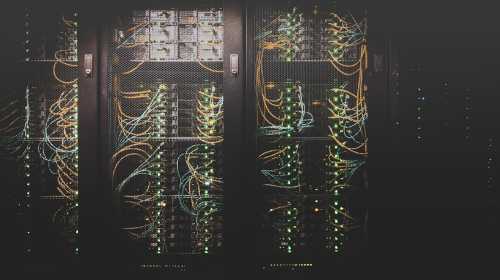
The Silicon Ceiling: How Power Grids and Geopolitics Are Choking the AI Revolution
Aug 22, 2026
Comments (0)
No comments yet. Be the first to share your thoughts!
Want to join the discussion?
Please log in to post a comment.
Login NoworCreate an Account