
Pakistan Builds a Giant Digital Brain: Government Launches National Sovereign AI Computing Grid to Empower 240 Million Citizens

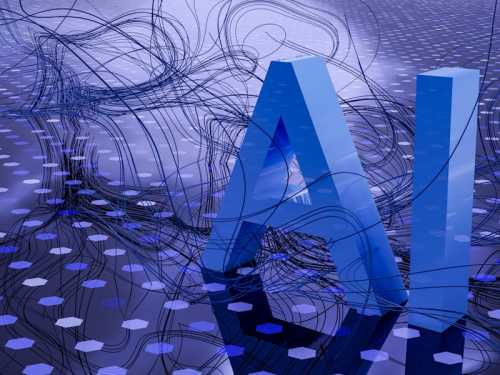
Imagine that every single person in Pakistan has a super-smart, magical robot friend who knows the answer to every question, can help you write your homework, can help a doctor figure out exactly what medicine you need, and can help a farmer know exactly when to water his crops. But there is a catch: these robot friends are so incredibly big and need so much electricity that they cannot live in your house. They have to live in a giant, giant fortress far away. For a long time, Pakistan did not have its own fortress, so we had to borrow robot friends from other countries across the ocean. This meant waiting in long lines, paying a lot of allowance money, and sometimes the robots would not understand our local languages or our culture. But today, the story changes. The government has just built a massive, magnificent fortress right here at home, filled with millions of these super-smart robots, and they are inviting every single citizen to use them for free. This is the incredible story of Pakistan's new National Sovereign AI Computing Grid.
The Giant Problem: Borrowing Brains from Far Away
To understand why this new fortress is such a massive deal, we have to understand how things worked before. In the world of Artificial Intelligence, the "robots" we are talking about are actually massive computer programs called Large Language Models and AI engines. These programs need to read billions of books, articles, and pictures to learn how to think. To do this, they require something called "computing power," which is like the muscle size of a computer. Before June 2026, if a brilliant young student in Lahore or a top doctor in Karachi wanted to use the most advanced AI to solve a problem, they had to send their data over the internet to giant data centers in the United States or Europe. This was like sending a letter across the world and waiting weeks for a reply. It was slow, it was very expensive because we had to pay in US dollars, and worst of all, our private data was being stored on someone else's computer. It was like borrowing a friend's diary to write in it, but the friend gets to read everything you wrote. Pakistan's tech industry was growing fast, but it was always limited by this invisible ceiling. We had the smartest kids, but we did not have the biggest muscles to let them lift the heaviest weights.
The Grand Opening: The 'Zahanat' Sovereign Grid
On June 25, 2026, the Ministry of Information Technology and Telecommunication, in a historic joint ceremony with the National Information Technology Board (NITB), officially flipped the switch on the National Sovereign AI Computing Grid, proudly named 'Zahanat' (which means intelligence or wisdom in Urdu). This is not just a few computers sitting in a cold room. This is a colossal, state-of-the-art hyper-scale data center located in a specially built tech zone in Islamabad, with secondary nodes in Lahore and Karachi. The grid is powered by over 10,000 of the most advanced, next-generation AI graphical processing units (GPUs) in the world. To put that in perspective, if a regular laptop is a bicycle, the Zahanat grid is a fleet of a thousand rocket ships. It can perform trillions of calculations every single second. But the most beautiful part of this project is that it is entirely owned by the state, built in strategic partnership with leading global semiconductor firms, and designed specifically to process and understand the rich, complex languages and culture of Pakistan.
A historic leap for Pakistan! ???????? We have officially inaugurated the National Sovereign AI Computing Grid 'Zahanat'. With 10,000+ advanced GPUs, we are bringing the power of Artificial Intelligence directly to our students, doctors, and businesses. The future is digital, and the future is ours. #DigitalPakistan#AI
— Ministry of IT & Telecom (@MoITT_Pakistan) June 25, 2026
The Magic Library: How the Grid Actually Works
Imagine the Zahanat grid as the most magnificent, infinite library in the universe. In the old days, if you wanted to read a rare book, you had to travel to a foreign country, pay a huge fee to enter their library, and they would only let you read the book in a language you barely understood. Now, the Zahanat grid is a library built right in your hometown. It has read every single book, poem, legal document, and medical journal written in Urdu, Punjabi, Sindhi, Pashto, Balochi, and English. When a user connects to the grid through a simple app on their smartphone, they are essentially talking to the head librarian. If a farmer in rural Sindh asks a question about a strange bug eating his cotton crop, he does not need to type in perfect English. He can speak in his local dialect into his phone. The Zahanat grid understands his voice, searches its infinite memory, and instantly sends back a voice reply in the exact same dialect, telling him exactly which organic pesticide to use. The data never leaves the country. The library belongs to us.
The Healing Touch: Revolutionizing Healthcare in Remote Villages
The most emotional and life-saving application of the Zahanat grid is in the healthcare sector. Pakistan has a severe shortage of specialist doctors, especially in remote areas like Gilgit-Baltistan, rural Balochistan, and the deep interiors of Sindh. If a child in a tiny village gets a rare skin condition or a complex heart murmur, the local health worker usually has no idea what to do, and the family cannot afford to travel to a big city hospital. With the new AI grid, every basic health unit is now equipped with a digital diagnostic terminal connected directly to Zahanat. The health worker can take a high-resolution picture of the skin condition or upload an audio file of the child's heartbeat. The AI, which has been trained on millions of medical cases from top hospitals in Karachi and Lahore, analyzes the data in seconds. It then provides the health worker with a highly accurate preliminary diagnosis and a step-by-step treatment plan. It is like having a world-class specialist doctor standing right next to the health worker in the village. The grid is not replacing doctors; it is giving superpowers to the frontline workers, ensuring that a child's health is not determined by the zip code they were born in.
The Classroom of the Future: A Personal Tutor for Every Child
Education is the foundation of any nation's future, and the Zahanat grid is about to democratize elite education. In the past, only the wealthiest families could afford private tutors to sit with their children, explain difficult math problems, and help them prepare for university entrance exams. The government has launched the 'AI Ustad' (AI Teacher) initiative, powered entirely by the sovereign grid. Every public school student from grade 6 to 12 is being given free access to a personalized AI tutor. This tutor adapts to the specific learning speed of the child. If a student is struggling with algebra, the AI does not just repeat the same explanation; it changes its approach, using real-world examples like cricket scores or local market prices to make the concept click. It can translate complex science textbooks into simple, regional languages on the fly. By leveling the educational playing field, Pakistan is ensuring that the next generation of engineers, scientists, and leaders can come from any background, not just the privileged few.
The Economic Engine: Empowering Freelancers and Startups
Pakistan is already one of the top countries in the world for freelance IT exports. Thousands of young men and women sit at their computers, writing code, designing graphics, and providing customer service for clients in New York, London, and Dubai. But as AI begins to automate basic coding and design tasks, these freelancers face a massive threat. The Zahanat grid is their ultimate shield and sword. The government has provided free, high-speed API access to the grid for all registered IT freelancers and startups. This means a freelance developer in Faisalabad can now use the same massive AI computing power as a top-tier startup in Silicon Valley to build complex applications. Instead of being replaced by AI, Pakistani freelancers are using the sovereign grid to become "AI-augmented" super-workers. They are using the local AI to write code ten times faster, generate stunning marketing campaigns in seconds, and offer services that were previously impossible for a single person to deliver. This is keeping Pakistan at the absolute cutting edge of the global gig economy.
The Geopolitical Masterstroke: Digital Sovereignty
Beyond the economics and the social benefits, the Zahanat grid is a monumental victory for national security and digital sovereignty. In the 21st century, data is the new oil. The country that controls the data controls the future. By building our own sovereign AI infrastructure, Pakistan has ensured that our citizens' data, our government's secrets, and our cultural heritage are stored on our own soil, protected by our own laws. We are no longer at the mercy of foreign tech giants who can change their pricing, shut off access, or siphon our data to train their own foreign models. The Zahanat grid ensures that the artificial intelligence shaping the minds of Pakistani children and the decisions of Pakistani businesses is aligned with our national values, our ethical standards, and our cultural identity. It is a declaration to the world that Pakistan is not just a consumer of technology; we are now a creator and a master of it.
Conclusion: The Dawn of a Smart Nation
The inauguration of the National Sovereign AI Computing Grid is not just a technological upgrade; it is a profound shift in the national consciousness. It is the moment Pakistan decided to stop waiting for the future to arrive from across the ocean and decided to build it with its own hands. The Zahanat grid is the giant digital brain that will help us solve our oldest problems, from poverty to disease, from energy shortages to educational gaps. The fortress is built, the rocket ships are fueled, and the doors are open to every single citizen. The kids of Pakistan now have the most powerful robot friends in the world, and together, there is absolutely no limit to what they can achieve.
Related Articles
The Biopharma Bottleneck: How Supply Chains and Regulatory Reality Are Restraining Medical Innovation
Aug 22, 2026
The Structural Faultlines of Modern Medicine: Navigating the Convergence of Capital, Compute, and Geopolitics
Aug 22, 2026
Comments (0)
No comments yet. Be the first to share your thoughts!
Want to join the discussion?
Please log in to post a comment.
Login NoworCreate an Account