
Pakistan Builds Giant Shield Factory: National Institute of Health Inaugurates First Commercial mRNA Vaccine Plant in Islamabad

Imagine your body is a beautiful, peaceful kingdom. Every day, invisible monsters called viruses try to sneak over the walls to make you sick. To protect the kingdom, you need a special shield. For a very long time, Pakistan did not know how to build these shields. We had to buy them from faraway lands across the ocean. Sometimes, the people who made the shields ran out, or they asked for too much money, or the ships carrying the shields got delayed. But today, the story changes forever. Pakistan has just built its own giant, magical shield factory right here at home. This means we can now build our own protection, exactly when we need it, for our own people. This is the incredible story of how Pakistan became a master of modern medicine.
The Grand Opening: A New Era in Islamabad
On a bright, historic morning in June 2026, the capital city of Islamabad witnessed a moment that will be written in the golden books of our country's history. The National Institute of Health (NIH), working hand-in-hand with the Ministry of National Health Services, officially cut the ribbon on the country's very first commercial-scale mRNA vaccine manufacturing facility . This is not just a small laboratory where a few scientists in white coats look through microscopes. This is a massive, state-of-the-art industrial powerhouse. It is a giant factory designed to produce up to 100 million doses of life-saving vaccines every single year. When the doors opened, government officials, international scientists from the World Health Organization (WHO), and local medical experts stood together, realizing that Pakistan had just crossed a threshold from being a buyer of medicine to being a creator of medicine. The facility, built with a blend of national funding and strategic technology transfer partnerships with leading Chinese biotech firms, represents a monumental leap in our national security and public health infrastructure.
What is mRNA? The Magical Instruction Manual
To understand why this factory is such a massive deal, we have to understand what mRNA actually is, but we will explain it in a way that is easy to grasp. Imagine your body's cells are tiny, microscopic factories. Normally, these factories only build the things your body needs to survive, like muscles, bones, and the soldiers of your immune system. But when a virus attacks, the body needs a specific weapon to fight it. In the old days, scientists would take a real virus, weaken it or kill it, and inject it into your body so your immune system could practice fighting it. This was like showing your kingdom's soldiers a picture of the monster. But mRNA technology is completely different and much smarter. mRNA stands for "messenger RNA." Think of it as a tiny, disposable instruction manual. Scientists write a set of instructions on this manual that tells your body's microscopic factories how to build a harmless piece of the virus—usually just a tiny spike on the outside of the monster. Your body reads the manual, builds the spike, and then your immune system says, "Aha! I know what this looks like now! If the real monster shows up, I will destroy it!" After your body learns the lesson, the instruction manual is completely destroyed and flushed out of your system. It does not change your DNA; it just gives your body a quick, safe training session. This new factory in Islamabad is specifically designed to write, print, and bottle these magical instruction manuals at a massive scale.
Historic milestone for Pakistan's health security! ???????? The inauguration of our first commercial-scale mRNA vaccine manufacturing facility at NIH Islamabad marks a new era of self-reliance. We are now equipped to produce 100M doses annually to protect our citizens and the region. #HealthForAll#Pakistan
— Ministry of NHSR&C (@nhsrcofficial) June 20, 2026
The Target: Dengue, Malaria, and the Future
So, what kind of shields will this giant factory build first? The scientists at the NIH have a very clear and urgent target list. The primary focus for the first two years of operation will be on diseases that have plagued Pakistan for decades: Dengue fever and Malaria. Every year, when the monsoon rains arrive, the mosquitoes come out, and thousands of people end up in hospitals with high fevers and body aches. By creating an mRNA vaccine for Dengue and Malaria, Pakistan can potentially wipe out these seasonal nightmares. Furthermore, the facility is being designed with "pandemic preparedness" in mind. One of the greatest strengths of mRNA technology is its speed. If a brand new, unknown virus suddenly appears anywhere in the world, scientists can sequence its genetic code in a matter of days. Because the Islamabad factory already has the basic machinery and the raw materials ready, they can simply write a new instruction manual for the new monster and start producing a vaccine in weeks, not years. This means Pakistan will never again be caught off guard, waiting for other countries to share their supplies while our people suffer.
The Economic Magic: Saving the Nation's Piggy Bank
Building a giant factory costs a lot of money, so you might wonder if it is worth it. The answer is a resounding yes, and it all comes down to the country's giant piggy bank, known as foreign exchange reserves. Before this factory opened, Pakistan had to spend hundreds of millions of US dollars every year buying vaccines from Europe, America, and China. That is a lot of money leaving the country. By manufacturing these vaccines locally, the government will save massive amounts of foreign currency. The cost of producing a dose of mRNA vaccine in Islamabad will be a fraction of the import price. This means the Sehat Card Plus—the giant health insurance piggy bank we talked about in previous stories—will be able to cover more people for much less money. The savings can be redirected to build more hospitals, hire more doctors, and buy better equipment. Additionally, the factory is creating thousands of high-quality, high-paying jobs. We are talking about biotechnologists, chemical engineers, quality control experts, and logistics managers. We are keeping our brightest young minds in Pakistan, giving them world-class careers right here at home instead of forcing them to move abroad.
The Geopolitical Win: Pakistan as a Regional Hub
The impact of this factory goes far beyond the borders of Pakistan. The World Health Organization has officially recognized this facility as a regional technology transfer hub. This means that Pakistan is now positioned to be a supplier of life-saving medicine to the entire surrounding region, including Afghanistan, Central Asian Republics, and parts of the Middle East. In the world of global politics, this is called "health diplomacy." When Pakistan sends a shipment of high-quality, locally produced vaccines to a neighboring country in need, it builds immense goodwill and strong diplomatic ties. We are no longer just a country that receives aid; we are a country that provides aid. This elevates Pakistan's status on the global stage, showing the world that we have the scientific capability, the industrial discipline, and the strategic vision to tackle the most complex challenges of the 21st century.
The Challenge of Trust: Winning the Hearts of the People
However, building the factory is only half the battle. The other half is convincing the people to use the shields. In Pakistan, there has historically been a lot of hesitation and misinformation regarding vaccines. Some people fear that the medicine is unsafe, while others believe it is part of a foreign conspiracy. The government and the medical community know that they cannot just force people to get vaccinated; they have to earn their trust. To combat this, the NIH has launched a massive, nationwide public awareness campaign. They are sending doctors and scientists to local communities, to mosques, and to schools to explain exactly how the mRNA instruction manual works. They are using local languages, creating easy-to-understand videos, and inviting community leaders to visit the Islamabad facility and see the spotless, high-tech environment with their own eyes. Transparency is the key. The factory's quality control data will be published openly, allowing international and local auditors to verify that every single dose meets the strictest global safety standards.
Conclusion: A Healthier, Stronger Pakistan
The inauguration of the mRNA vaccine manufacturing plant in Islamabad is a beacon of hope and a testament to human ingenuity. It is the story of a nation that decided to stop waiting for help and started building its own solutions. By mastering the science of mRNA, Pakistan is not just protecting its children from Dengue and Malaria; it is securing its economy, creating thousands of jobs, and stepping up as a leader in global health. The giant shield factory is now open, the machines are humming, and the instruction manuals are being printed. For the first time in our history, the defense of our kingdom is entirely in our own hands, and the future of Pakistani health has never looked brighter.
Related Articles

The Entertainment Inflection Point: Navigating Streaming Monopolies, AI Disruption, and Geopolitical Fragmentation
Aug 22, 2026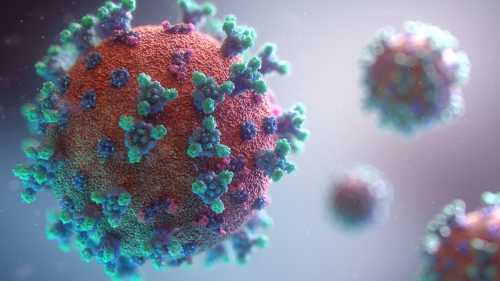
The Macroeconomic Squeeze: How Geopolitics and Climate are Rewiring Global Health Architecture
Aug 22, 2026
Comments (0)
No comments yet. Be the first to share your thoughts!
Want to join the discussion?
Please log in to post a comment.
Login NoworCreate an Account