
Pakistan Makes Artificial Intelligence Compulsory in Schools: A Giant Leap for the Next Generation

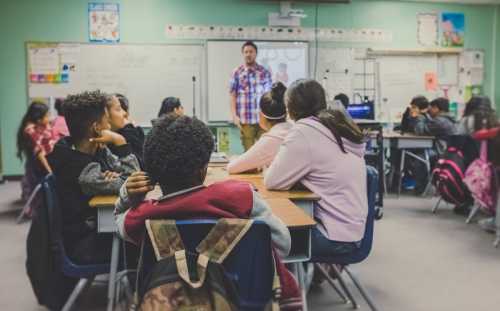
ISLAMABAD — Imagine a world where your homework helper is not just a book, but a super-smart computer program that can talk to you, answer your questions, and even help you draw pictures. This is the world of Artificial Intelligence, or AI, and the government of Pakistan has just made a historic decision to bring this world directly into the classrooms of the country's youngest children. In a landmark move that has educators, parents, and tech experts buzzing with excitement, the provincial government of Punjab, in coordination with federal education authorities, has officially announced that Artificial Intelligence will now be a compulsory subject in all primary and secondary schools across the province, starting from the upcoming academic year.
Understanding the Big News:
- AI is now a mandatory subject for primary and secondary school students.
- The curriculum focuses on basic coding, ethics, and practical AI applications.
- Over 50,000 teachers will undergo special training to teach the new subject.
- The goal is to prepare Pakistan's youth for the global digital economy.
- Special computer labs will be set up in public schools across Punjab.
What Does This Mean for a Five-Year-Old?
To understand why this is such a massive deal, we need to look at it through the eyes of a child. Imagine you have a magical box. When you ask the box a question, it doesn't just give you an answer from a book; it thinks about millions of books it has read in a split second and gives you the best possible answer. That is essentially what AI is. For a long time, learning about these magical boxes was only for university students studying computer science. Now, a five-year-old in a public school in Lahore or Rawalpindi will learn how to talk to this magical box, how to tell it what to do, and most importantly, how to understand that the box is just a machine that needs human guidance.
The new curriculum is not about making little kids write complex code on day one. Instead, it is about teaching them how to think logically. They will learn how to break big problems into small, manageable pieces—a skill called computational thinking. They will use visual, block-based coding tools that look like playing with digital Lego bricks. By the time they reach middle school, they will be building their own simple AI models that can recognize pictures of cats and dogs, or sort recycling from trash in digital simulations.
The Massive Teacher Training Challenge
You cannot teach a subject if you do not have teachers who understand it. Recognizing this, the government has launched one of the largest teacher training programs in the country's history. Over 50,000 primary and secondary school teachers are currently enrolled in intensive workshops. These workshops are not just about learning how to use a computer; they are about changing the mindset of how education is delivered. Teachers are being trained to act as facilitators rather than just lecturers. In an AI classroom, the teacher is not the only source of knowledge. The AI tools provide instant feedback, allowing the teacher to walk around the room and help students who are stuck on creative projects.
The training also heavily emphasizes the ethical use of technology. Teachers are learning how to explain to students that AI can make mistakes, that it can be biased, and that it should never replace human empathy and critical thinking. This is crucial because we are raising a generation that will grow up with AI as a normal part of their daily lives, much like how we grew up with the internet and smartphones.
Building the Infrastructure: From Chalkboards to Computer Labs
Of course, teaching AI requires computers, and this is where the logistical challenge becomes enormous. The government has allocated a special budget to upgrade existing computer labs and build new ones in public schools. They are partnering with local tech companies to donate refurbished but fully functional laptops and tablets. Furthermore, to ensure that schools in remote areas without high-speed internet can still participate, the curriculum includes offline AI tools that can run on local intranets. This means a student in a village in southern Punjab can learn the exact same concepts as a student in the heart of Islamabad.
The infrastructure push is not just about hardware. It is about creating a reliable power supply and secure network environments. Solar panels are being installed in schools to ensure that load shedding does not interrupt a coding class. This holistic approach to infrastructure shows that the government is treating this not as a temporary project, but as a permanent upgrade to the national education system.
The Economic Vision: Creating a Generation of Tech Leaders
Why is the government spending so much money and effort on this? The answer lies in the future of the global economy. We are entering the Fourth Industrial Revolution, where AI, robotics, and data science are the new oil. Countries that do not adapt will be left behind. Pakistan already has a thriving IT freelance sector, with millions of young people earning dollars by providing software and digital services to clients around the world. By introducing AI at the primary level, Pakistan is building a pipeline of talent that will eventually move from basic freelancing to creating high-value, innovative tech products.
Experts predict that within ten years, the students learning AI today will be entering the workforce. If they are well-trained, they will not just be looking for jobs; they will be creating them. They will start tech companies, develop AI solutions for local problems like crop disease detection for farmers, or create educational apps that help other children learn faster. This initiative is directly linked to the country's goal of increasing IT exports to $10 billion in the next five years. You cannot export high-tech services if you do not have a workforce that understands high-tech concepts from a young age.
Global Context: How Pakistan Compares
Pakistan is not the first country to introduce AI in schools, but the scale and speed of this rollout are noteworthy. Countries like India, China, and the UK have already integrated coding and basic AI into their national curricula. However, many of these programs are concentrated in elite private schools. Pakistan's initiative is unique because it specifically targets the public school system, aiming for mass inclusion. This democratization of tech education is vital for social mobility. It ensures that a brilliant child from a low-income family has the same opportunity to become an AI engineer as a child from a wealthy family.
International organizations, including UNESCO and the World Bank, have praised the initiative. They see it as a model for other developing nations. By focusing on foundational logic and ethics rather than just expensive hardware, Pakistan is showing that you do not need to be a rich country to teach your children about the future. You just need the political will and a smart curriculum.
Addressing the Risks: Screen Time and Digital Wellbeing
No major change comes without concerns, and parents are naturally worried about screen time. Will this new subject mean children are glued to screens all day? The education ministry has been very clear: the AI curriculum is designed to be a blend of digital and physical activities. For every hour spent on a computer, students will engage in unplugged activities—games and exercises that teach computational thinking without any screens at all. They might use playing cards to understand sorting algorithms or use physical blocks to understand how neural networks process information.
Furthermore, the curriculum includes a strong component on digital wellbeing. Students will learn about the importance of taking breaks, the physical effects of too much screen time, and how to balance their digital lives with sports, reading, and family time. The goal is to create healthy, balanced individuals who use technology as a tool, not as a crutch.
Looking Ahead: The Road to 2030
The rollout of the AI curriculum is just the beginning. The government has outlined a five-year roadmap that includes national AI hackathons for school children, partnerships with international tech giants for mentorship programs, and the establishment of a national youth AI council where students can advise the government on tech policies. The vision for 2030 is clear: Pakistan wants to be recognized not just as a consumer of technology, but as a creator and leader in the global AI space.
As the first batch of students sits down to write their first lines of code, they are doing more than just completing a school assignment. They are taking their first steps into a future that they will help build. By making AI compulsory, Pakistan is handing its next generation the keys to the most powerful technology in human history, trusting them to use it wisely, creatively, and for the betterment of society.
The Bottom Line: Teaching AI to children is not about turning them into robots; it is about teaching them how to control the robots. Pakistan's bold move to make AI compulsory in schools is a massive investment in its most valuable resource: its youth. If implemented well, this could be the catalyst that transforms the country's economic future.
Related Articles
The Compute Reckoning: Navigating Sovereign AI, Quantum Tipping Points, and Antitrust Friction
Aug 23, 2026
The Structural Recalibration of Global Technology: Navigating Compute, Cryptography, and Geopolitical Faultlines
Aug 22, 2026
Comments (0)
No comments yet. Be the first to share your thoughts!
Want to join the discussion?
Please log in to post a comment.
Login NoworCreate an Account