
Pakistan Needs Export-Led Growth Strategy to Unlock Trade Potential: PFC CEO

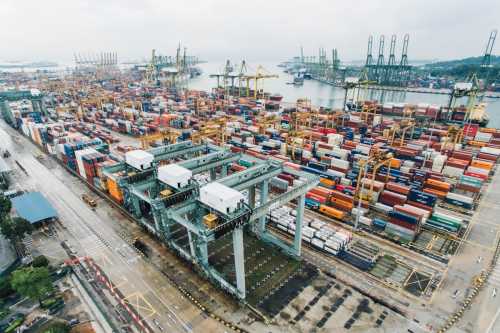
Understanding the Basics: What is an Export-Led Growth Strategy?
Imagine you have a lemonade stand. You make the best lemonade in the neighborhood, but you only sell it to your own family. Your family only has so much money, so you can only make a little bit of profit. Now, imagine if you started selling your lemonade to every house on the street, then every street in the city, and eventually to the whole world. You would make so much more money, and you could hire more helpers to make even more lemonade. This is exactly what an "export-led growth strategy" is for a country. Instead of just selling the things we make—like clothes, food, and tools—to the people inside our own country, we sell them to other countries. When a country sells more things to the rest of the world than it buys, it brings in foreign money, creates millions of jobs for its citizens, and makes the entire nation richer. It is like turning a small neighborhood lemonade stand into a global empire.
The Big News: PFC CEO Calls for Major Shift in Pakistan's Economy
On June 29, 2026, the Chief Executive Officer of the Pakistan Fertilizer Corporation (PFC) made a powerful and urgent statement that has caught the attention of economists, business leaders, and the government alike www.nation.com.pk . The CEO declared that Pakistan absolutely needs to adopt an aggressive, export-led growth strategy if it wants to unlock its true trade potential and secure a prosperous economic future www.nation.com.pk . For decades, Pakistan's economy has relied heavily on importing goods and consuming them locally, which often leads to a shortage of foreign dollars and massive debts. The PFC CEO emphasized that the country must remove critical barriers in banking, logistics, and policy that are currently holding businesses back www.nation.com.pk . This is not just a suggestion; it is a roadmap for survival and success. By shifting the focus from simply buying and selling within our borders to competing on the global stage, Pakistan can transform its economic destiny. The statement highlights a growing consensus among top industrialists that the old ways of doing business are no longer enough, and a bold new direction is required to lift millions of Pakistanis out of poverty and build a self-reliant nation.
Official News Source Reference
"Pakistan needs export-led growth strategy to unlock trade potential: PFC CEO. June 29, 2026. Pakistan must remove banking, logistics, policy barriers to..."
The Deep Dive: What Are the Banking, Logistics, and Policy Barriers?
To understand why the PFC CEO is so urgent about this, we need to look at the invisible walls that stop Pakistani products from reaching the world. First, let's talk about banking. When a Pakistani businessman wants to sell goods to Europe or America, he needs to get paid in dollars or euros. But our banking system often makes it incredibly difficult, slow, and expensive to receive these foreign payments. High transaction fees, complex paperwork, and strict regulations mean that by the time the money actually reaches the businessman's account, a huge chunk of it has disappeared. Next, consider logistics. Logistics is simply the art of moving things from point A to point B. In Pakistan, moving a container of goods from a factory in Faisalabad to the port in Karachi can take days, sometimes weeks, due to poor roads, outdated trains, and massive bureaucratic red tape at the ports. This makes our goods more expensive and slower to deliver than competitors from Bangladesh or Vietnam. Finally, there are policy barriers. The government frequently changes tax laws, import bans, and export incentives without warning. A businessman cannot plan for the future if the rules of the game keep changing every few months. The PFC CEO is demanding that the government sit down with the private sector and fix these three massive problems immediately.
Economic and Social Impact: Jobs, Dollars, and National Pride
If Pakistan successfully implements this export-led growth strategy, the positive impacts would be nothing short of revolutionary. When our factories are producing goods for the entire world, they need more workers. This means millions of new, high-paying jobs for our youth, from engineers and designers to truck drivers and port operators. When people have jobs and money, they spend it in the local economy, buying houses, cars, and education for their children, which creates a beautiful cycle of prosperity. Furthermore, exporting brings in foreign exchange—those all-important US dollars and Euros. Pakistan needs these dollars to pay for the oil, gas, and machinery we must buy from other countries. By earning our own dollars through exports, we stop relying on expensive loans from the International Monetary Fund (IMF) and friendly countries, giving us true economic independence. Socially, a booming export sector changes the mindset of a nation. It replaces a culture of dependency with a culture of innovation and hard work. Young entrepreneurs will start looking at global markets from day one, building companies that are designed to compete with the best in the world. This boosts national pride and puts Pakistan on the map as a serious, formidable economic player.
Future Outlook: The Road to a $1 Trillion Economy
The vision laid out by the PFC CEO is not just about fixing today's problems; it is about building the foundation for a massive, modern economy. Pakistan has incredible potential. We have a young, energetic population, a strategic location connected to Central Asia and the Middle East, and rich agricultural land. If we can combine these natural advantages with a world-class banking system, lightning-fast logistics, and stable, business-friendly policies, there is no limit to what we can achieve. Experts believe that an export-led model could eventually help Pakistan transition into a $1 trillion economy. To get there, the government must establish special economic zones with zero red tape, invest billions in modernizing our ports and railways, and sign free trade agreements with major economies like the European Union and the United States. The next five to ten years are critical. If the government and the private sector work together as partners, listening to the urgent advice of leaders like the PFC CEO, Pakistan can unlock its true trade potential and secure a bright, wealthy, and independent future for generations to come.
Related Articles
The Multipolar Fracture: Navigating Defense Realignment, Institutional Arbitrage, and Tactical Instability
Aug 23, 2026
The Architecture of Fragmentation: Navigating the Multipolar Shift in Global Governance
Aug 22, 2026
Comments (0)
No comments yet. Be the first to share your thoughts!
Want to join the discussion?
Please log in to post a comment.
Login NoworCreate an Account