
Pakistan Touches the Stars: SUPARCO Launches EO-3 Satellite and Prepares First Astronaut for China's Space Station

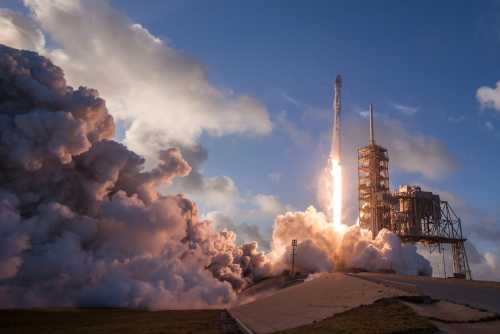
Looking Up at the Night Sky
Have you ever looked up at the night sky and seen tiny twinkling lights moving very slowly across the stars? Those are not just stars; many of them are satellites! Imagine a satellite as a tiny, super-smart robot bird that flies so high up in the sky that it can see the whole world at once. It does not have feathers or wings like a real bird, but it has solar panels that act like leaves, catching sunlight to give it energy. In 2026, Pakistan has done something truly magical. The Space and Upper Atmosphere Research Commission, which we call SUPARCO for short, has launched a brand-new satellite named EO-3. But that is not all! They are also getting ready to send a real, live human being—a Pakistani astronaut—to live in a giant house in the sky called a space station. Let us explore this wonderful journey together, step by step, just like we are learning to ride a bicycle for the very first time.
What is the EO-3 Satellite and Why is it Special?
Think of the EO-3 satellite as a giant, floating camera with super-vision. EO stands for Earth Observation. This means its main job is to look down at our beautiful planet and take pictures. But these are not ordinary pictures like the ones you take with a toy camera. These pictures are so detailed and smart that they can tell us things we cannot see with our own eyes. For example, EO-3 can look at a big farm in Punjab and tell the farmers exactly which plants need more water and which plants are happy. It can look at a forest in Khyber Pakhtunkhwa and count the trees to make sure no one is cutting them down illegally. It can even look at the ocean and help fishermen find where the fish are swimming. This satellite is like a helpful guardian angel watching over Pakistan from space, making sure our land, water, and people are safe and healthy. When SUPARCO launched EO-3 in April 2026, it was a huge moment because it means Pakistan now has its own eyes in the sky, built with its own brilliant scientists and engineers.
The Giant House in the Sky: China's Space Station
Now, let us talk about the most exciting part: sending a human to space! Imagine building a giant Lego house, but instead of putting it in your bedroom, you put it floating high above the clouds, where there is no gravity. This is what a space station is. China has built a magnificent space station called Tiangong, which means Heavenly Palace. It is like a giant science laboratory floating in the dark, starry sky. Astronauts live there for months at a time. They eat special food, sleep in sleeping bags tied to the wall so they do not float away, and do amazing science experiments. Because there is no gravity, everything floats! If an astronaut drops a pencil, it just stays there in the air. Pakistan and China are very good friends, and they decided to work together on this space adventure. China said to Pakistan, We have this beautiful house in the sky, and we would love for a Pakistani astronaut to come and visit, live, and do science with us. This is a very big deal because only a few countries in the whole world have sent their people to live in space.
How Do You Become an Astronaut?
You might be wondering, how does a person from Pakistan get to go to this giant house in the sky? Becoming an astronaut is like training to be a superhero, but instead of learning to fly by waving your arms, you have to learn how to fly a rocket, fix complicated machines, and do science experiments while floating upside down. SUPARCO and the Pakistani government chose the very best, smartest, and bravest people in the country. These heroes have to exercise every single day to make their muscles strong because in space, your muscles can get weak if you do not use them. They have to study how the human body changes when there is no gravity. They also have to learn how to stay calm if something goes wrong, because in space, you cannot just open a window to get some fresh air. The training is very hard, but these astronauts are doing it to make Pakistan proud and to learn new things that will help everyone back on Earth.
Why is This Important for Pakistan?
You might ask, why are we spending time and money on space when we have so many things to do on Earth? That is a very smart question! The answer is that space technology actually helps us solve problems right here at home. Remember the EO-3 satellite? The pictures it takes help us grow more food, which means less hunger. It helps us manage our rivers and dams, which prevents floods and gives us clean drinking water. It helps us build better cities and roads. And when our astronaut goes to the space station, they will do experiments about how plants grow in space, how water can be cleaned using special filters, and how our bones and hearts stay healthy. The things they learn up there can be brought back down to Earth to help doctors, farmers, and scientists in Pakistan. Space exploration is not about leaving Earth behind; it is about finding new ways to take care of our home.
The Official Announcement and the World's Reaction
When SUPARCO announced this landmark advancement in Pakistan's Manned Space Mission Program, the whole country cheered. The Ministry of Information and Broadcasting shared the wonderful news with everyone. People were so happy to see that Pakistani scientists are capable of doing such advanced, futuristic things. It inspires young children, just like you, to look up at the stars and dream. It shows that if you study hard, love science, and work together with friends from other countries like China, you can achieve the impossible. The world is watching Pakistan with great respect. We are no longer just a country that uses space technology; we are now a country that creates it and sends its own people to explore it.
Official Resources and Social Media Updates
To see the official announcement and stay updated on the brave astronauts training for this mission, you can visit the official social media channels of the government. The Ministry of Information and Broadcasting posted the exciting news on their official X (formerly Twitter) account. You can read the exact details and see the official statements directly from the source by visiting their post. This is the best way to get real, verified information straight from the people making history.
The Space and Upper Atmosphere Research Commission (SUPARCO) announces a landmark advancement in Pakistan's Manned Space Mission Program as the nation prepares to send its first astronaut to China's space station by the end of 2026. A proud moment for Pakistan!
— Ministry of Information & Broadcasting (@MoIB_Official) June 2026
The Future is Bright and Full of Stars
As we look forward to the rest of 2026 and beyond, the sky is literally the limit for Pakistan. The launch of the EO-3 satellite is just the beginning. Soon, we will see our very own astronaut floating inside the Tiangong space station, waving the Pakistani flag, and doing science that will change the world. This journey teaches us that no dream is too big. Whether you want to be a doctor, a teacher, an artist, or an astronaut, you have the power to reach the stars. Pakistan is stepping into a new era of science, technology, and exploration, and every single citizen is a part of this magnificent journey. So, the next time you look up at the night sky, remember that one of those twinkling lights might be a Pakistani satellite, and one of the stars might be a Pakistani astronaut, looking right back down at you, smiling and waving hello.
Related Articles

The Healthcare Quadruple Bypass: Navigating Price Controls, Workforce Attrition, and Rural Desertification
Aug 22, 2026
The Fractured Laboratory: How Geopolitical Friction is Rewiring Global Science Economics
Aug 19, 2026
Comments (0)
No comments yet. Be the first to share your thoughts!
Want to join the discussion?
Please log in to post a comment.
Login NoworCreate an Account