
Pakistan Unveils National AI Computing Grid: A Giant Leap for Tech Freelancers and Students

Imagine you have a brilliant idea to build a robot that can help clean up your city, but you do not have the tools or the big machines to make it work. You have the brainpower, but you lack the muscle. Now, imagine if the government suddenly gave you access to the biggest, most powerful machine in the country, completely for free, just so you could build your robot. This is exactly what is happening in Pakistan right now in the world of technology. In a historic move that has sent shockwaves of excitement through the tech community, the government of Pakistan has officially launched the National AI Computing Grid. This is not just a new building or a fancy computer; it is a massive, super-powered digital engine designed to help young Pakistanis, freelancers, and students turn their wildest dreams into reality. To understand why this is such a massive deal, we need to look at the story behind the screens, the people it will help, and how it changes the future of a nation.
The Big Announcement from Islamabad
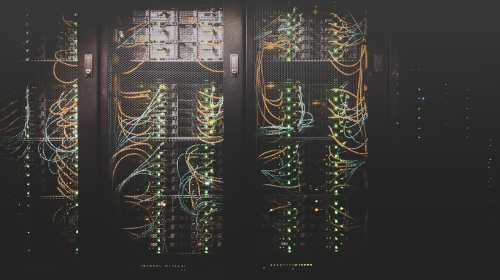
The story begins in the bustling capital city of Islamabad, where leaders, tech experts, and journalists gathered for a very special event. The Minister of Information Technology and Telecom stood on stage and announced that Pakistan now has its very own sovereign AI computing infrastructure. For a long time, if a Pakistani software developer wanted to train a smart computer program—what we call Artificial Intelligence or AI—they had to rent computer power from companies in America or Europe. This cost a lot of money, often hundreds of dollars a day, which is simply too expensive for a young student or a small startup in Lahore or Karachi. But with this new National AI Computing Grid, that problem is solved. The government has built a massive data center filled with thousands of the world's most advanced computer chips. These chips are linked together to work as one giant brain. By keeping this computing power inside the country, Pakistan is ensuring that its digital future is in its own hands. The leaders explained that this grid will be accessible to registered startups, university researchers, and top-tier freelancers at a heavily subsidized rate, meaning it will be incredibly cheap for them to use.
Official Announcement from the Ministry of IT & Telecom:
Historic day for Pakistan! ???????? We are proud to launch the National AI Computing Grid, empowering our youth and startups with world-class supercomputing power. The future of tech is proudly made in Pakistan! ???????? #PakistanAI #DigitalPakistan #PakistanAI
— Ministry of IT & Telecom (@MoIT_Telecom_Pak) June 22, 2026
Understanding AI Computing: The Giant Kitchen Analogy
Now, let us break down what "AI Computing" actually means, because the tech words can sound very confusing. Imagine you are running a massive restaurant kitchen. If you have only one chef, he can only chop one onion at a time. If a million customers order food at the exact same second, that one chef will be overwhelmed, and the food will take forever to cook. This is how old computers work; they do one task at a time, very quickly. But Artificial Intelligence is different. Training an AI is like trying to cook a million meals at the exact same second. You need a kitchen with ten thousand chefs, all chopping, frying, and baking at the exact same time. The new National AI Computing Grid is exactly that kitchen. It is a massive space filled with thousands of "digital chefs" (which are actually special computer chips called GPUs). When a student wants to teach a computer how to recognize diseases in X-ray images, they send their recipe (the data) to this giant kitchen. The ten thousand digital chefs work together for a few hours, and boom—the computer has learned how to be a doctor's assistant. Before this grid, Pakistani students had to send their recipes to kitchens in other countries, pay a fortune, and wait in line. Now, they have the biggest kitchen in the region right in their own backyard.
The Freelancer Revolution: From Bedrooms to Boardrooms
Pakistan is already famous for having one of the largest armies of freelancers in the world. These are talented young men and women sitting in their bedrooms, working with clients from New York, London, and Dubai. They design websites, write code, and create digital art. But the world is changing. Clients no longer just want a basic website; they want smart apps that use AI. They want chatbots that can talk to customers, or algorithms that can predict what shoppers want to buy. Previously, a Pakistani freelancer could not take these high-paying AI jobs because they did not have the computing power to build and test the AI. This new grid changes the game completely. A freelancer in Faisalabad can now log into the national grid, use supercomputer power to build a complex AI tool, and sell it to a global client for thousands of dollars. This means more foreign money coming into Pakistan, more respect for Pakistani tech workers on the global stage, and a massive boost to the country's economy. The government has stated that by empowering these freelancers, IT exports—which are the money earned from selling tech services to other countries—will skyrocket. It is a beautiful cycle: the government provides the tools, the youth do the hard work, and the whole country becomes wealthier and more modern.
Supercharging Universities and Research
Let us not forget the students and the professors. In universities across Pakistan, from NUST in Islamabad to LUMS in Lahore and NED in Karachi, brilliant minds are working on solutions for Pakistan's unique problems. They are trying to build AI that can predict floods in the Sindh rivers, or smart systems that can manage the crazy traffic in Lahore, or apps that can help farmers know exactly when to water their crops based on the weather. But all of these projects require massive computing power. A university server simply cannot handle the heavy math required to train these smart models. With the National AI Computing Grid, every major university is getting a direct, high-speed fiber-optic connection to the supercomputer. Professors are already cheering, because this means their students can do world-class research without leaving the country. Instead of moving to America or Europe for their PhDs because those countries have better labs, Pakistani students can now do cutting-edge AI research right at home. This stops the "brain drain"—which is when smart people leave their country to find better opportunities—and turns it into a "brain gain," where the smartest minds stay and build their nation.
Green Technology and the Future
One of the most beautiful parts of this story is how it is being powered. Giant supercomputers use a lot of electricity, and if that electricity comes from burning oil or coal, it creates smoke and hurts the environment. The leaders of this project knew that Pakistan is already facing challenges with climate change, so they designed the new data center to be as green as possible. The facility is equipped with massive solar panels on its roof and uses advanced cooling systems that do not waste water or energy. By combining renewable energy with high-tech computing, Pakistan is showing the world that you can be a leader in the digital future without hurting the planet. It is a perfect example of how technology and nature can work together. As the sun shines brightly over the data center, its rays are turned into electricity, which powers the digital chefs, which in turn help students build a better future. It is a cycle of clean, smart progress.
The Road Ahead: A Digital Destiny
Of course, building the kitchen is just the first step. Now, the country needs to make sure everyone knows how to cook. The Ministry of IT has announced new training programs to teach thousands of young people how to use AI tools. They are launching coding boot camps, online courses, and hackathons where students can compete to build the best AI apps. The goal is to create a whole generation of "AI-native" citizens—people who grow up using artificial intelligence as naturally as we use smartphones today. The journey of Pakistan's tech sector has always been one of resilience. Despite economic challenges and power shortages, the youth of Pakistan have always found a way to code, create, and connect with the world. This National AI Computing Grid is not just a piece of infrastructure; it is a promise. It is a promise from the state to its youth that their talents will be supported, their ideas will be given the tools they need, and their country will stand tall as a digital powerhouse in the region. As the sun sets on this historic launch, the screens in the data center glow brightly, ready to process the dreams of millions. The future is not just coming to Pakistan; the future is being coded, compiled, and created right there, by the hands of its own people.
Related Articles
The Compute Reckoning: Navigating Sovereign AI, Quantum Tipping Points, and Antitrust Friction
Aug 23, 2026
The Structural Recalibration of Global Technology: Navigating Compute, Cryptography, and Geopolitical Faultlines
Aug 22, 2026
Comments (0)
No comments yet. Be the first to share your thoughts!
Want to join the discussion?
Please log in to post a comment.
Login NoworCreate an Account