
Pakistan Urges US-Iran Ceasefire Compliance as Kuwait Raises Regional Security Concerns

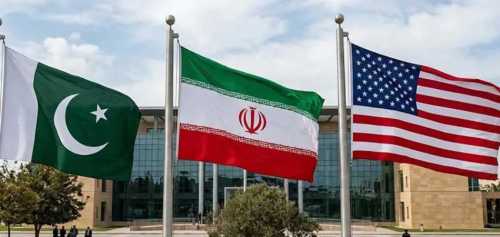
ISLAMABAD — In a significant diplomatic engagement underscoring Pakistan's pivotal mediatory role in regional conflict resolution, Deputy Prime Minister and Foreign Minister Senator Muhammad Ishaq Dar on Saturday emphasized the paramount importance of upholding ceasefire commitments under the Islamabad Memorandum of Understanding (MoU) while cautioning against any escalatory measures that could exacerbate tensions in the volatile Middle East region.
The foreign minister's remarks came during a reciprocal telephone conversation with Foreign Minister of the State of Kuwait, Sheikh Jarrah Jaber Al-Ahmad Al-Sabah, as confirmed by the Foreign Office spokesperson in an official press release. The dialogue between the two senior diplomats centered on the perturbing latest developments in the region, particularly the ongoing conflict between the United States and Iran.
"Foreign Minister Sheikh Jarrah shared Kuwait's serious concerns regarding the continued attacks on its territory and expressed hope that restraint would be exercised by all sides and that the Islamabad MoU would be fully implemented," the official statement articulated.
The Kuwaiti foreign minister's communication reflected the pervasive anxiety gripping Gulf states as the conflict continues to pose threats to regional stability and security. In his assessment, Sheikh Jarrah lauded Pakistan's constructive and mediatory role in promoting dialogue and fostering regional stability—a testament to Islamabad's diplomatic prowess in navigating complex geopolitical landscapes.
Responding to his Kuwaiti counterpart's concerns, Senator Dar admonished for urgent de-escalation while stressing the imperative of respecting the sovereignty and territorial integrity of all states. The deputy prime minister emphasized that maintaining regional peace and security must remain the foremost priority for all stakeholders involved in the conflict.
Islamabad MoU: A Fragile Framework for Peace
The Islamabad Memorandum of Understanding, signed on June 17, 2026, between the United States and Iran, represented a landmark diplomatic achievement brokered by Pakistan after months of intense negotiations. The agreement formalized the process of ending the devastating conflict that had engulfed the region, with provisions for the immediate reopening of the Strait of Hormuz and the lifting of naval blockades.
However, recent developments suggest that the ceasefire remains precarious, with both sides occasionally engaging in actions that threaten to undermine the fragile peace framework. Pakistan's continued diplomatic engagement reflects its commitment to ensuring the full implementation of the agreement and preventing any regression into hostilities.
Key Points from the Conversation:
- Kuwait expressed serious concerns over attacks on its territory
- Both ministers emphasized full implementation of Islamabad MoU
- Pakistan's mediatory role appreciated by Kuwait
- Urgent need for de-escalation stressed
- Respect for sovereignty and territorial integrity highlighted
- Agreement to maintain close contact on regional issues
The telephone conversation between the two foreign ministers concluded with a mutual commitment to remain in close contact on matters of mutual interest, signaling continued diplomatic coordination between Pakistan and Kuwait as they navigate the labyrinthine challenges posed by the regional crisis.
Pakistan's diplomatic efforts in mediating the US-Iran conflict have garnered international acclaim, positioning the country as a credible and trustworthy broker in international conflict resolution. As the region continues to grapple with the aftermath of the conflict, Pakistan's role in facilitating dialogue and promoting peace remains indispensable.
Official Social Media Statement:
Deputy Prime Minister/Foreign Minister Senator Mohammad Ishaq Dar @MIshaqDar50 received a telephone call today from the Foreign Minister of the State of Kuwait, H.E. Sheikh Jarrah Jaber Al-Ahmad Al-Sabah. The two Foreign Ministers discussed the latest developments in the region. Foreign Minister Sheikh Jarrah shared Kuwait's serious concerns regarding the continued attacks on its territory and expressed hope that restraint would be exercised by all sides and that the Islamabad MoU would be fully implemented. Foreign Minister Sheikh Jarrah also appreciated Pakistan's constructive and mediatory role in promoting dialogue and regional stability. The Deputy Prime Minister/Foreign Minister underscored the urgent need for de-escalation, stressed the importance of respecting the sovereignty and territorial integrity of all states, and emphasized that maintaining regional peace and security must remain the foremost priority. He also underlined the importance of upholding ceasefire commitments under the Islamabad MoU and avoiding any actions that could further escalate tensions. The two leaders agreed to remain in close contact on matters of mutual interest.
— Ministry of Foreign Affairs - Pakistan (@ForeignOfficePk) July 19, 2026



Comments (0)
No comments yet. Be the first to share your thoughts!
Want to join the discussion?
Please log in to post a comment.
Login NoworCreate an Account