
Pakistan’s Digital Goldmine: IT and Freelancing Exports Shatter Records with $4.6 Billion Earnings in 2026

The Magic of Selling Invisible Things
Imagine you have a giant lemonade stand, but instead of selling cups of lemonade to your neighbors, you are selling invisible, magical puzzles that you built on your computer. People from all over the world love your puzzles so much that they send you money from faraway countries. In the grown-up world, we call this "exporting." When a country sells things to another country, it brings in money, which helps the whole nation buy important things like fuel for cars, medicine for hospitals, and materials to build strong roads. For a long time, Pakistan mostly exported visible things like soft cotton, yummy rice, and colorful clothes. But in 2026, something incredible has happened. Pakistan has discovered a massive digital goldmine, and instead of cotton, the country is now exporting computer code, software, and digital services at a speed nobody ever imagined possible.
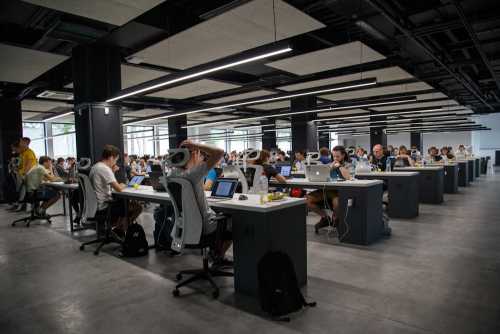
This shift is not just a small change; it is a complete transformation of how Pakistan earns money from the rest of the world. The technology sector, which includes everything from making mobile apps to managing giant computer networks for foreign companies, has become the new engine of the country's economy. Young men and women sitting in small rooms in Lahore, Karachi, Islamabad, and even tiny villages are connecting to the internet and doing work for companies in America, Europe, and the Middle East. They are the new digital soldiers of Pakistan's economic growth, and their hard work has just led to a historic victory that is making the entire nation proud.
The Historic $4.6 Billion Milestone
To understand how big this victory is, we have to look at the numbers, which are nothing short of spectacular. According to official reports and industry leaders, Pakistan's Information Technology and freelancing exports have hit a mind-blowing record of $4.6 billion in just the first 11 months of the fiscal year 2026 [[14]]. Let that number sink in for a moment. Four point six billion dollars is a mountain of money. To put it in perspective, that is enough money to build hundreds of new schools, buy thousands of ambulances, or pave millions of miles of new roads. This massive influx of foreign dollars is like a giant rainstorm filling up a dry dam, giving the country the financial water it needs to grow and thrive.
This achievement represents a staggering 26.4 percent growth compared to the same time last year [[14]]. In the world of economics, growing by even a few percent is considered a great success. But growing by over 26 percent in a single year is like running a race and suddenly finding a pair of rocket boots that make you fly past everyone else. The first nine months of the year alone saw IT exports reach $3.39 billion, which was already a 20 percent jump from the previous year [[11]]. This shows that the momentum is not slowing down; it is actually speeding up as more companies around the world realize that Pakistani tech professionals are among the most skilled, hardworking, and affordable in the entire globe.
The Army of Digital Freelancers
A huge part of this success story belongs to a special group of heroes known as freelancers. Imagine a freelancer as a digital mercenary. Instead of working for just one boss in a single office from nine to five, they are independent warriors who offer their skills to multiple clients all over the world. A freelancer in Pakistan might spend the morning designing a beautiful website for a shop in London, the afternoon writing code for a bank in New York, and the evening creating a mobile app for a startup in Dubai. They are the ultimate flexible workers, and Pakistan has more of them than almost anywhere else.
In a historic first, Pakistani freelancers earned over $1 billion in IT export income during the first 11 months of FY2026 [[12]]. Earlier in the year, reports showed they had already brought in a record-breaking $960 million in just the first 10 months [[8]]. These young professionals are not just earning money for themselves; they are bringing foreign exchange directly into the country's banks. Because of their incredible skills in graphic design, software development, digital marketing, and customer support, Pakistan has been ranked as the 4th fastest-growing freelance market in the world, with a mind-boggling 47 percent growth rate [[9]]. This means that the world is knocking on Pakistan's door, begging for the talent that its youth possesses.
Official Announcement from Islamabad Chamber
Good News for Pakistan's IT Industry! The Government has retained the fixed tax regime. Pakistan's IT and freelancing exports hit a record $4.6 billion in the first 11 months of FY 2024–25, showing a 26.4% year-on-year growth.
- Islamabad Chamber of Commerce and Industry Official Facebook
Read the full official post here: View Official Facebook Post
The Government Removes the "Permission Slips"
You might wonder how the government helped make this happen. Imagine you want to sell your delicious cookies to a neighbor, but before you can hand over the cookies and take the money, you have to fill out a long, complicated permission slip and get it stamped by the principal of the school. It would take so much time that you might lose the sale! For a long time, IT companies and freelancers in Pakistan had to do exactly this. Every time they exported a small piece of software or received a payment for a freelance job, they had to submit a document called "Form R" to the State Bank [[10]].
This Form R was like a giant, heavy backpack that slowed the freelancers down. It required endless paperwork, visits to the bank, and waiting in long lines. Recognizing that this was hurting the country's digital growth, the State Bank of Pakistan made a brilliant decision in April 2026. They announced that IT companies and freelancers will no longer be required to submit Form R for every individual export transaction [[10]]. By removing this digital backpack, the government has freed up thousands of hours for programmers and designers. Now, instead of filling out paperwork, they can spend that time writing code, designing apps, and earning more dollars for Pakistan. This single change has been a massive boost to the industry's speed and efficiency.
The Road to Five Billion and Beyond
With $4.6 billion already in the bag, the target for IT exports in FY2026 is set at an ambitious $5 billion [[9]]. Is this goal achievable? Absolutely. The momentum is unstoppable. The sector is projected to contribute over $5 billion annually to Pakistan's economy on a permanent basis, a massive leap up from just $400 million a few years ago [[16]]. This growth is fueled by a new generation of youth who are deeply connected to the internet, highly educated in technical skills, and fluent in the global language of code.
Furthermore, the government has retained a fixed, favorable tax regime for the IT industry, ensuring that these companies keep more of their profits to reinvest in better computers, faster internet, and training for their employees [[14]]. Special technology parks and incubators are being built across the country, providing free electricity and high-speed fiber optics to startups. The message to the world is clear: Pakistan is open for digital business. The country is transitioning from an agricultural economy to a knowledge-based economy, where the minds of its people are its most valuable natural resource.
A New Era of Digital Pride
The story of Pakistan's IT exports in 2026 is not just about money; it is about dignity and global respect. For decades, the country faced economic challenges that made it rely on loans from other nations. Now, by exporting software and digital services, Pakistan is earning its own money through hard work and intellect. When a Pakistani freelancer in a small town earns dollars from a client in California, they are not just paying their own bills; they are strengthening the entire nation's financial shield.
As we look to the future, the sky is not the limit; it is just the beginning. With artificial intelligence, cloud computing, and cybersecurity becoming the new frontiers, Pakistan's tech army is ready to conquer them. The record-breaking $4.6 billion is a testament to what happens when youth, technology, and supportive government policies come together. Pakistan has officially arrived as a global technology powerhouse, and the digital goldmine is only just beginning to shine.
Related Articles
The Compute Reckoning: Navigating Sovereign AI, Quantum Tipping Points, and Antitrust Friction
Aug 23, 2026
The Structural Recalibration of Global Technology: Navigating Compute, Cryptography, and Geopolitical Faultlines
Aug 22, 2026
Comments (0)
No comments yet. Be the first to share your thoughts!
Want to join the discussion?
Please log in to post a comment.
Login NoworCreate an Account