
Pakistan’s Grand Neighborhood Strategy: How the 2026 Islamabad Connectivity Summit is Redrawing the Map of Central Asia

Imagine you live in a house that sits exactly between two massive, bustling neighborhoods. To your north, you have a neighborhood full of giant warehouses packed with energy, minerals, and incredible resources, but they have no direct way to send their goods to the ocean. To your south, you have a massive, deep ocean port that is always hungry for trade. Your house is the only bridge connecting them. For a long time, this bridge was broken, and everyone just walked around it. But in June 2026, Pakistan decided to fix the bridge, paint it, and throw the biggest block party the region has ever seen. This is exactly what happened at the 2026 Islamabad Regional Connectivity Summit, where Pakistan officially launched the next, massive phase of its diplomatic and economic strategy to integrate Central Asia with the Arabian Sea.
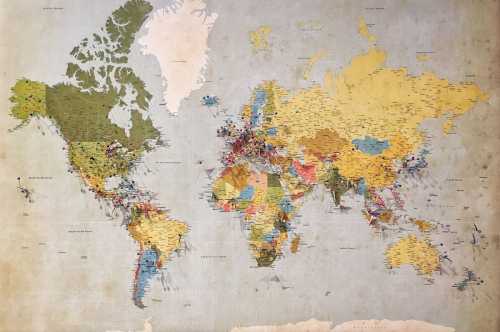
To really understand why this is such a monumental shift in world politics, we have to look at the map. Pakistan shares its northern borders with Afghanistan, and right above Afghanistan are the Central Asian Republics: Uzbekistan, Tajikistan, Kyrgyzstan, Turkmenistan, and Kazakhstan. These countries are incredibly rich in natural gas, uranium, and agriculture, but they are "landlocked." Being landlocked is like having a giant bakery but no doors; you have all the bread, but you cannot deliver it to the customers. Pakistan, with its Gwadar Port and Karachi harbor, is the door. By building roads, railways, and energy pipelines through its territory, Pakistan is not just helping its neighbors; it is making itself the most important toll booth, logistics hub, and trading partner in the entire region .
The centerpiece of this 2026 summit was the formal agreement to extend the China-Pakistan Economic Corridor (CPEC) deep into Central Asia. Think of CPEC as a massive, high-speed conveyor belt. For the last ten years, this conveyor belt mostly moved things between China and Pakistan. But now, the leaders of Uzbekistan and Kazakhstan flew to Islamabad to sign agreements extending this belt right into their capitals. This means that a crate of electronics made in China can be loaded onto a train in Beijing, travel through Pakistan, and end up in Tashkent, Uzbekistan, in a fraction of the time it would take to go by sea. It is a logistical miracle that turns weeks of travel into mere days .
But it is not just about moving boxes; it is about moving power. Central Asia has massive hydroelectric dams and natural gas reserves, while Pakistan is constantly hungry for energy to keep its factories running and its cities lit. The 2026 summit finalized the TAPI (Turkmenistan-Afghanistan-Pakistan-India) pipeline acceleration plan and a new CASA-1000 expansion. Imagine your neighbor has a giant solar panel on their roof and produces more electricity than they can use. Instead of letting that power go to waste, they run an extension cord to your house and sell it to you at a discount. That is exactly what these energy agreements do. They create a win-win situation where Central Asia gets a reliable buyer for its energy, and Pakistan gets the cheap, reliable power it desperately needs to fuel its economic engine .
The political implications of this are staggering. For decades, Central Asia was heavily influenced by Russia to the north and China to the east. By bringing Pakistan into the fold, these Central Asian nations are diversifying their friendships. They are saying, "We want options." Pakistan, in turn, is securing its strategic depth. If Pakistan is the indispensable gateway for Central Asia, then the entire region has a vested interest in Pakistan's stability, security, and economic success. No one wants the bridge they rely on to collapse. This diplomatic masterstroke gives Pakistan immense leverage and security guarantees from multiple global powers simultaneously .
How does this affect the regular person on the street in Lahore or Peshawar? It means jobs. Thousands and thousands of jobs. Building railways, maintaining pipelines, working at the new dry ports, and managing the logistics hubs requires a massive workforce. It means that a farmer in Punjab might soon be exporting his mangoes to Kazakhstan via a streamlined rail link, earning more money than ever before. It means cheaper electricity for your home because the country is importing affordable hydro-power from Tajikistan. The grand neighborhood strategy is not just about flags and handshakes; it is about putting food on the table and keeping the lights on .
Of course, you cannot build a bridge through a neighborhood without making sure the streets are safe. The 2026 summit included a historic security accord with Afghanistan to guarantee the safety of these trade routes. Pakistan has offered extensive economic incentives to Kabul, essentially saying, "If you keep the roads safe for our trade convoys, we will help you build your economy." This is a shift from purely military border management to economic statecraft. By intertwining the economic fate of the region, the incentive for conflict drops dramatically. Peace becomes more profitable than war .
The international community is watching this closely. The United States, the European Union, and even Japan are looking at Pakistan's new role as a stabilizing force in Central Asia. They are beginning to offer their own investments to ensure that these trade routes remain open and transparent. Pakistan is successfully positioning itself not just as a South Asian country, but as the central pivot of the entire Eurasian landmass. It is a return to the ancient days of the Silk Road, but this time, the silk is being carried by fiber-optic cables and high-speed trains .
As the summit concluded on June 23, 2026, the mood in Islamabad was electric. The agreements signed are not just pieces of paper; they are the blueprints for a new era of prosperity. Pakistan has realized that its geography is not a curse; it is its greatest superpower. By embracing its role as the connector, the bridge, and the gateway, Pakistan is securing its future, enriching its neighbors, and redrawing the political map of Asia. The neighborhood is finally talking to each other, and Pakistan is the one holding the megaphone .
Official Social Media Update:
Historic day at the Islamabad Regional Connectivity Summit 2026! ???????????????? We signed landmark agreements to extend CPEC into Central Asia, unlocking new trade, energy, and transit corridors. Pakistan is proud to be the bridge connecting Eurasia to the Arabian Sea. #CPEC #Connectivity #Diplomacy
— Ministry of Foreign Affairs Pakistan (@ForeignOfficePk) June 22, 2026
Related Articles
The Multipolar Fracture: Navigating Defense Realignment, Institutional Arbitrage, and Tactical Instability
Aug 23, 2026
The Architecture of Fragmentation: Navigating the Multipolar Shift in Global Governance
Aug 22, 2026
Comments (0)
No comments yet. Be the first to share your thoughts!
Want to join the discussion?
Please log in to post a comment.
Login NoworCreate an Account