
Pakistan's Grand Plan to Teach One Million People How to Talk to Computers

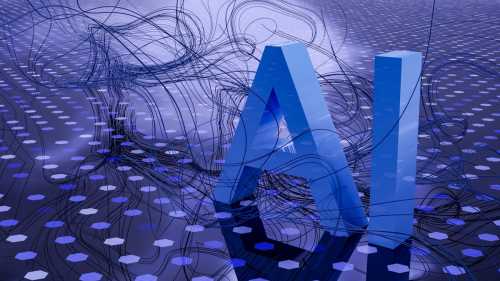
Imagine you have a magical parrot. This parrot has read every single book in the world's biggest library. If you ask it a question, it can answer you in seconds. If you ask it to write a story, paint a picture, or even help you build a toy, it can do that too. This magical parrot is a lot like Artificial Intelligence, or AI for short. Now, imagine if one million people in Pakistan were each given one of these magical parrots and taught exactly how to talk to them. That is the big, exciting news coming out of Pakistan in June 2026. The government has launched a massive new program called "AI Seekho 2026," which translates to "Learn AI 2026." The goal is simple but incredibly powerful: to teach one million citizens how to use AI and a brand-new skill called "vibe coding." In this story, we are going to explore exactly what this means, why it is so important, and how it could change the future of the country, all explained as simply as possible but with the serious attention it deserves from a journalistic perspective.
To understand why this is such a big deal, we first need to understand what "vibe coding" is. In the past, if you wanted to tell a computer to do something, like build a website or create a game, you had to speak the computer's language. This language is called code, and it looks like a bunch of confusing math and strange words. Learning to code is a bit like learning to speak a completely new language, like Mandarin or Arabic, but for machines. It takes a lot of time, patience, and practice. But now, because AI has become so smart, we have something called "vibe coding." Vibe coding is like talking to your magical parrot in your normal, everyday language. Instead of writing complex math, you just tell the AI what you want to build. You might say, "Build me a website for a bakery that looks like it is made of chocolate and has a button to order cakes." The AI understands your "vibe," your feelings, and your simple words, and it writes all the complicated computer code for you in the background. This means that anyone, no matter their age or background, can become a creator of technology. They do not need to spend four years at a university learning complex math; they just need to know how to ask the right questions.
The government of Pakistan is acting like a giant gardener. A gardener knows that if you plant one seed, you get one tree. But if you plant a million seeds, you get a massive forest that can change the climate of the whole area. By launching AI Seekho 2026, the government is planting one million seeds. They are providing free training, resources, and even hackathons with a prize pool of Rs 2.5 Million to encourage people to participate. This is not just about giving people a new hobby; it is about changing the entire economy of the country. Pakistan has a very young population. Millions of young people are looking for jobs, but there are not always enough traditional jobs available. However, the internet has no borders. A young person in a small village in Pakistan can use their new AI skills to do freelance work for a company in New York, London, or Tokyo. They can build apps, design marketing campaigns, or analyze data for businesses all over the world, all from their laptop at home. This brings foreign money into the country and creates wealth without anyone having to leave their hometown.
To see the official excitement about this, we can look at the social media announcements from the government. The official channels have been sharing the news far and wide, emphasizing that this is a historic moment for the nation's digital future. Here is the official word directly from the source, showing the commitment to making this vision a reality for every citizen.
But what about the schools and universities? This initiative is also completely changing how education works. In the old days, a teacher would stand at the front of the class, and thirty students would all have to learn the exact same thing at the exact same speed. If you were a fast learner, you got bored. If you were a slow learner, you got left behind. AI changes this completely. Now, every student can have their own personal AI tutor. This tutor never gets tired, never gets angry, and knows exactly how each student learns best. If a student loves football, the AI tutor will use football examples to teach them math. If a student loves music, it will use music notes to teach them physics. This means that education is becoming personalized, like a suit tailored perfectly to fit one person, rather than a one-size-fits-all uniform. The government knows that to build a strong future, they need a smart, well-educated population, and AI is the tool that will make this possible at a massive scale.
Let us also think about the farmers who grow the food we eat. Farming is one of the oldest jobs in the world, but it is also one of the hardest. Farmers have to guess the weather, watch for bugs, and figure out exactly how much water their crops need. Now, with AI, farming is becoming super-smart. Drones can fly over fields and take pictures of the plants. The AI looks at these pictures and can tell the farmer, "Hey, those plants in the corner are thirsty," or "There are bugs starting to eat the leaves on the east side." This helps the farmer save water, use less bug spray, and grow more food. By teaching young people in rural areas how to use these AI tools, the government is making sure that the agriculture sector—the backbone of Pakistan's economy—becomes modern and efficient. This is how AI helps put food on the table while also creating high-tech jobs in the countryside.
Healthcare is another area where this million-person AI army will make a huge difference. Imagine a doctor who can see inside your body without cutting you open, or who can look at a thousand X-rays in one second and spot a sickness that a human eye might miss. AI can do exactly that. In many parts of Pakistan, there are not enough doctors for everyone. But if a local health worker has a tablet with an AI assistant, they can check a patient's symptoms and get instant advice on what to do. The AI can help them diagnose diseases early, when they are easiest to cure. By training young people to work alongside these medical AI tools, Pakistan can ensure that even people in remote villages get access to world-class healthcare advice. It is like giving every village a super-doctor who never sleeps.
This initiative is also a massive step forward for women's empowerment. In many places, cultural norms or safety concerns make it difficult for women to travel to offices or work late hours in traditional corporate settings. But the digital world does not care about gender. A woman in her home can learn AI, build software, and work for global clients just as effectively as anyone else. "Vibe coding" and AI tools lower the barrier to entry, meaning women who may not have had the chance to go to elite engineering universities can now learn these skills online, at their own pace, from the safety and comfort of their homes. This is unlocking a huge, previously untapped pool of talent. When half the population is empowered to create and earn, the entire country becomes richer, safer, and more progressive.
Of course, every big journey has its bumps in the road. Teaching one million people how to use advanced technology is not as simple as flipping a switch. There are real challenges that need to be solved. First, you need electricity. If the power goes out, the computers turn off, and the learning stops. Second, you need the internet. The internet needs to be fast and available everywhere, not just in the big cities like Karachi or Lahore, but also in the rural areas where many talented young people live. The government is working on these infrastructure problems, building more data centers and improving the national fiber optic network. It is a huge task, like building a new highway system for data instead of cars. But the leadership has made it clear that this is a top priority. They understand that in the 21st century, internet access and digital skills are just as important as roads and bridges were in the 20th century.
When we look at the rest of the world, Pakistan is not alone in this race, but it is moving with incredible speed. Countries all over the globe are realizing that AI is the next great industrial revolution. Just like the steam engine changed farming and factories, and the internet changed communication and shopping, AI is changing how we think, create, and work. By launching AI Seekho 2026, Pakistan is signaling to the world that it does not want to just be a consumer of technology created in Silicon Valley or Beijing. It wants to be a creator. It wants its own young minds to build the apps, solve the local problems, and create the businesses of tomorrow. This shift in mindset is perhaps the most important part of the whole initiative. It is about confidence. It is about telling the youth of Pakistan that they are just as capable of shaping the future as anyone else in the world.
In conclusion, the "AI Seekho 2026" initiative is much more than just a series of computer classes. It is a grand vision for the future of a nation. It is about taking the most powerful tool ever invented by humanity—Artificial Intelligence—and putting it into the hands of one million ordinary citizens. By teaching them how to use "vibe coding," the government is removing the barriers that used to keep people out of the tech world. They are planting a forest of innovation that will provide jobs, improve education, boost agriculture, and transform healthcare. While there are certainly challenges with electricity and internet access, the determination is clear. Pakistan is stepping onto the global stage not as a follower, but as a leader in the digital age. The magical parrot of AI is here, and for one million Pakistanis, the conversation is just beginning. The world will be watching closely to see the incredible things they create next.
Related Articles
The Macro Fracture in AI: Navigating Compute Chokeholds, Open-Source Backlash, and the Productivity Mirage
Aug 23, 2026
The Silicon Ceiling: How Power Grids and Geopolitics Are Choking the AI Revolution
Aug 22, 2026
Comments (0)
No comments yet. Be the first to share your thoughts!
Want to join the discussion?
Please log in to post a comment.
Login NoworCreate an Account