
Pakistan's Invisible Lemonade Stand: IT Exports Smash $5 Billion Record as AI and Freelancers Lead Global Tech Boom

Imagine you and your friends decide to open the most amazing lemonade stand in the entire world. But there is a magical twist: your lemonade is completely invisible. You cannot see it, you cannot touch it, and you cannot drink it. Instead of lemons and sugar, your lemonade is made of computer code, brilliant ideas, and digital solutions. You sell this invisible lemonade to people in giant, wealthy neighborhoods across the ocean—in places like New York, London, and Dubai. In exchange for your invisible lemonade, they give you shiny foreign coins called US Dollars. You bring these shiny coins back home and put them into the country's giant piggy bank. For a long time, our lemonade stand was small. But today, the stand has grown into a massive, global empire. In the fiscal year 2026, Pakistan's IT exports have officially smashed through the $5 Billion mark, proving that our invisible lemonade is some of the most valuable product on the planet.
The Giant Piggy Bank: Understanding IT Exports
To understand why this $5 Billion number is such a massive deal, we have to understand how the country's giant piggy bank works. Every country needs foreign currency—mostly US Dollars—to buy important things from the outside world, like oil for our cars, machinery for our factories, and even the ingredients for our medicines. If a country does not have enough shiny dollars in its piggy bank, it has to borrow money from strict uncles like the International Monetary Fund (IMF), which comes with very tough rules. For decades, Pakistan's main way of earning these shiny dollars was by selling physical things: soft cotton, fluffy towels, and delicious rice. These are great products, but they take a lot of time to grow, they are heavy to ship, and their prices go up and down depending on the weather. But IT exports—our invisible lemonade—are completely different. A young coder in Lahore can write a brilliant piece of software, send it over the internet in two seconds, and get paid thousands of dollars instantly. It requires no ships, no fuel, and no weather. It is pure, high-value brainpower, and in 2026, it has become the most powerful engine for filling the national piggy bank.
The Two Giant Engines: Freelancers and Software Houses
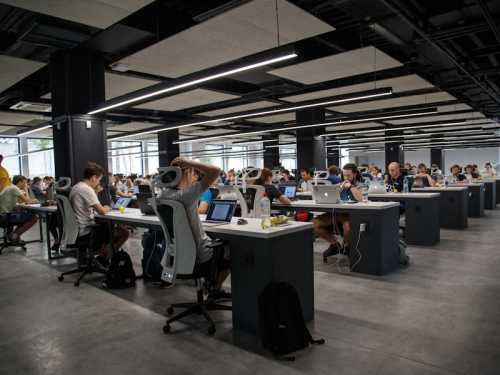
The journey to $5.2 Billion in IT exports for FY2026 was driven by two massive engines working together perfectly. The first engine is the army of freelance freelancers. Pakistan is already one of the top countries in the world for freelancing. These are young men and women sitting in their bedrooms, local cafes, or co-working spaces, doing jobs for global clients. They are graphic designers, web developers, digital marketers, and customer support experts. But in 2026, the game changed. These freelancers are no longer just doing basic tasks. They have become 'AI-Augmented Super-Workers.' By using the new, highly advanced Artificial Intelligence tools, a single Pakistani freelancer can now do the work that used to require a team of five people. They are writing code faster, designing better, and solving complex problems in minutes. Because their productivity skyrocketed, they started charging higher rates in dollars, and their total earnings doubled. The State Bank of Pakistan reported that freelance remittances alone crossed the $2.5 Billion mark, bringing a massive flood of dollars directly into the hands of middle-class families.
A historic milestone for Digital Pakistan! ???????? IT and IT-enabled exports have officially crossed the $5 Billion mark in FY2026. This is a testament to the hard work of our freelancers, software houses, and the youth who are putting Pakistan on the global tech map. ???????? #DigitalPakistan#ITExports
— Ministry of IT & Telecom (@MoITT_Pakistan) June 28, 2026
The Second Engine: The Rise of SaaS and Global Startups
The second engine driving this massive growth is the transformation of local software houses into global SaaS (Software as a Service) companies. In the past, Pakistani IT companies mostly did 'outsourcing'—meaning a company in America would tell them exactly what to build, and they would build it. It was good work, but it was like being a hired chef in someone else's restaurant. In 2026, Pakistani tech companies stopped just being hired chefs and started opening their own global restaurants. They built their own software products—like accounting tools for small businesses in the US, healthcare management apps for clinics in the UK, and logistics tracking systems for e-commerce giants in the Middle East. Because they own the software, they get to charge a monthly subscription fee in dollars from thousands of users worldwide. This recurring revenue model is incredibly stable and highly valued by global investors. Companies like Systems Limited and newer, agile startups have seen their foreign earnings explode, contributing over $2 Billion to the national export tally.
The Government's Master Plan: Special Tech Zones and Tax Holidays
This incredible growth did not happen by accident. The government of Pakistan, realizing that IT was the golden goose, rolled out a series of brilliant business policies to help the lemonade stand grow. The Ministry of IT and Telecommunication, in coordination with the State Bank, introduced the 'Tech Export Facilitation Framework.' This framework created Special Technology Zones (STZs) across the country—in Islamabad, Lahore, Karachi, and Peshawar. Imagine these zones as magical VIP playgrounds for tech companies. If a company sets up its office in an STZ, it gets a 10-year tax holiday. This means they do not have to pay any corporate income tax on the dollars they earn from exporting their software. Furthermore, the government simplified the process of bringing foreign investment into the country and allowed tech companies to retain a larger portion of their foreign earnings in special dollar accounts to pay for their own international servers and marketing. By removing the red tape and the heavy taxes, the government gave the tech sector the freedom to run as fast as it could.
The Ripple Effect: How This Helps the Common Family
You might be wondering, "This is all about big companies and computer code. How does this help my family when we go to the grocery store?" The answer lies in the magic of foreign exchange. When Pakistani IT professionals bring billions of dollars into the country, the State Bank uses those dollars to pay for the country's imports, like oil and gas. Because we have more dollars coming in from IT, the country does not have to borrow as much money from the IMF. This stabilizes the value of the Pakistani Rupee. When the Rupee is strong and stable, the price of petrol does not jump every week, and the cost of imported goods like cooking oil, tea, and medicines stays under control. Furthermore, the IT boom is creating hundreds of thousands of high-paying, white-collar jobs. A young graduate who gets a job at a software house earning a salary comparable to global standards can support their entire extended family, send their siblings to better schools, and buy a house. The IT sector is not just exporting code; it is exporting poverty and importing prosperity.
The Challenges Ahead: Keeping the Momentum Alive
However, a $5 Billion lemonade stand still faces challenges in the global market. The biggest hurdle is the global competition. Countries like India, the Philippines, and Vietnam are also aggressively pushing their IT exports. To stay ahead, Pakistan must continuously upgrade the skills of its workforce. The government has launched the 'National AI and Cloud Computing Certification Program' to ensure that every IT graduate is proficient in the latest technologies like Machine Learning, Blockchain, and Cloud Architecture. Another challenge is the digital infrastructure. To sell invisible lemonade to the world, you need a incredibly fast, unbreakable internet connection. The state has invested heavily in laying new fiber-optic cables and launching low-earth orbit satellite internet partnerships to ensure that a freelancer in a remote area of Balochistan has the exact same high-speed connection as a coder in Silicon Valley. If the internet drops, the lemonade stand closes, so keeping the digital pipes wide open is a matter of national security.
Conclusion: The New Face of Pakistani Business
The crossing of the $5 Billion IT export milestone is a defining moment in Pakistan's economic history. It proves that the country's greatest resource is not its fertile land, its massive rivers, or its mineral wealth. Its greatest resource is the brilliant, resilient, and adaptable mind of its youth. By leveraging the power of Artificial Intelligence, embracing the freedom of the global digital economy, and creating a supportive business environment, Pakistan has built a modern, invisible empire. The lemonade stand is now a global corporation, and the shiny dollars it brings home are building a stronger, more stable, and more prosperous future for every single citizen. The code is written, the servers are humming, and the future of Pakistani business is undeniably digital.
Related Articles
The Multipolar Fracture: Navigating Defense Realignment, Institutional Arbitrage, and Tactical Instability
Aug 23, 2026
The Architecture of Fragmentation: Navigating the Multipolar Shift in Global Governance
Aug 22, 2026
Comments (0)
No comments yet. Be the first to share your thoughts!
Want to join the discussion?
Please log in to post a comment.
Login NoworCreate an Account