
Pakistan's Macro Strait: Geopolitical Realignment and the Illusion of Economic Stabilization

Navigating the Macro Strait
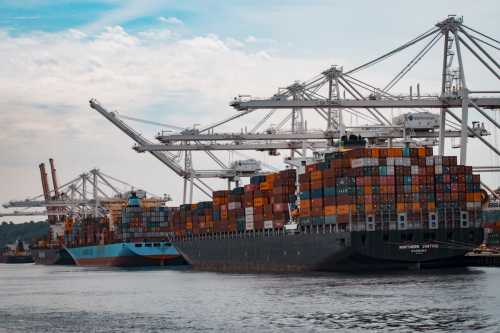
Managing Pakistan’s macroeconomic trajectory currently resembles steering a heavily laden cargo vessel through a narrowing strait while the primary engine sputters. The core event defining this moment is Pakistan’s fragile economic stabilization, marked by foreign exchange reserves reaching approximately $18 billion, juxtaposed against imminent external shocks from Middle East tensions and rapid regional geopolitical realignments. This precarious equilibrium demands rigorous analytical scrutiny beyond superficial headline metrics.
The Regional Realignment Squeeze
Mainstream discourse frequently overlooks the structural decoupling occurring in regional supply chains. Europe’s accelerated courting of India signals a profound geopolitical realignment, compelling Pakistan to urgently reassess its position in global trade networks. This shift is not merely diplomatic; it directly compresses Pakistan’s export margins as foreign direct investment naturally gravitates toward more stable, scalable manufacturing hubs. Consequently, legacy industries face an existential threat as capital allocation models prioritize risk-adjusted returns over historical geographic proximity.
The Illusion of Structural Resilience
Proponents of the current economic framework often point to the Special Investment Facilitation Council and deepening Gulf partnerships as sufficient buffers against external volatility. While this perspective offers a comforting narrative, it dangerously oversimplifies the macroeconomic reality. Temporary relief from allied nations provides short-term liquidity, but it does not address the structural rigidity of the export base. The economy remains disproportionately reliant on low-value-added textiles rather than transitioning toward high-tech manufacturing, leaving it vulnerable to the slightest shift in global commodity demand.
The Stealth Tax of Maritime Volatility
Beyond regional diplomacy, global conflict dynamics are introducing hidden costs that mainstream inflation models fail to adequately price. Escalating tensions in the Middle East directly threaten maritime security, leading to surging war-risk insurance premiums and higher sea freight charges. As macroeconomic observers warn, "war-risk insurance premiums and disruptions in maritime routes would raise the cost of both imports and exports," effectively acting as an unlegislated tax on an already strained consumer base. For an import-dependent economy, this accelerates currency depreciation and feeds directly into domestic inflation without any corresponding increase in productivity.
Echoes of the 2008 Balance-of-Payments Precipice
History provides a stark warning for those who mistake temporary reserve accumulation for fundamental recovery. The current macroeconomic posture bears a striking resemblance to the period preceding the 2008 balance-of-payments crisis. During that era, short-term inflows and temporary stabilization measures masked deep-seated structural deficits and an overvalued exchange rate. When the global financial crisis hit, the illusion shattered, forcing abrupt, painful multilateral interventions. The lesson is clear: without concurrent, aggressive structural reforms, today’s reserve buildup is merely a temporary reprieve.
The Sovereign Debt Gravity Well
At the heart of this vulnerability is an unsustainable debt trajectory. Recent geo-economic assessments confirm that "Pakistan's public debt remains over 67.5 per cent of GDP, rendering the economy extremely sensitive to external shocks and limiting fiscal maneuverability." This high leverage means that any minor depreciation of the rupee instantly triggers a sovereign risk spiral, as the local currency cost of servicing foreign-denominated debt escalates exponentially. This debt gravity well continuously crowds out productive public investment, trapping the economy in a cycle of survival rather than growth.
The Austerity Paradox
Critics of deep multilateral integration frequently argue that mandated austerity measures cripple domestic growth and exacerbate poverty. While the social cost of fiscal consolidation is undeniably severe, this counter-argument ignores the catastrophic alternative. Without the fiscal discipline enforced by multilateral frameworks, the likely outcome is not organic growth, but rather hyperinflation and complete capital flight, as witnessed in numerous emerging market defaults. The paradox is that short-term pain is the only viable mechanism to prevent long-term economic collapse, making structural adjustment a necessary, albeit unpopular, imperative.
Strategic Imperatives for Market Actors
Local businesses and citizens must proactively adapt to this volatile landscape rather than passively await policy salvation. Corporate entities should immediately hedge currency exposure through forward contracts and diversify supply chains to mitigate the impact of maritime freight volatility. There is a distinct opportunity to capitalize on import-substitution sectors, particularly in renewable energy and agricultural technology, which are insulated from global supply chain shocks. For individual citizens, preserving capital in inflation-indexed instruments or hard currency assets remains the most prudent defense against ongoing rupee depreciation.
The Six-Month Horizon
Looking ahead six months, the economic landscape will likely bifurcate. Export-oriented technology and agri-tech sectors will thrive under new facilitation frameworks, attracting targeted foreign investment. As strategic analysts note, "Pakistan has tremendous potential as a regional connector for trade, transit, and energy between South, Central, and West Asia," yet realizing this requires decisive action. Conversely, traditional, energy-intensive manufacturing will face severe margin compression unless the government accelerates long-delayed privatization and energy sector reforms. The window for incremental change has closed; the next half-year will decisively determine whether the nation transitions toward geo-economic viability or remains trapped in a cycle of financial distress.



Comments (0)
No comments yet. Be the first to share your thoughts!
Want to join the discussion?
Please log in to post a comment.
Login NoworCreate an Account