
Pakistan’s Polycrisis: The Unseen Implications of the 2024 Stabilization

Managing Pakistan’s current geopolitical and economic trajectory is akin to steering a heavily laden cargo ship through a narrowing strait while the crew debates the validity of the navigational charts. The vessel is moving, the engines are humming, but the margin for error has virtually evaporated, and the waters are growing increasingly turbulent.
The Anatomy of a Polycrisis
In 2024, Pakistan solidified a fragile macroeconomic stabilization through a critical International Monetary Fund tranche, concurrently unveiling a $348 billion National Climate Finance Strategy while navigating profound domestic political friction and a quiet, grassroots solar energy revolution. [[60]] This convergence of fiscal austerity, institutional realignment, and decentralized energy adoption represents a structural inflection point rather than a mere cyclical adjustment. The state is attempting to thread a needle: satisfying external creditors demanding primary fiscal surpluses while managing a domestic populace exhausted by inflation and political volatility. This is not a standard recovery; it is a fundamental rewiring of the national economic operating system under extreme duress.
The Silent Shifts: Unseen Implications
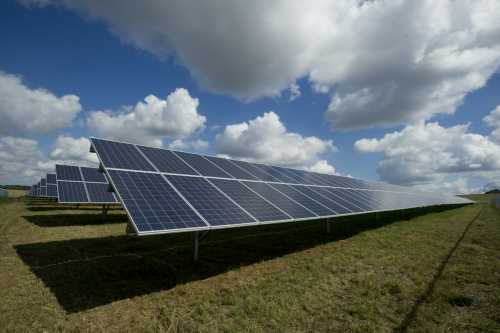
1. The Decentralized Energy Bypass: Mainstream financial narratives obsess over the legacy of circular debt, yet they frequently overlook a massive, decentralized market correction. Pakistan imported 17 gigawatts of solar panels in 2024 alone, making it one of the world’s top importers and more than doubling the previous year's volume. [[53]] This grassroots transition is quietly decoupling the industrial sector and the upper-middle class from the national grid. This creates a two-tier energy economy: those who can afford the upfront capital opt out of the system, while the state-owned distribution companies (DISCOs) are left with a shrinking, less affluent customer base to subsidize the legacy infrastructure. This threatens the long-term financial viability of the grid, even as it alleviates immediate load-shedding for the privileged.
2. The Demographic Dividend Reversal: Persistent political hybridity, institutional friction, and censorship are accelerating a severe "brain drain" of technical and entrepreneurial talent. When a nation’s democracy ranking drops among the worst performers globally, the immediate casualty is not just abstract political capital, but tangible human capital. [[48]] The tech, fintech, and climate finance sectors are losing their most agile minds to regional hubs like Dubai and Riyadh. This exodus directly undermines the very innovation and administrative capacity required to execute the newly minted, highly ambitious climate finance frameworks.
3. The Shadow Economy Formalization Pressure: The IMF’s strict conditions for primary fiscal surpluses are inadvertently forcing a harsh, rapid formalization of the historically informal retail and agricultural sectors. [[7]] While broadening the tax net is a necessary long-term goal, the abruptness of this shift is compressing small and medium enterprise (SME) margins. This environment is leading to a silent consolidation of market share by larger, politically connected conglomerates that possess the compliance infrastructure to survive. This phenomenon, which the World Bank has subtly flagged as "elite capture," is estimated to cost the economy between 5 to 6.5 percent of its GDP annually. [[4]]
Echoes of 2008: The Historical Precedent
The current macroeconomic landscape bears a striking, almost eerie resemblance to the 2008–2013 period. Then, as now, Pakistan faced a severe balance of payments crisis, relied on an emergency IMF bailout, and grappled with intense internal security challenges and political transitions. The critical lesson from that era is that stabilization without deep, structural reform is merely deferred default. In 2008, the focus was on short-term macroeconomic triage; the failure to reform the energy sector or broaden the agricultural tax base inevitably led to the 2013 crisis. Today, the stakes are exponentially higher due to the addition of climate finance imperatives and decentralized technology. The 2008 precedent teaches us that external financing is a temporary bridge, not a final destination. Without dismantling the structural bottlenecks in energy pricing and export complexity—where Pakistan has stagnated in the Economic Complexity Index since the year 2000 [[5]]—the current stabilization will merely set the stage for the next, potentially more severe, crisis.
The Compliance Theater Trap: A Necessary Counter-Perspective
However, viewing this current stabilization purely as a triumph of institutional reform risks falling into the compliance theater trap. Critics rightly argue that current positive macroeconomic indicators, such as the easing of inflation and the achievement of current account surpluses, are heavily engineered through the administrative suppression of demand rather than organic, productivity-led growth. [[7]] High interest rates and import restrictions have crushed private sector credit growth, artificially creating a surplus. The IMF’s own modest 3.5% growth forecast for the upcoming fiscal year reflects this subdued reality, indicating that the economy is being managed for bare survival, not dynamic expansion. [[45]] To frame this engineered stability as a robust, organic recovery is to mistake the absence of a heart attack for a return to peak athletic performance.
The Sovereignty Imperative: Balancing the Ledger
Conversely, dismissing these painful reforms as mere external imposition by Western financial institutions ignores the profound sovereignty imperative driving domestic policy. The state’s aggressive pursuit of climate finance and renewable energy integration is not solely an IMF dictate; it is a strategic necessity for national survival. With climate vulnerability consistently ranking Pakistan among the top ten nations globally, the estimated $348 billion climate finance requirement by 2030 is an existential metric, not a neoliberal talking point. [[36]] Furthermore, the government’s push to formalize the economy, however economically painful in the short term, is a necessary attempt to break decades of elite capture that has historically held the state’s fiscal sovereignty hostage to a narrow, untaxed oligarchy. [[63]] True sovereignty requires a self-sustaining fiscal base, which is impossible without this painful transition.
Strategic Navigation: Actionable Takeaways
- For Local Businesses: Diversify energy sourcing immediately. The national grid is rapidly becoming a legacy utility for those unable to opt out. Investing in localized solar and battery storage is no longer an optional ESG luxury, but a core operational hedge against inevitable tariff volatility and grid unreliability.
- For Citizens and Investors: Shift investment portfolios toward export-oriented and tech-enabled sectors that are naturally insulated from domestic demand suppression. Avoid highly leveraged domestic retail plays that will be disproportionately crushed by the ongoing formalization of the tax net and reduced consumer purchasing power.
- For Policymakers: Prioritize the bureaucratic absorption capacity of climate finance. The international capital is pledged, but the administrative machinery to deploy it effectively at the provincial level remains deeply fractured. Streamlining public-private partnerships in climate tech is the single highest-leverage action available to the state.
The Six-Month Horizon: Future Forecast
Over the next six months, the Pakistani landscape will be defined by "frictional stabilization." We can expect a slight but noticeable uptick in social friction as the full, uncompromising weight of tax net expansion hits the middle class and small business owners. However, the macroeconomic floor will hold, preventing a return to the brink of default. The real, untold story will be the quiet acceleration of private climate tech ventures, as evidenced by the recent launch of dedicated climate funds securing significant anchor commitments in the region. [[37]] Geopolitically, Pakistan will continue its multi-vector balancing act, leveraging its critical geographic position to secure bilateral trade and energy arrangements that bypass traditional Western conditionalities, thereby ensuring the uninterrupted flow of essential energy and technology imports. For a deeper dive into the macroeconomic data underpinning this analysis, refer to the official IMF country reports.



Comments (0)
No comments yet. Be the first to share your thoughts!
Want to join the discussion?
Please log in to post a comment.
Login NoworCreate an Account