
Paving the Way for 5G: Ministry of IT Pushes Revolutionary Right of Way Bill

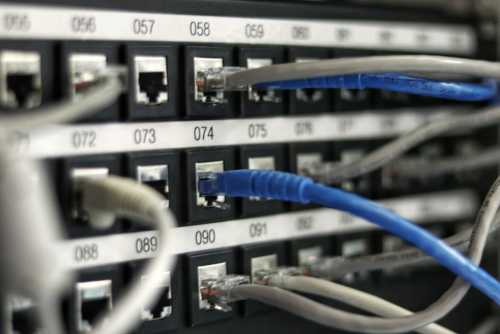
Imagine you want to build a super-fast water pipe from your house to your friend's house across town. But to do that, you have to dig up the road. Now, imagine every single time you want to dig a tiny hole, you have to ask the mayor, the police chief, the local council, and the owner of the road for permission. It would take years just to lay one pipe! This is exactly what telecom companies in Pakistan have been facing when trying to lay fiber optic cables for high-speed internet. But the Ministry of Information Technology and Telecommunication is finally fixing this with the new Right of Way (ROW) Provisions in the Pakistan Telecommunication (Re-organization) (Amendment) Bill, 2026 moitt.gov.pk .
The Right of Way (ROW) is basically a legal permission slip that allows companies to dig up roads, install poles, and lay underground cables to connect their networks. In the past, this process was a bureaucratic nightmare. Different cities and provinces had different rules, different fees, and different timelines. A telecom company would submit an application and wait for months, sometimes years, for approval. This massive delay is a primary reason why Pakistan's internet speeds and 4G coverage have lagged behind other countries in the region.
The new 2026 Bill changes the game completely. It introduces a unified, standardized, and digital process for granting ROW permissions across the entire country. Instead of running from office to office with piles of paper, companies can now apply online. The bill sets strict timelines for authorities to approve or reject applications. If the government office does not respond within a specific number of days, the permission is automatically considered granted. This "deemed approval" concept is a revolutionary step that cuts through the red tape like a hot knife through butter.
Why is this so critical right now? Because the world is moving toward 5G, and 5G requires a completely different type of network. Unlike 4G, which uses a few giant towers, 5G uses thousands of small antennas placed close together on streetlights and buildings. To connect all these small antennas, you need a massive web of fiber optic cables. Without a smooth ROW process, building a 5G network in Pakistan would be physically impossible. This bill is the foundational infrastructure needed to bring next-generation connectivity to the masses.
The benefits of this bill go far beyond just faster internet for streaming videos. High-speed, low-latency internet is the backbone of the modern digital economy. It enables smart cities, where traffic lights adjust automatically to prevent jams. It enables telemedicine, where a doctor in Karachi can perform a remote diagnosis on a patient in a rural village using real-time HD video. It enables autonomous vehicles and advanced manufacturing. By clearing the path for fiber optics, the Ministry of IT is essentially paving the highway for Pakistan's entire digital future.
The telecom industry has welcomed the bill with open arms, noting that it will save them millions of dollars in delays and administrative costs. These savings can now be reinvested into expanding network coverage to underserved and remote areas. The government has illustrated these provisions clearly, showing a commitment to transforming Pakistan into a connected, digital powerhouse moitt.gov.pk . It is a perfect example of how fixing a boring, bureaucratic rule can unlock billions of dollars in economic growth.
Official Source Information
The Ministry of Information Technology and Telecommunication officially outlined the Right of Way (ROW) Provisions in the 2026 Amendment Bill, marking a new era for telecom infrastructure.
Visit Ministry of IT & Telecom Official PortalRelated Articles

The Compute Reckoning: Navigating Sovereign AI, Quantum Tipping Points, and Antitrust Friction
Aug 23, 2026
The Structural Recalibration of Global Technology: Navigating Compute, Cryptography, and Geopolitical Faultlines
Aug 22, 2026
Comments (0)
No comments yet. Be the first to share your thoughts!
Want to join the discussion?
Please log in to post a comment.
Login NoworCreate an Account