
Physical AI Enters the Workforce: Boston Dynamics' Atlas and NVIDIA's Robotics Revolution

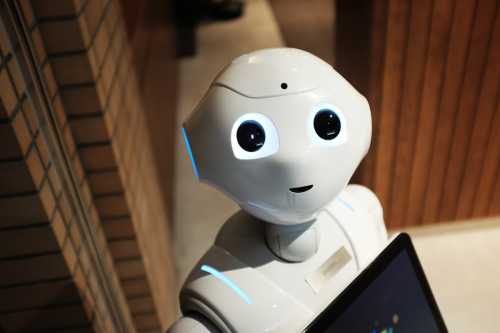
The long-anticipated integration of advanced robotics into the global workforce has officially transitioned from science fiction to operational reality. In a watershed moment for the field of Physical AI, Boston Dynamics’ iconic Atlas humanoid robot has commenced its first major field test at Hyundai’s massive manufacturing facility near Savannah, Georgia. This deployment, captured and analyzed by major media outlets including CBS News’ "60 Minutes," marks the definitive end of the experimental phase for bipedal, multi-task humanoid automation. Concurrently, NVIDIA has unveiled a suite of foundational models and simulation platforms designed to accelerate the deployment of physical AI across industries, signaling that 2026 is the year machines finally learn to navigate the physical world with human-like dexterity and reasoning.
Atlas in the Wild: The End of the Experimental Phase
For years, videos of Boston Dynamics’ Atlas performing backflips and parkour have gone viral, showcasing breathtaking agility. However, the deployment at Hyundai represents a fundamentally different milestone: the application of that agility to sustained, economically valuable industrial labor. The Atlas units currently operating in Savannah are not performing choreographed routines; they are engaged in complex assembly tasks, material handling, and quality inspection in a dynamic, unstructured environment shared with human workers.
The significance of this deployment lies in the integration of advanced Vision-Language-Action (VLA) models. Unlike traditional industrial robots that are bolted to the floor and programmed to repeat a single motion with sub-millimeter precision, the new Atlas utilizes AI to perceive its environment, understand natural language instructions, and adapt its physical actions in real-time. If a component is misaligned on the assembly line, Atlas doesn't trigger an error code and halt production; it visually identifies the discrepancy, calculates the necessary physical correction, and adjusts its grip and trajectory autonomously.
NVIDIA’s Alpamayo and the Cognitive Architecture of Robots
Powering this physical dexterity is a new generation of AI models specifically architected for the physical world. At the forefront is NVIDIA’s Alpamayo, a massive 10-billion-parameter Vision-Language-Action model designed explicitly for autonomous systems. Alpamayo represents a breakthrough in robotic cognition because it incorporates "chain-of-thought" reasoning tailored for physical interactions. Before Atlas reaches for a heavy, awkwardly shaped component, Alpamayo simulates the physics of the grasp, evaluates the center of gravity, and plans the optimal motor sequence to ensure a secure hold, all in milliseconds.
However, training a physical robot in the real world is slow, dangerous, and expensive. To solve this, NVIDIA has introduced AlpaSim, a revolutionary simulation platform that reduces validation metric variance by up to 83%. AlpaSim creates hyper-realistic digital twins of manufacturing environments, allowing fleets of virtual Atlas robots to undergo millions of hours of training, encountering countless edge cases and failure scenarios, before a single line of code is deployed to a physical machine. This "sim-to-real" transfer is the key to scaling physical AI from a single prototype to a global workforce.
"We are no longer programming robots; we are educating them. The combination of VLA models like Alpamayo and massive simulation environments means that physical AI can now generalize across tasks. A robot trained to assemble a battery pack can intuitively understand how to handle a fragile glass component."
Beyond the Factory: LG CLOiD and the Domestic Frontier
While the industrial applications of Physical AI are generating immediate economic value, the technology is also rapidly advancing toward the domestic sphere. LG Electronics has officially launched CLOiD, a smart home AI robot powered by the NVIDIA Jetson Thor compute platform. CLOiD is not a simple voice assistant on wheels; it is a physically interactive agent capable of simulating and learning behaviors in virtual environments before deployment in a human home.
The Jetson Thor platform provides the immense localized compute power required for CLOiD to process complex spatial data, recognize individual family members, and manipulate objects safely. Early demonstrations show CLOiD performing tasks such as organizing clutter, loading dishwashers, and even providing physical assistance to elderly residents. The deployment of CLOiD signals that the miniaturization and cost-reduction of Physical AI hardware are progressing rapidly, paving the way for consumer-grade humanoid and multipedal robots within the next three to five years.
Industry Analysis
"The Hyundai/Boston Dynamics deployment is the 'iPhone moment' for robotics. Just as the iPhone combined touchscreens, cellular data, and apps into a ubiquitous form factor, the integration of VLA models, advanced actuators, and sim-to-real training has finally made general-purpose humanoid robots economically viable." #PhysicalAI#Robotics
— Lead Analyst, Global Robotics Institute
The Siemens Partnership and the Digital Twin Factory
The deployment of these advanced robots is not happening in isolation. NVIDIA and Siemens AG have announced a landmark partnership to integrate Physical AI deeply into the industrial metaverse. Through this collaboration, factories can be built and optimized entirely in virtual space. Digital twin technology allows engineers to simulate the placement of every Atlas unit, test the workflow, and identify bottlenecks before a single physical robot is manufactured. This integration of Physical AI with industrial digital twins addresses two of the manufacturing sector's most pressing challenges: the chronic shortage of skilled labor and the need for unprecedented supply chain resilience.
As 2026 progresses, the definition of the "workforce" is expanding to include silicon and steel. The successful field tests of Boston Dynamics’ Atlas, powered by NVIDIA’s cognitive architectures, prove that the barriers to entry for physical automation have been breached. The factories of the future are not dark, unmanned facilities; they are collaborative environments where human ingenuity is amplified by the tireless, adaptable, and increasingly intelligent physical presence of autonomous machines.
For deep dives into the engineering behind Physical AI and robotics, follow our technology desk on Facebook.
Related Articles
The Macro Fracture in AI: Navigating Compute Chokeholds, Open-Source Backlash, and the Productivity Mirage
Aug 23, 2026
The Silicon Ceiling: How Power Grids and Geopolitics Are Choking the AI Revolution
Aug 22, 2026
Comments (0)
No comments yet. Be the first to share your thoughts!
Want to join the discussion?
Please log in to post a comment.
Login NoworCreate an Account