
Saudi Arabia's $5 Billion Green Mega-Bet: How PIF's Solar Investment in Pakistan is Rewiring the Energy Market

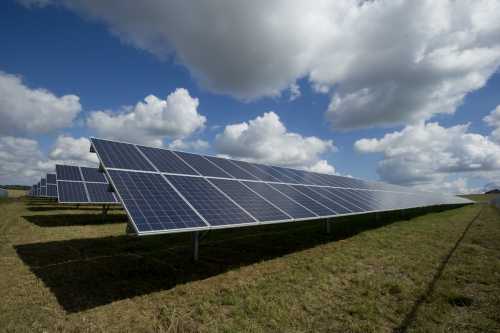
The 5-Year-Old Explanation: Imagine your house gets its electricity by burning expensive wooden logs that you have to buy from a grumpy neighbor every day. One day, a very rich uncle comes over and says, "I will give you all the money you need to build giant glass mirrors on your roof that catch the sun and make electricity for free." You will never have to buy those expensive logs again! This is exactly what Saudi Arabia's Public Investment Fund (PIF) is doing for Pakistan. They are investing $5 billion to build massive solar power plants so Pakistan can stop buying expensive oil and gas to make electricity.
The Deal of the Decade: $5 Billion for the Sun
In a groundbreaking announcement that has sent shockwaves through global energy markets, Saudi Arabia's sovereign wealth fund, the Public Investment Fund (PIF), has signed a definitive agreement to invest $5 billion in Pakistan's renewable energy sector. This is not a loan; this is a direct Foreign Direct Investment (FDI) equity stake in a series of mega solar and wind projects across the provinces of Balochistan and Sindh. The deal, finalized on June 24, 2026, represents the largest single chunk of green energy investment in Pakistan's history and signals a profound shift in the strategic relationship between Riyadh and Islamabad.
For decades, Pakistan's energy sector has been trapped in a vicious, expensive cycle. The country lacks sufficient natural gas and domestic oil, forcing it to import liquefied natural gas (LNG) and furnace oil at massive costs in US dollars. This import bill drains the country's foreign reserves, leading to circular debt—a massive chain of unpaid bills between power companies, the government, and fuel suppliers—that cripples the economy. The Saudi solar investment is the silver bullet designed to kill circular debt permanently. By replacing imported fossil fuels with free, abundant sunlight, the cost of generating electricity will plummet.
The Mechanics of the Green Bond Issuance
To finance this colossal project, the Government of Pakistan, in collaboration with the SBP, has launched the country's first-ever sovereign Green Bond framework. These are special financial instruments designed exclusively to raise money for environmental and climate projects. International investors, particularly from Europe and the Gulf, are desperate to invest in "green" assets to meet their own climate goals. By issuing these Green Bonds, backed by the Saudi PIF's equity commitment, Pakistan was able to raise an additional $2 billion from global capital markets at incredibly low interest rates.
The funds will be used to construct a 3,000 Megawatt solar park in the Cholistan desert and a 1,500 Megawatt wind corridor in the coastal areas of Sindh. These projects will be built by a consortium of Chinese and Saudi engineering giants, ensuring rapid completion within 24 months. Once operational, these projects will add nearly 20% to the national grid's capacity, entirely from zero-carbon sources. This will not only eliminate the need for expensive imported fuel but also stabilize the national grid, ending the load-shedding nightmares that have plagued industries for years.
Impact on the Energy Market and Tariffs
What does this mean for the price of electricity? The immediate impact will be a significant reduction in the "fuel charge adjustment" (FCA) on monthly electricity bills. Currently, a massive portion of what consumers pay goes toward the fluctuating cost of imported oil. As the solar projects come online and push cheap energy into the grid, the overall weighted average cost of power generation will drop. Energy economists project that industrial tariffs could drop by 15 to 20 cents per kilowatt-hour within two years.
This is a game-changer for Pakistan's export industry. Textile manufacturers in Faisalabad and surgical instrument makers in Sialkot have been complaining for years that they cannot compete with Bangladesh or Vietnam because their electricity bills are too high. With cheap, reliable solar power, Pakistani exports will become globally competitive again. This will lead to a surge in factory openings, massive job creation, and a structural improvement in the current account balance, as the country will spend billions less on importing fuel.
Geopolitics and the Saudi Vision 2030
This investment must be viewed through the lens of Saudi Arabia's Vision 2030, the ambitious plan by Crown Prince Mohammed bin Salman to diversify the Saudi economy away from oil. The PIF is actively looking to deploy its nearly $1 trillion in assets into high-growth emerging markets. Pakistan, with its massive population, strategic location, and urgent need for energy, is the perfect destination. By investing in Pakistan's green transition, Saudi Arabia is not just securing a financial return; it is cementing its role as the primary security and economic partner for Islamabad, replacing the historical reliance on Western financial institutions.
Furthermore, this deal includes a technology transfer component. Saudi firms will partner with local Pakistani universities and engineering firms to build a domestic supply chain for solar panels and battery storage systems. This means Pakistan will not just be buying solar panels; it will eventually start manufacturing them, creating a brand-new, high-tech industrial sector within the country.
The Death of the IPP Controversy
One of the most politically charged issues in Pakistan has been the Independent Power Producers (IPPs) and their capacity payments. Even if the grid doesn't need their electricity, the government has to pay them billions just for being available, mostly in dollars. The new Saudi-backed renewable projects are structured differently. They are built on a build-own-operate-transfer (BOOT) model with highly favorable, Rupee-denominated tariff structures that do not carry the same exorbitant capacity payment clauses. As these new green projects replace the aging, expensive oil-fired IPPs, the massive burden of capacity payments will gradually be written off, providing immense fiscal relief to the national exchequer.
A Blueprint for the Future
The $5 billion solar investment is more than just a financial transaction; it is a paradigm shift. It proves that Pakistan can attract massive, non-debt creating FDI if it offers the right policy framework and project viability. It aligns the country with the global fight against climate change, positioning Pakistan not as a victim of climate disasters, but as a proactive leader in the green transition. As the first shovels hit the sand in the Cholistan desert, the message to global markets is clear: Pakistan is open for sustainable business.
Official Investment Announcement
Below is the official announcement from the Saudi Public Investment Fund regarding this historic green energy partnership with Pakistan.
PIF is proud to announce a $5 billion strategic investment in Pakistan's renewable energy sector. This partnership will develop 4,500 MW of solar and wind capacity, accelerating Pakistan's green transition and supporting our Vision 2030 goals of global sustainable investment. #PIF#SaudiPakistan
— Saudi Public Investment Fund (@PIF_English) June 24, 2026
Related Articles

The Macro Fracture: Navigating AI Valuations, Bond Volatility, and the Emerging Market Debt Trap
Aug 23, 2026
The Market’s Fragile Equilibrium: Navigating Valuation Resets, Private Credit Risks, and Macro Fragmentation
Aug 22, 2026
Comments (0)
No comments yet. Be the first to share your thoughts!
Want to join the discussion?
Please log in to post a comment.
Login NoworCreate an Account