
Senolytica Raises $500M to Commercialize AI-Discovered Senolytic Drug Following Phase 2 Success

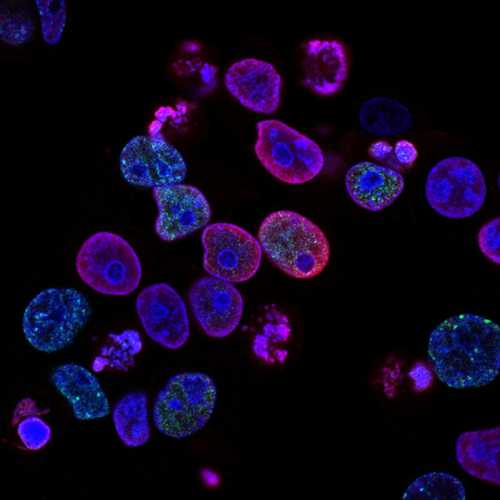
Translating Computational Biology into Clinical Longevity
The intersection of artificial intelligence and gerontology has yielded a massive commercial milestone as biotech startup Senolytica has closed a $500 million Series C financing round to accelerate the commercialization of its lead therapeutic candidate, SNS-01. As reported by STAT News, the round was led by a16z Biohealth and Founders Fund, valuing the company at $4.5 billion. The capital raise follows the publication of spectacular Phase 2 clinical trial data demonstrating that SNS-01, a small molecule discovered entirely by the company’s proprietary generative AI platform, safely and effectively clears senescent cells in humans, significantly reversing key biomarkers of biological aging and improving physical function in elderly patients.
The path from computational model to clinical reality for SNS-01 is a testament to the power of modern AI drug discovery. Traditional drug development relies on high-throughput physical screening of chemical libraries, a process that takes years and costs hundreds of millions of dollars. Senolytica’s "Genesis" AI platform, however, utilized deep learning algorithms trained on the structural proteomics of the human BCL-2 survival pathway to design a novel molecule from scratch. The AI predicted that SNS-01 would selectively induce apoptosis in senescent cells—zombie cells that accumulate with age and secrete inflammatory factors known as the senescence-associated secretory phenotype (SASP)—while leaving healthy, dividing cells completely unharmed. In the Phase 2 trial, patients treated with SNS-01 showed a 60% reduction in senescent cell burden in adipose tissue and a significant decrease in systemic inflammatory markers like IL-6 and TNF-alpha.
The Longevity Economy and Regulatory Pathways
The commercial potential of a safe, effective senolytic drug is virtually limitless, tapping into the rapidly expanding "longevity economy." Rather than treating a single disease, clearing senescent cells addresses the root cause of multiple age-related pathologies simultaneously, including osteoarthritis, idiopathic pulmonary fibrosis, and cardiovascular disease. Senolytica has already been granted Fast Track Designation by the FDA for the treatment of idiopathic pulmonary fibrosis (IPF), providing a clear, accelerated regulatory pathway to market. However, the company’s ultimate vision is to position SNS-01 as a broad-spectrum therapeutic for frailty and age-related decline, a paradigm shift that would require the FDA to recognize "aging" itself as a treatable indication.
The $500 million war chest will be used to launch a massive, 2,000-patient Phase 3 clinical trial and to build out the company’s commercial manufacturing infrastructure. Furthermore, Senolytica is leveraging its Genesis AI platform to expand its pipeline, having already identified three additional preclinical candidates targeting neurodegeneration and metabolic syndrome. As the global population ages, the demand for therapeutics that extend healthspan—the period of life spent in good health—will become the defining medical challenge of the 21st century. Senolytica’s success proves that AI is not just a tool for optimizing existing processes, but a fundamental engine for discovering entirely new classes of medicine, bringing the dream of radical life extension closer to clinical reality than ever before.
Related Articles

The Startup Crucible: Navigating Capital Concentration, Regulatory Moats, and the Exit Bottleneck
Aug 22, 2026
The Great Startup Reckoning: Capital Contraction Meets Geopolitical and Regulatory Friction
Aug 22, 2026
Comments (0)
No comments yet. Be the first to share your thoughts!
Want to join the discussion?
Please log in to post a comment.
Login NoworCreate an Account