
Six Wild Discoveries from the James Webb Space Telescope Revolutionizing Our View of the Cosmos

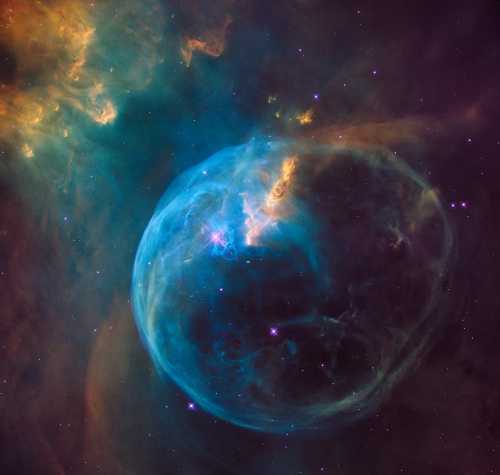
When the James Webb Space Telescope (JWST) launched, it promised to revolutionize our view of the cosmos. Years later, it is delivering in spectacular fashion, revealing cosmic impossibilities ranging from planets that rain diamonds to the chemical fingerprints of the universe's dawn.
1. Our First Look at Moons in the Making
Astronomers have never actually seen how gas giants make moons—until now. Researchers used JWST to peek inside the disk of gas and dust swirling around a baby gas giant called CT Chamaeleontis b. This marked humanity's first-ever detailed look at a moon-forming disk, revealing that the moon-making material around the planet is chemically distinct from the planet-making material around its host star, featuring complex carbon-containing molecules like benzene.
2. A Lava World That Defies Atmospheric Rules
Meet TOI-561 b: a planet twice as old as our Sun, orbiting its star in just 10.56 hours with a surface temperature of 3,200 degrees Fahrenheit. By every exoplanet rule previously known, this small, hot planet should be a bare rock incapable of holding an atmosphere. However, temperature readings suggest it is surrounded by a thick atmosphere that distributes heat, indicating a dynamic exchange between the surface magma ocean and the air above.
"It's really like a wet lava ball," noted a co-author of the study, highlighting how this discovery completely upends our understanding of how rocky planets can maintain atmospheres in extreme conditions.
3. A Lemon-Shaped Planet That Rains Diamonds
Data from exoplanet PSR J2322-2650b revealed a truly bizarre world. This Jupiter-sized planet orbits a rapidly spinning pulsar, and the intense gravitational forces are squeezing the planet into a lemon shape. Most astonishingly, its atmosphere is composed of pure molecular carbon. Deep inside, these carbon clouds condense and rain down as diamonds, representing a completely new type of world that breaks existing formation models.
4. Baby Galaxies Speedrunning Star Formation
Observations of galaxies from just two billion years after the Big Bang revealed that they are forming stars at rates much faster than astrophysical models predicted. These infant galaxies exhibited "bursty" star formation, suddenly producing stars at accelerated rates during the universe's early, disorganized phases, forcing theorists to rethink the timeline of cosmic evolution.
5. The Chemical Immaturity of Teenage Galaxies
When studying 33 "teenage" galaxies from 2 to 3 billion years after the Big Bang, researchers found widely varying oxygen levels but a consistent deficiency in sulfur and argon. This distinct chemical environment indicates that these early galaxies were chemically immature, having not yet experienced the later-stage supernovae required to produce heavier elements, offering a pristine glimpse into galactic growth.
6. Giant Planets Orbiting Tiny Stars
Gas giants like Jupiter shouldn’t be able to form around small, cold red dwarf stars, yet they exist. Observations of planets like TOI-5205b revealed atmospheres that are metal-poor and surprisingly carbon-rich, with interiors that are much more metal-rich than their outer layers. This lack of mixing suggests these objects formed through mechanisms entirely different from the gas giants in our own Solar System.
Official Science Communication
For the complete scientific framework and detailed program observations, please refer to the original publication: Carnegie Science: Six Wild Discoveries from JWST.
Related Articles

The Healthcare Quadruple Bypass: Navigating Price Controls, Workforce Attrition, and Rural Desertification
Aug 22, 2026
The Fractured Laboratory: How Geopolitical Friction is Rewiring Global Science Economics
Aug 19, 2026
Comments (0)
No comments yet. Be the first to share your thoughts!
Want to join the discussion?
Please log in to post a comment.
Login NoworCreate an Account